






Overview of Montana Family Law
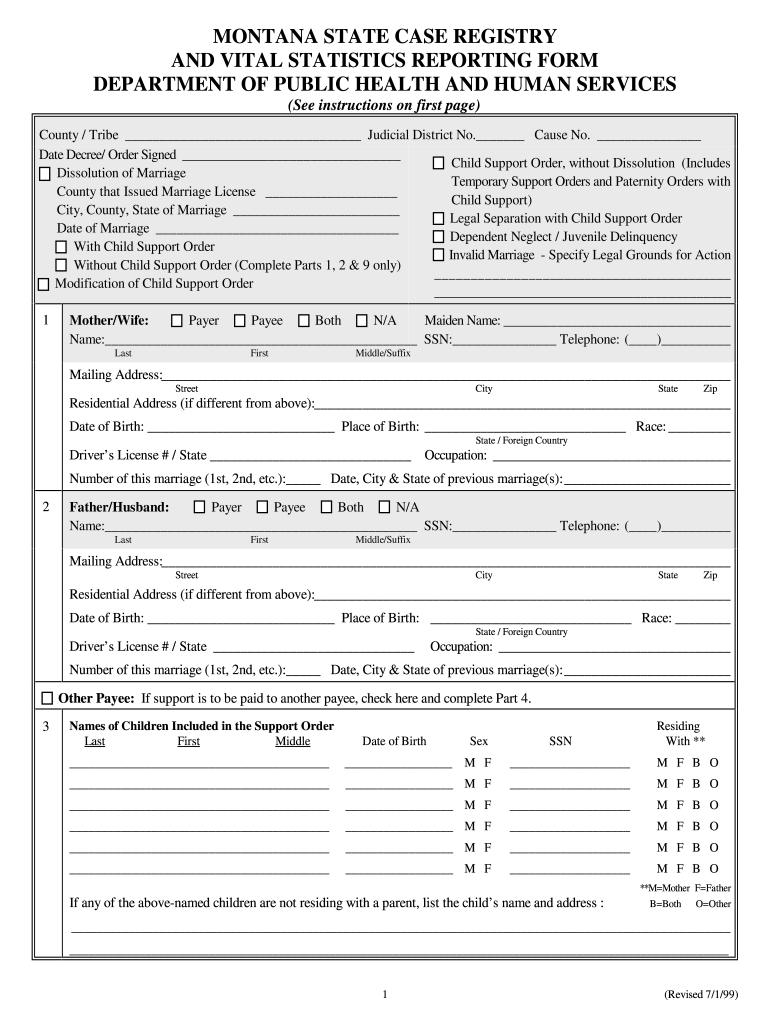
Montana family law encompasses various aspects of legal proceedings related to family matters within the state of Montana. This includes issues such as divorce, child custody, support obligations, and the legal framework governing these areas. Understanding these laws is crucial for those navigating family-related legal proceedings to ensure compliance and protect their rights.
Key Elements of Montana Family Law
Understanding Montana family law requires knowledge of several key elements that define family-related legal proceedings in the state:
-
Dissolution of Marriage: This is commonly known as divorce and involves the legal termination of a marriage. In Montana, the process includes filing a petition, meeting jurisdictional requirements, and addressing issues of property division, child custody, and support.
-
Child Custody and Support: In divorce proceedings involving children, determining custody arrangements and calculating support obligations according to Montana's guidelines are critical steps. These decisions have lasting impacts on both parents and children.
-
Property and Debt Division: The division of marital property and debts must be handled equitably as per Montana's laws. Understanding which assets are considered marital property and how debts are apportioned is essential.
Steps to Complete a Joint Petition for Dissolution
Filing for the dissolution of marriage in Montana involves several meticulously defined steps:
-
Prepare the Joint Petition: Both parties collaborate to complete and sign the joint petition for dissolution, ensuring they meet all jurisdictional prerequisites.
-
File the Petition: Submit the completed petition, along with requisite forms, to the appropriate district court in the jurisdiction where either party resides.
-
Serve Notice: Properly serve the other party with the petition unless both parties are consistently involved collaboratively from the outset.
-
Child Support and Parenting Plan: If children are involved, develop a comprehensive parenting plan and determine child support obligations in accordance with state guidelines.
-
Final Hearing: After meeting statutory waiting periods and completing necessary mediation or counseling (if required), attend the court hearing for judicial review and approval.
State-Specific Rules for Montana Family Law
Montana family law is guided by specific rules unique to the state that must be observed:
-
Residency Requirements: At least one of the parties must have resided in Montana for 90 days before filing a petition for dissolution.
-
No-Fault Basis: Montana allows for divorce on a no-fault basis, citing irretrievable breakdown as the sole ground, which eliminates the need to prove wrongdoing by either party.
-
Mandatory Parenting Courses: For cases involving children, parties may be required to complete parenting courses to assist in developing co-parenting strategies post-divorce.
Legal Use of Family Law Forms in Montana
Montana family law forms must be accurately completed and submitted to be legally binding. These forms address various needs:
-
Filing for Divorce: Utilize forms such as the joint dissolution petition and financial affidavits to initiate the divorce process.
-
Child Custody Arrangements: Submit a parenting plan detailing custody and visitation schedules following Montana statutory guidelines.
-
Property Division: Document agreements on property division through duly signed marital settlement agreements.
Important Terms Related to Montana Family Law
Several terms are integral to understanding Montana family law proceedings:
-
Petitioner and Respondent: The primary parties involved in a dissolution process.
-
Maintenance: Sometimes referred to as spousal support or alimony, financial assistance that one spouse may be ordered to provide to the other post-divorce.
-
Debts and Assets: Financial obligations and property owned by either or both parties that must be equitably divided.
Who Typically Uses Montana Family Law Forms
Montana family law forms are predominantly utilized by individuals who are:
-
Seeking Divorce: Couples looking to terminate their marriage legally, ensuring proper legal documentation and processes.
-
Establishing Custody: Parents requiring formal legal agreements regarding the custody and support of their children post-separation.
-
Dividing Assets: People needing to equitably distribute property and address debts through a formal legal process.
Required Documents for Filing
The dissolution or modification of family law matters in Montana necessitates specific documents:
-
Joint Petition for Dissolution: A necessary document filed by both parties in a no-fault divorce.
-
Financial Affidavits: Documents elucidating each party’s financial situation to inform equitable division and support decisions.
-
Parenting Plan: A detailed arrangement for child custody and support outlining each parent’s responsibilities and rights.
Penalties for Non-Compliance
Failure to comply with Montana family law can lead to serious repercussions:
-
Legal Penalties: Non-compliance with court orders can result in contempt of court charges, potential fines, or adjustments to existing custody and support arrangements.
-
Financial Consequences: Not adhering to financial judgments or support obligations can lead to wage garnishment or asset seizure.
-
Custodial Impacts: Bypassing custody agreements may affect parental rights and result in restricted visitation.
Digital vs. Paper Version Use
Montana family law forms can be utilized in both digital and paper formats:
-
Digital Forms: Easily accessible online, allowing for remote completion and submission, fostering efficiency in processing.
-
Paper Forms: Available for in-person submission, providing an alternative for those who prefer or require tangible documentation methods.
Understanding and adhering to Montana family law regulations is critical for successfully navigating the legal processes involved in family matters within the state. Comprehensive knowledge of these elements ensures individuals comply with legal standards while safeguarding personal rights and interests.