Medical Assessment Referral Form- Home Oxygen Concentrator Program (HOCP) Home Oxygen Concentrator P 2026

Get Form
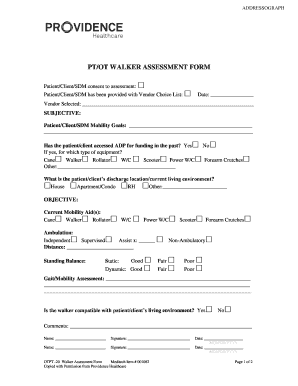
Medical Assessment Referral Form- Home Oxygen Concentrator Program (HOCP) Home Oxygen Concentrator P Preview on Page 1

Here's how it works

01. Edit your form online
Type text, add images, blackout confidential details, add comments, highlights and more.

02. Sign it in a few clicks
Draw your signature, type it, upload its image, or use your mobile device as a signature pad.

03. Share your form with others
Send it via email, link, or fax. You can also download it, export it or print it out.

Definition and Purpose of the Medical Assessment Referral Form for Home Oxygen Concentrator Program

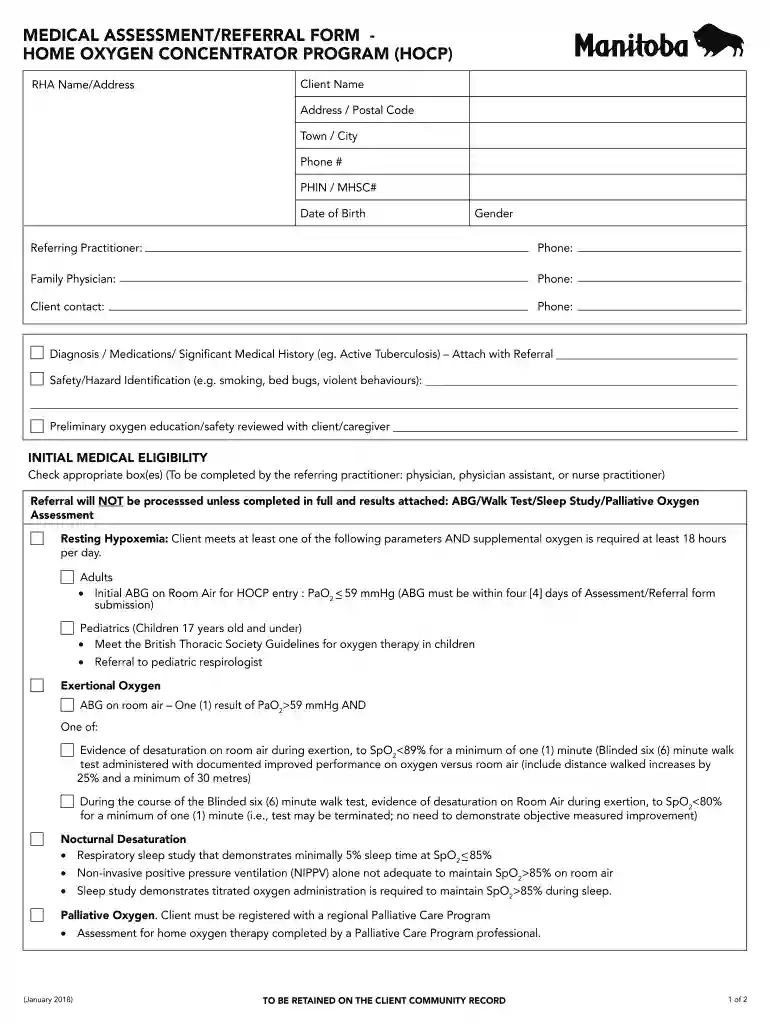
The Medical Assessment Referral Form for the Home Oxygen Concentrator Program (HOCP), also known as the Home Oxygen Concentrator P, is a critical document used to evaluate a patient's eligibility for receiving home oxygen therapy. This form serves as a standardized tool to gather essential information regarding the patient's health status, diagnosis, and specific oxygen requirements. It is tailored to ensure patients receive the appropriate level of respiratory support while facilitating an efficient assessment and approval process by healthcare providers.

Key Components of the Form

  • Client Demographics: Includes personal details such as the name, age, and contact information of the patient. This section ensures the correct identification and documentation of the individual's information.
  • Medical Eligibility Criteria: Outlines the specific health conditions and physiological markers required for eligibility. It guides physicians in determining if the patient meets the necessary standards for program enrollment.

Steps to Complete the Medical Assessment Referral Form

Accurate completion of the Medical Assessment Referral Form is crucial for a successful evaluation. Below are the step-by-step instructions:

  1. Gather Patient Information: Collect comprehensive demographic details, including full name, date of birth, and address.
  2. Assessment of Medical Criteria: Review medical records to confirm that the patient meets medical eligibility for home oxygen therapy.
  3. Complete Diagnosis Section: Document the primary diagnosis contributing to the patient's need for oxygen therapy.
  4. Specify Oxygen Prescription Details: Indicate prescribed oxygen flow rates and durations, tailored to individual patient needs.
  5. Healthcare Provider Authorization: The referring practitioner must review all inputted information and certify the form with a signature.

Tips for Accuracy

  • Double-check all entered data for errors before submission.
  • Ensure all necessary sections are completed to avoid processing delays.

Who Typically Uses the Medical Assessment Referral Form?

The primary users of this form include healthcare providers, respiratory therapists, and medical practitioners who are responsible for assessing and referring patients for home oxygen therapy. This form is essential for:


  • Referring Practitioners: Physicians and specialists diagnosing and assessing patients needing respiratory therapy.
  • Healthcare Facilities: Hospitals and clinics coordinating home oxygen therapy for patients.
  • Insurance Providers: Varies on a case-by-case basis but often requires documents like this form to validate the need for covered medical devices.
decoration image ratings of Dochub

How to Obtain the Medical Assessment Referral Form

The form can typically be acquired through healthcare facilities, medical providers, or directly from program administrators overseeing the Home Oxygen Concentrator Program. Digital versions may also be available for download from medical portals or by contacting relevant health departments.

Access Points

  • Medical Offices: Available upon request for patients deemed eligible by their healthcare provider.
  • Online Portals: Some health care systems provide downloadable PDFs for convenience.

Legal Use and Compliance

The Medical Assessment Referral Form is legally binding and must be completed accurately to ensure compliance with healthcare regulations and insurance requirements. It is used to document medical eligibility under strict confidentiality protocols.

Important Compliance Notes

  • Data Privacy: Patient information must be protected according to HIPAA regulations.
  • Signature Requirement: The form requires authentication via signature by a licensed healthcare professional.

Eligibility Criteria for the Home Oxygen Concentrator Program

Patients must meet specific medical and physiological criteria to qualify for home oxygen therapy. These criteria evaluate the severity of respiratory conditions and the anticipated benefit of oxygen therapy.

decoration image

Examples of Criteria

  • Chronic Respiratory Disorders: COPD, severe asthma, or restrictive lung disease.
  • Oxygen Saturation Levels: Must typically fall below a certain threshold to warrant oxygen therapy.

Key Elements of the Medical Assessment Referral Form

Each section of the form plays a critical role in the assessment process, some of which include:

  • Safety Identification: Addresses any potential risks and safety considerations for using home oxygen equipment.
  • Continued Eligibility Assessments: Allows for ongoing review to determine if therapy adjustments are needed over time.

Examples of Using the Medical Assessment Referral Form

Patients with progressive respiratory diseases often require this form to initiate home-based therapy. For instance, an individual with chronic obstructive pulmonary disease (COPD) may use this form to arrange for an oxygen concentrator to improve their quality of life at home.

Sample Scenarios

  • COPD Management: Ensuring continuous oxygen support to prevent hospital readmissions.
  • Post-Surgical Recovery: Temporary use for patients recovering from major surgeries involving the respiratory system.

By understanding and correctly utilizing this structure, stakeholders can ensure proper patient care and compliance with healthcare protocols.

be ready to get more

Complete this form in 5 minutes or less

Get form

Got questions?

We have answers to the most popular questions from our customers. If you can't find an answer to your question, please contact us.
Contact us
Conditions for Which Oxygen Therapy May Be Covered Examples of these symptoms and findings are pulmonary hypertension, recurring congestive heart failure due to chronic cor pulmonale, erythrocytosis, impairment of the cognitive process, nocturnal restlessness, and morning headache.
Yes, obtaining insurance coverage for portable oxygen concentrators (POCs) is possible, but it largely depends on the specific insurance policy and the individuals eligibility.
Your blood oxygen levels will be tested when youre sitting quietly using a finger probe (pulse oximeter). If these are low well do a further test by taking a needle blood specimen from your earlobe. This tells us the levels of oxygen and carbon dioxide (waste gas) in your blood.
How to Qualify for Home Oxygen Therapy Be evaluated by a doctor, in-person. Have a medical record that documents your need for oxygen therapy. Show diminished oxygen saturation on an arterial blood gas study. Receive a prescription from a qualified healthcare professional.
Your doctor will prescribe equipment like tanks, a stationary concentrator, a portable oxygen concentrator, or other items. Your oxygen company should give you the type of equipment that your doctor prescribes. Medicare will only pay for one type of portable equipment and one type of stationary equipment.

Security and compliance

At DocHub, your data security is our priority. We follow HIPAA, SOC2, GDPR, and other standards, so you can work on your documents with confidence.
Learn more
ccpa2
pci-dss
gdpr-compliance
hipaa
soc-compliance