







Definition and Meaning
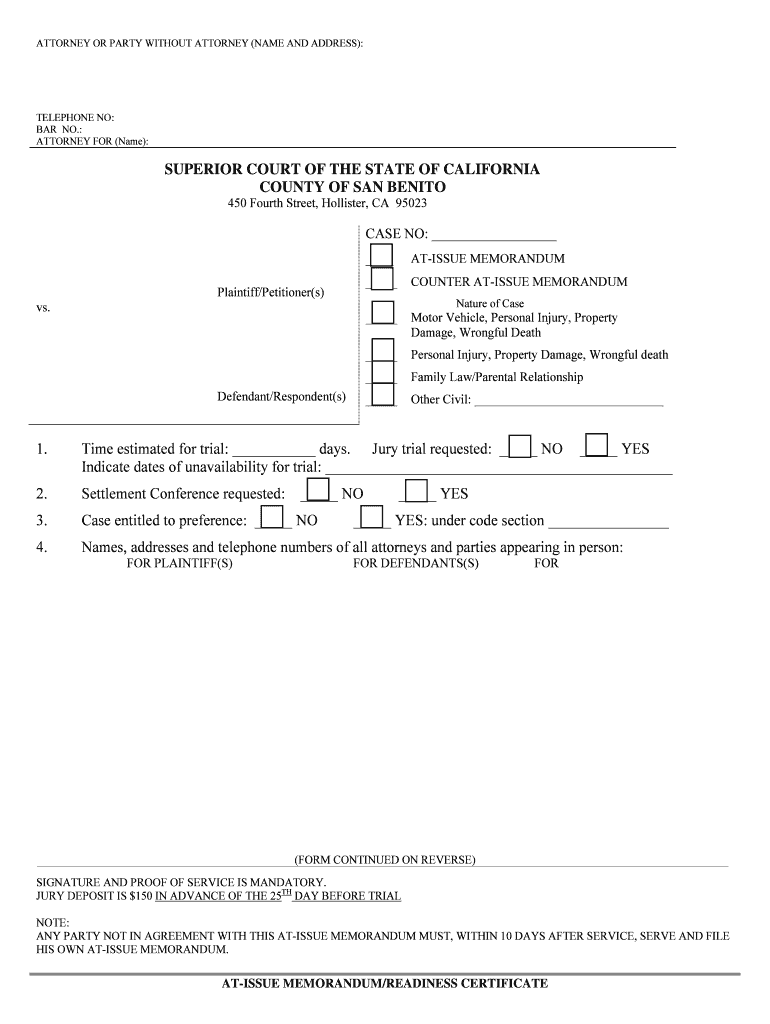
The At-Issue Memorandum Readiness Certificate for the Superior Court of San involves a detailed statement indicating that a civil case is prepared to proceed to trial. It is a formal document that signals readiness by outlining the nature of the case and various relevant details. Once this certificate is filed, the court understands that all pre-trial processes have been finalized, and the matter is officially at issue, meaning there is no more dispute on what is being contested. It encompasses factors such as case type, potential trial duration, jury requests, and prior conference outcomes.
This document is crucial because it ensures that all parties involved, including attorneys and the court, are on the same page regarding the trial's status. The correct filing of this certificate is a vital procedural step in moving a case forward effectively within the Superior Court system.
Steps to Complete the At-Issue Memorandum Readiness Certificate
Completing the At-Issue Memorandum Readiness Certificate involves several detailed steps to ensure accuracy and compliance with court requirements:
-
Identify Case Details: Begin with basic information such as the case number, the names of the parties involved, and the type of matter being contested, e.g., personal injury or family law. It's crucial to ensure all this information is precise to avoid filing errors.
-
Determine Trial Needs: Specify whether a jury trial is requested and assess the estimated trial length. These factors influence court scheduling and resource allocation.
-
Include Conference and Settlement Information: Note any settlement conferences or mediation outcomes. These details help the court understand previous efforts to resolve the case before trial.
-
Acquire Necessary Signatures: Attorneys representing the involved parties must sign the document. This signature denotes that the information provided is true and complete and confirms their agreement to move to the trial stage.
-
Completing Service of Process: Attach proof of service by mail, evidencing that all parties have been notified about the certificate and impending trial procedures.
Key Elements of the At-Issue Memorandum Readiness Certificate
When preparing and filing the At-Issue Memorandum Readiness Certificate, there are several key elements to consider:
- Nature of the Case: Clearly specify the type of case, such as family law or property damage, as each category may have distinct procedural requirements.
- Trial Duration and Requirements: Provide an estimated timeline for the trial, ensuring any special needs, such as a jury, are noted.
- Signature and Date Sections: Confirm the appropriate legal representatives have officially endorsed the document.
- Proof of Service: Attach evidence that involved parties have been formally notified, a critical step for legal proceedings.
- Arbitration Stipulations: Indicate whether arbitration has been agreed upon or if it remains a contested matter.
How to Use the At-Issue Memorandum Readiness Certificate
Using the At-Issue Memorandum Readiness Certificate efficiently involves understanding its role within the trial preparation process. Legal professionals typically file it after all pre-trial motions have been heard and discovery is complete. This certificate acts as official notice that the case is ready for trial, streamlining judicial efficiency and preventing unnecessary delays.
In practice, legal teams should audit their readiness, ensuring all procedural steps have been taken before filing. Additionally, verifying that all documentation, like settlement conference reports, is compiled and accurate, can prevent potential setbacks.
Filing Deadlines and Important Dates
Understanding the filing deadlines associated with the At-Issue Memorandum Readiness Certificate is essential to keeping a case on track:
- Pre-Trial Calendar Setting: The certificate must be submitted within a specified period before the expected trial date to secure a place on the court's calendar.
- Compliance with Court Orders: Deadlines are often linked to specific court orders or procedural rules relevant to the jurisdiction of the Superior Court in California.
Meeting these deadlines ensures that the case proceeds smoothly and helps avoid penalties or delays.
State-Specific Rules for California
The At-Issue Memorandum Readiness Certificate is subject to state-specific court rules and procedures. In California, these rules dictate how documents are formatted and filed within the judicial system. It's critical to understand:
- Local Court Rules: These can vary by county and may affect deadlines, required documents, and methods of submission.
- State Court Mandates: Pay attention to any overarching state laws that might influence the filing process or content of the document.
Attorneys should remain updated on these regulations to ensure compliance and avoid negative repercussions.
Legal Use and Significance
The legal significance of the At-Issue Memorandum Readiness Certificate cannot be overstated:
- Facilitating Trial Preparation: It officially indicates that a case can proceed to trial, ensuring clarity and agreement between parties.
- Court Scheduling: The certificate aids the court in managing its docket, allowing for efficient allocation of courtroom resources.
- Legal Authorizations: By signing the certificate, attorneys are legally approving the readiness of their case, which holds significant weight in the judicial process.
Thus, the form becomes a critical document in the litigation strategy, impacting timelines and trial readiness.
Examples of Using the At-Issue Memorandum Readiness Certificate
Several scenarios demonstrate the application of the At-Issue Memorandum Readiness Certificate:
- Personal Injury Case: After discovery is complete and settlement talks have failed, plaintiffs and defendants file the certificate to advance to trial.
- Family Law Proceedings: In divorce cases where custody and alimony issues remain unresolved, submitting the certificate propels the case towards judicial resolution.
- Property Damage: Parties involved in a dispute over real estate damage use this document post-mediation, when no settlement was reached, to push for a courtroom determination.
Each case highlights the certificate’s role in transitioning from preparation to active trial engagement.




