
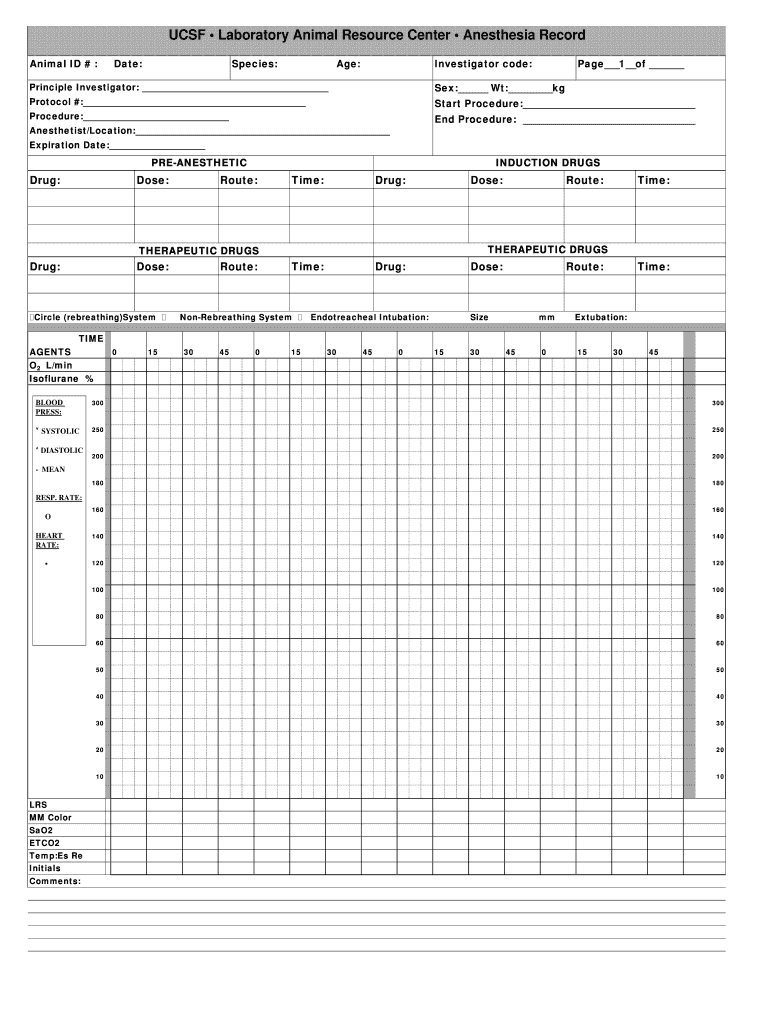







Overview of the Animal Resource Anesthesia Record
The animal resource anesthesia record is a critical document used in veterinary settings for recording anesthetic procedures involving laboratory animals. This record serves as a comprehensive log that details each stage of the anesthesia process, essential for ensuring animal safety and compliance with regulatory standards.
Importance of the Anesthesia Record
- Regulatory Compliance: This record assists facilities in adhering to animal welfare laws and guidelines by documenting all anesthetic procedures.
- Patient Safety: It helps in tracking vital signs and drug administration, ensuring the animals' safety during and post-procedure.
- Research Integrity: Accurate records contribute to the validity of research findings, as they provide a clear picture of the experimental conditions.
Key Sections of the Anesthesia Record
- Animal Identification: Essential for tracking the specific animal being treated, including species, age, sex, and unique identification numbers.
- Procedure Details: This section outlines the nature of the procedure for which anesthesia is being administered, including the purpose and expected outcomes.
- Drug Administration: Details all anesthetic agents used along with dosages, routes of administration, and timing of each dose.
- Vital Signs Monitoring: Continuous monitoring readings such as heart rate, respiratory rate, and blood pressure ensure the animal's wellbeing during the procedure.
- Comments and Observations: A space for noting any complications or observations that may arise during the anesthesia process.
How to Use the Anesthesia Record Effectively
Utilizing the anesthesia record properly ensures both compliance and the safety of laboratory animals. This section breaks down step-by-step how to complete the record accurately.
Step-by-Step Completion of the Anesthesia Record
-
Prepare the Record Before the Procedure:
- Fill in basic information, including the date, animal identification number, and the procedure to be performed.
-
Document Pre-anesthesia Information:
- Note the pre-anesthetic medications given.
- Record baseline vital signs before anesthesia administration.
-
Anesthetic Protocol Execution:
- Accurately document the anesthetic drugs administered, including dosages and time of administration.
- Use a standardized format to log vital signs continuously throughout the procedure.
-
Post-Procedure Monitoring:
- Record recovery observations, ensuring clarity on any complications faced during recovery.
- Make follow-up notes in the comments section regarding the animal's status after awakening from anesthesia.
-
Review and Finalize:
- Ensure completeness and accuracy before filing the record as a part of laboratory documentation.
- Retain copies for regulatory review and potential audits.
Best Practices for Maintaining Records
- Consistency: Use the same record format for all procedures to enhance reliability.
- Clear Legibility: Handwritten records must be clear and concise to avoid misinterpretation.
- Regular Audits: Conduct routine checks of the anesthesia logs to ensure compliance and identify areas for improvement.
Key Elements and Features of the Anesthesia Record
The anesthesia record contains several critical components that help streamline the monitoring and reporting process.
Essential Features of the Anesthesia Record
- Fillable Sections: Includes fields for vital signs, drug administration logs, and observations which can often be customized for specific procedural needs.
- Compatibility with Digital Systems: Many facilities now use electronic systems to record anesthesia data, which often integrates seamlessly with veterinary practice management software.
- Legally Binding Signature Areas: Sections provide space for veterinary staff to sign off, ensuring accountability at each stage of the procedure.
Examples of Record Keepers
- Veterinary Technicians: Typically responsible for documenting anesthesia-related information and vital signs.
- Veterinarians: Ensure the anesthesia record reflects all relevant clinical details for the procedures carried out.
Common Variants of the Anesthesia Record
Different institutions may utilize variants of the anesthesia record tailored to their specific requirements, which may include additional sections or modified formats.
Types of Anesthesia Records
- PDF Versions: Easily shareable and printable, suitable for use in various practice environments.
- Excel Templates: Allow for customization and detailed reporting, beneficial for larger research facilities conducting multiple procedures simultaneously.
- Digital Monitoring Sheets: Integrated systems that provide real-time data entry and monitoring capabilities.
Compliance and Legal Aspects of Anesthesia Records
Maintaining an accurate anesthesia record is not only a best practice but also a legal requirement under various animal welfare regulations in the United States.
Legal Considerations
- Federal Guidelines: Ensure compliance with regulations such as the Animal Welfare Act, which mandates the proper care and management of laboratory animals.
- State Regulations: Some states may have additional requirements regarding recordkeeping and monitoring for veterinary practices.
- Training and Accountability: All staff must be trained in proper record-keeping procedures to mitigate legal liabilities and ensure ethical practices are followed.
Importance of Legal Compliance
- Animal Welfare: Protects the rights and safety of laboratory animals, ensuring they receive humane treatment.
- Research Integrity: Upholds the credibility of scientific findings derived from monitored anesthetic procedures.




