






Definition and Meaning
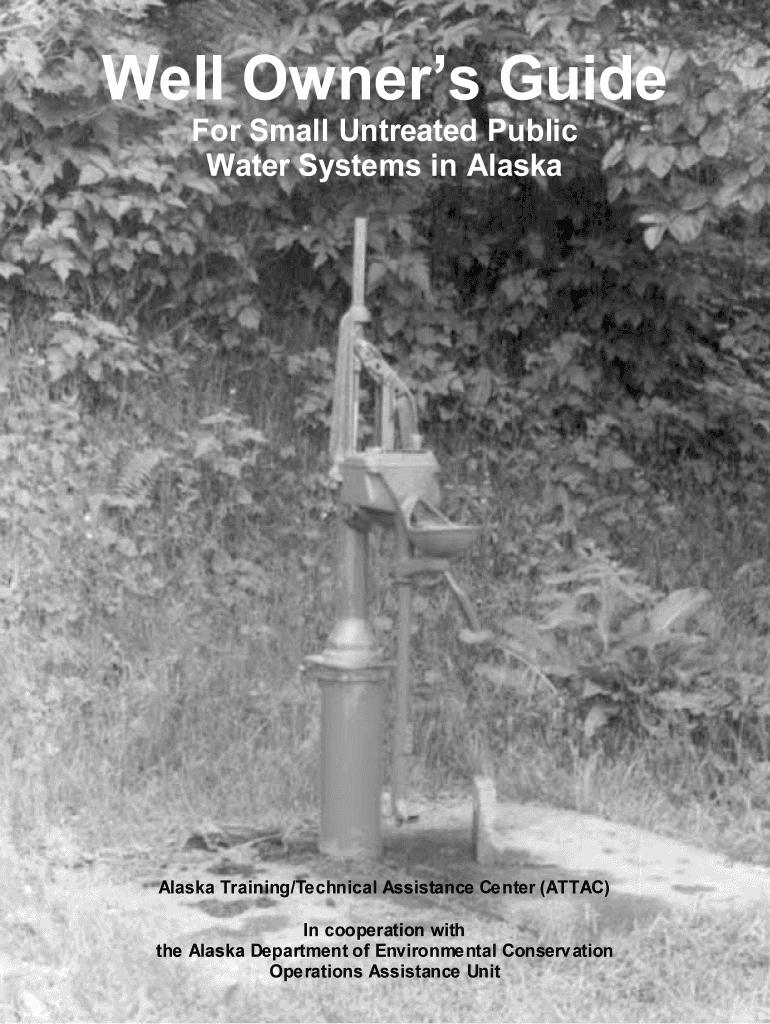
The "Well Owner's Guide – Alaska Department of Environmental – dec state ak" is a vital document designed for owners and operators of small public water systems in Alaska, particularly those utilizing untreated groundwater. It aims to offer a comprehensive overview of the requirements and best practices necessary for maintaining safe and effective water systems. By following this guide, owners can ensure compliance with the Safe Drinking Water Act, as well as understand the essentials of well management, such as construction, operation, and maintenance protocols.
Key Components of the Guide
- Understanding Groundwater: Outlining the basics of groundwater systems.
- Quality Assessment: Guidelines for evaluating water quality and detecting contaminants.
- Well Construction: Instructions on how to build wells according to state and federal standards.
- Maintenance Procedures: Best practices for ongoing well and system maintenance.
How to Use the Well Owner's Guide
This guide serves as an instructional manual that assists well owners in the daily management and long-term planning of their water systems. Users should begin by thoroughly reviewing the sections relevant to their specific needs, such as groundwater management or system assessments.
Usage Steps
- Review Requirements: Familiarize yourself with the Safe Drinking Water Act provisions and the need for certified operators.
- Assess Your System: Determine if your current system meets the guidelines outlined in the guide.
- Implement Best Practices: Follow recommended steps for constructing and maintaining your system.
- Monitor and Report: Regularly test water quality and report findings as required by state regulations.
Steps to Obtain the Guide
The guide, often provided by the Alaska Department of Environmental Conservation, can be accessed in multiple ways. It is available both digitally and in print from official government portals.
Acquisition Methods
- Online Download: Obtain the guide from the Department of Environmental Conservation’s official website.
- Request by Mail: Contact the department directly to have a physical copy sent to your address.
Key Elements of the Guide
The guide is comprehensive, focusing on several critical aspects that every well owner should understand. It not only addresses technical specifications but also delves into regulatory compliance and practical advice.
Essential Elements
- Water Safety Protocols: Ensures drinking water safety through detailed protocols.
- Troubleshooting Methods: Specific techniques for diagnosing and resolving common well problems.
- Regulatory Compliance: Steps to remain compliant with state and federal regulations.
State-Specific Rules
This guide specifically addresses Alaska's policies and regulations concerning small public water systems. Given Alaska’s unique environment and legal framework, the guide adapts general practices to fit regional specifics.
Alaska-Specific Considerations
- Climate Impact Health Protocols: Evaluating water systems in cold climates.
- Wildlife and Conservation Laws: Guidelines on how local wildlife regulations might impact water systems.
Legal Use of the Guide
Understanding the legal implications of using this guide is critical for well owners, as it provides the framework for complying with the Safe Drinking Water Act in Alaska.
Compliance Relevance
- Certified Operator Requirement: Necessitates that certain system types have certified operators.
- Documentation and Reporting: Legal obligations to maintain proper records and report annually to regulatory bodies.
Examples of Using the Guide
Real-world scenarios demonstrate the practical application of the guide, aiding well owners in effectively managing and optimizing their water systems.
Practical Scenarios
- Case Study Example: A small community used the guide to revamp its outdated wells, resulting in cleaner and safer drinking water.
- Troubleshooting Success: By applying troubleshooting methods from the guide, a private well owner mitigated contamination risks successfully.
Important Terms Related to the Guide
Having a clear understanding of the terminology used throughout the document is vital. Terms related to water chemistry, equipment, and regulations are integral to comprehending the guidelines effectively.
Key Terms
- Groundwater Recharge: The process by which water seeps into the water table.
- Aquifer: An underground layer of water-bearing rock.
- Backflow Prevention: Techniques used to prevent contaminants from entering water systems.