






Definition & Meaning
A Submission Cover Sheet, specifically the "SUBMISSION COVER SHEETDocuments - TopSlide," refers to a form typically used to accompany and summarize documents being submitted to a regulatory body or organization. This document acts as a guide or index, helping the recipient understand the contents, purpose, and any critical details of the attached documentation. In essence, it provides a structured overview that facilitates more efficient and accurate document processing.
How to Use the SUBMISSION COVER SHEETDocuments - TopSlide
To effectively utilize the Submission Cover Sheet, you must first gather all the documents you intend to submit. Begin by filling out the cover sheet with details such as the names of attached documents, their significance, and any relevant dates or identifiers, such as reference numbers. Clearly indicate the submitter's details, like name and contact information, and any submission-specific instructions or comments. Ensure every section is completed to avoid delays in processing or the requirement for additional follow-up.
- Section Details: Include document titles, recipient's details, and purpose statements.
- Instructions: Provide any special instructions for handling the documents.
How to Obtain the SUBMISSION COVER SHEETDocuments - TopSlide
Obtaining this specific cover sheet involves checking the source, such as the website of the organization requiring the submission. For instance, if you are dealing with the Commodity Futures Trading Commission (CFTC), they might have a repository or forms section on their site where the necessary documents are available for download. Make sure to access the most current version to ensure compliance with any updated requirements or formats.
Steps to Complete the SUBMISSION COVER SHEETDocuments - TopSlide
- Download the Form: Access and download the form from the official source.
- Review Instructions: Read through any provided instructions or guidelines.
- Fill Out Submitter Details: Include your name, title, and contact information.
- List Attached Documents: Clearly list each document you are submitting.
- Detail Purpose: Provide a brief explanation of the document's purpose and significance.
- Review and Verify: Double-check all information for accuracy and completion before submission.
Key Elements of the SUBMISSION COVER SHEETDocuments - TopSlide
The cover sheet contains several vital components crucial to effective document submission:
- Submitter Information: Provides details about the person or entity submitting the documents.
- Document Summary: Lists and describes the documents included in the package.
- Purpose Explanation: Articulates the reason for submission and any expected outcomes.
- Reference Codes: May include tracking numbers or identifiers to assist with processing.
Legal Use of the SUBMISSION COVER SHEETDocuments - TopSlide
The Submission Cover Sheet is often a legally required document when submitting materials to regulatory entities. Its primary function is to ensure that submissions are processed correctly and efficiently, reducing the risk of lost or misinterpreted documents. By serving as a formal record of what was submitted, it can provide a layer of legal protection by clearly documenting the intent and completion of the submission process.
Who Typically Uses the SUBMISSION COVER SHEETDocuments - TopSlide
This form is commonly used by professionals in legal, financial, and regulatory industries. For example:
- Lawyers: Submit client documents to courts.
- Regulatory Professionals: Provide compliance documentation to government agencies.
- Corporate Executives: Submit business filings to regulatory agencies like the CFTC.


Examples of Using the SUBMISSION COVER SHEETDocuments - TopSlide
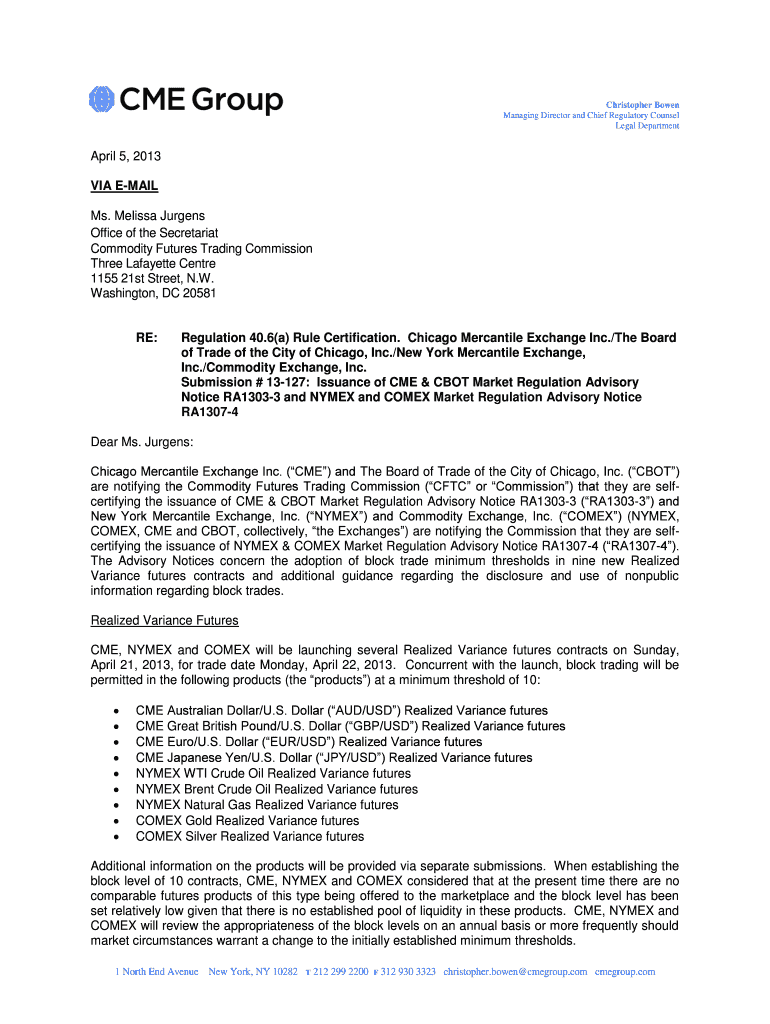
Consider a scenario in which a Managing Director at an exchange company submits compliance-related documents to the CFTC. The cover sheet would include the names and functions of each attachment, such as details on self-certification notices concerning financial thresholds. Such a structured presentation ensures that the recipient understands the context and purpose, facilitating efficient processing.
Important Terms Related to SUBMISSION COVER SHEETDocuments - TopSlide
Understanding specific terms related to the cover sheet can improve the user's ability to complete and submit it effectively. Key terms include:
- Self-Certification: Refers to the act of asserting compliance or adherence to regulatory standards without external verification.
- Block Trades: Large-scale transactions conducted privately or off-exchange to ensure regulatory transparency.
- Market Regulation Advisory Notices: Guidance documents that provide clarification or establish procedures for compliance.
Form Submission Methods (Online / Mail / In-Person)
Depending on the entity or regulatory body, the Submission Cover Sheet can typically be submitted through several methods:
- Online: Through an authorized portal or direct email submission.
- Mail: Via postal services to a provided address.
- In-Person: Delivered directly to the respective office's submission desk, often applicable in legal or government settings.
Software Compatibility (TurboTax, QuickBooks, etc.)
While the Submission Cover Sheet itself is a standardized document, it can sometimes be integrated with or referenced in various software tools:
- Document Management Systems: Useful for tracking the status of document submissions.
- Compliance Software: Could integrate form data for regulatory adherence.
- Accounting Tools: Software like QuickBooks can utilize form references for financial document submissions.
These systems aid in maintaining records and ensuring compliance with submission requirements.