






Definition and Meaning
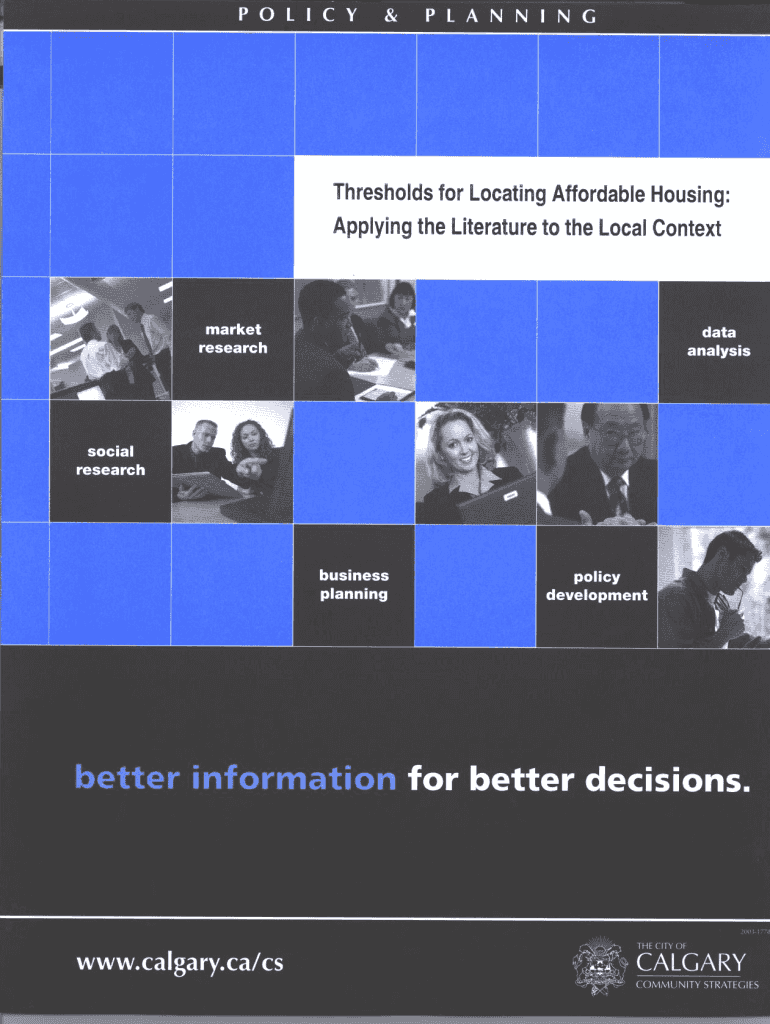
The "Thresholds for Locating Affordable Housing: Applying the Literature - homeless samhsa" serves as a guide to understand critical factors influencing the placement of affordable housing. It is intended to integrate evidence from literature to help governmental and non-governmental entities in making informed decisions on housing distribution strategies. This framework aims to ensure affordable housing developments are strategically positioned to foster economic diversity and social inclusion.
Key Elements of the Guide
The guide is built upon several fundamental elements that must be considered for effective housing development:
- Demographic Analysis: Understanding the local population's age, income, and employment status.
- Community Health: Evaluates housing's impact on community health.
- Balanced Distribution: Aims to prevent high poverty concentration.
- Local Amenities: Accessibility to schools, healthcare, and public transportation.
How to Use the Guide
Users can apply the guidance provided to evaluate prospective housing development locations. Steps include:
- Identify Neighborhood Needs: Gather data on local demographics and existing housing supply.
- Assess Community Resources: Analyze access to necessary social services.
- Evaluate Impact: Use the insights to predict the potential social and economic impact.
Important Terms
Some critical terms relevant to understanding and using the guide effectively include:
- Non-Market Housing: Housing that is not sold or rented at profit-driven rates.
- Housing Density: The number of housing units per land unit.
- Social Inclusion: The process of improving conditions for individuals and communities.
Legal Use of the Guide
The guide must be used in compliance with federal and state laws governing housing and urban development. By adhering to these legal frameworks, housing authorities ensure that developments meet regulatory standards and contribute positively to community growth.
Steps to Complete a Housing Evaluation
The evaluation follows a strategic series of steps:
- Review the Literature: Understand past findings and existing frameworks.
- Data Collection: Obtain current demographic and housing data.
- Analysis: Use models to forecast housing impacts.
- Reporting: Compile findings to inform decision-makers.
Who Typically Uses the Guide
The guide is most frequently utilized by city planners, housing developers, and social services agencies. These stakeholders rely on the document to ensure that housing projects are sustainable and align with local needs and policies.


Examples of Using the Guide
Consider a city like Detroit confronting a housing shortage; the guide helps assess which neighborhoods are most suitable for new developments, factoring in local demographics and amenity access without increasing poverty concentration.
State-Specific Rules
While the guide provides a universal framework, its application varies by state due to differing regulations and economic conditions. Users must tailor strategies to align with local zoning laws and development incentives.
Version and Variants
While this document serves as a primary guide, subsets or related documents may address specific aspects of housing development, such as environmental concerns or energy efficiency standards.
Why It Matters
This guide promotes balanced urban growth and ensures housing solutions are reflective of community needs. Properly applied, it can contribute to healthier, more equitable urban environments by addressing homelessness and improving accessibility to vital services.
Each block listed above provides a detailed view of the multiple facets involved in applying the "Thresholds for Locating Affordable Housing" guide effectively, ensuring stakeholders are well-equipped to make informed decisions.