






Definition and Meaning of the Notice of 90-Day Finding
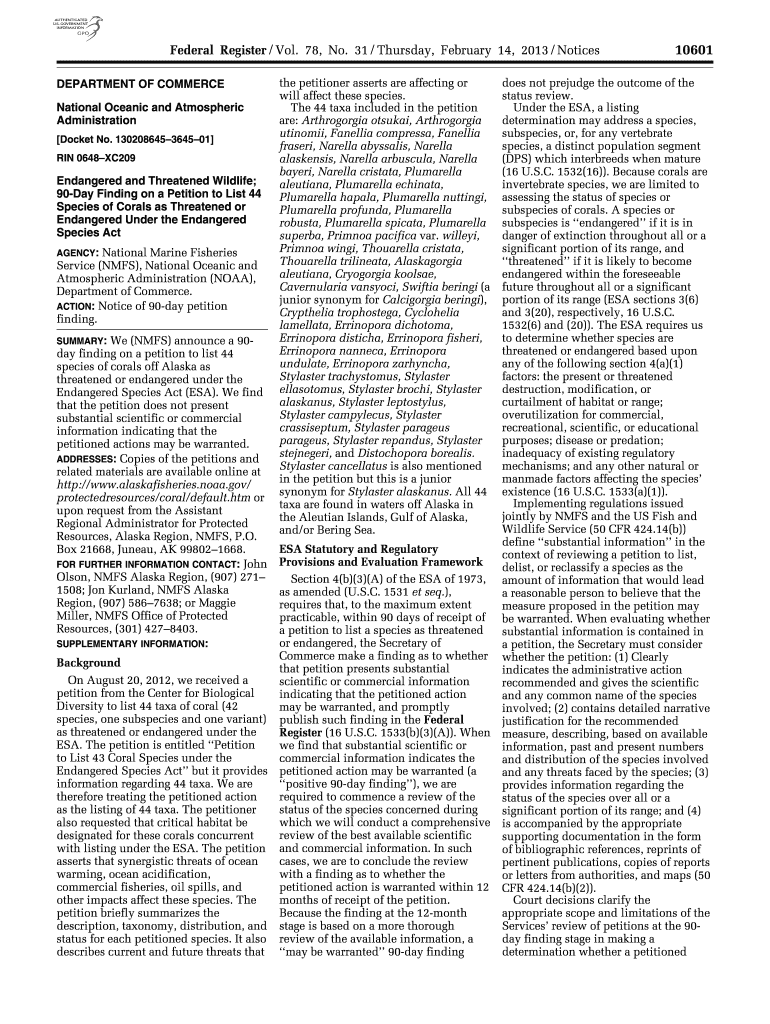
The "Notice of 90-day Finding - National Marine Fisheries Service Alaska" is a formal decision issued by the National Marine Fisheries Service (NMFS) in response to a petition to list certain species as threatened or endangered under the Endangered Species Act. This document serves to inform the public of the NMFS's determination regarding the sufficiency of evidence provided to justify such a listing. A 90-day finding indicates whether the petition presents substantial scientific or commercial data that could merit further review.
Understanding the Context
- Purpose: To evaluate petitions aimed at protecting wildlife, in this case, 44 coral species in Alaska.
- Outcome: Determines if a deeper investigation is justified based on presented evidence.
- Legal Basis: Anchored in the Endangered Species Act, which mandates a structured review process for at-risk species.
How to Use the Notice of 90-Day Finding
For individuals or organizations interested in wildlife protection, the notice details how petitions are reviewed and the criteria used by NMFS in their assessment. Understanding this process facilitates effective advocacy and helps stakeholders tailor future petitions to meet evidentiary standards.
Practical Applications
- Wildlife Advocates: Provide a robust framework for preparing effective petitions.
- Researchers: Identify data gaps that need addressing to strengthen future submissions.
- Policy Makers: Utilize findings to inform conservation strategies and legislative actions.
Steps to Complete the Notice of 90-Day Finding Process
Submitting a petition requires adherence to specific guidelines set forth by NMFS. While the 90-day finding is internal, understanding its criteria helps in preparation.
Submission Guidelines
- Prepare Comprehensive Data: Collect substantial scientific and commercial information about the species.
- Include Distribution and Abundance Data: Clearly outline the geographical and population metrics.
- Identify Potential Threats: Detail threats affecting the species' survival.
- Submit the Petition: Follow NMFS protocols for submission, ensuring all documentation is complete.
Key Elements of the Notice of 90-Day Finding
This document is composed of critical components that outline NMFS's decision. Understanding these elements helps in grasping the overall findings.
Core Components
- Species Information: Lists the species concerned, providing historical and biological contexts.
- Evaluation Criteria: Details what qualifies as substantial information.
- Preliminary Findings: Offers NMFS's initial judgments based on the submitted petition.
Important Terms Related to the Notice of 90-Day Finding
Familiarity with specific terminologies aids in comprehending the nuances of the notice. Below are key terms frequently encountered:
Essential Terminologies
- Endangered Species Act (ESA): U.S. law providing a framework for conservation of threatened and endangered species.
- Petition: A formal request to review the status of a species.
- Substantial Information: Evidence sufficient to suggest a warranted status review, such as credible population assessments.
Legal Use of the Notice
The NMFS notice carries legal weight in environmental regulation and conservation efforts. Its findings influence policy decisions and biodiversity initiatives.
Legal Implications
- Regulatory Measures: Guides current and future protections for species based on scientific findings.
- Policy Amendments: Facilitates advancements in legal frameworks for species conservation and habitat protection.
Penalties for Non-Compliance
While the notice itself outlines findings, non-compliance with ESA regulations can lead to significant consequences.
Possible Repercussions
- Legal Action: Entities failing to adhere to established regulations may face litigation or penalties.
- Loss of Funding: Government grants and subsidies might be rescinded for organizations not aligning with ESA guidelines.
Who Typically Uses the Notice of 90-Day Finding
The notice is pivotal for various stakeholders involved in environmental conservation and policy-making.


Target Audience
- Environmental NGOs: Use findings to drive advocacy and conservation initiatives.
- Legal Practitioners: Aid in understanding compliance and regulatory requirements.
- Academic Institutions: Inform research on environmental protection and biodiversity.