






Definition & Meaning
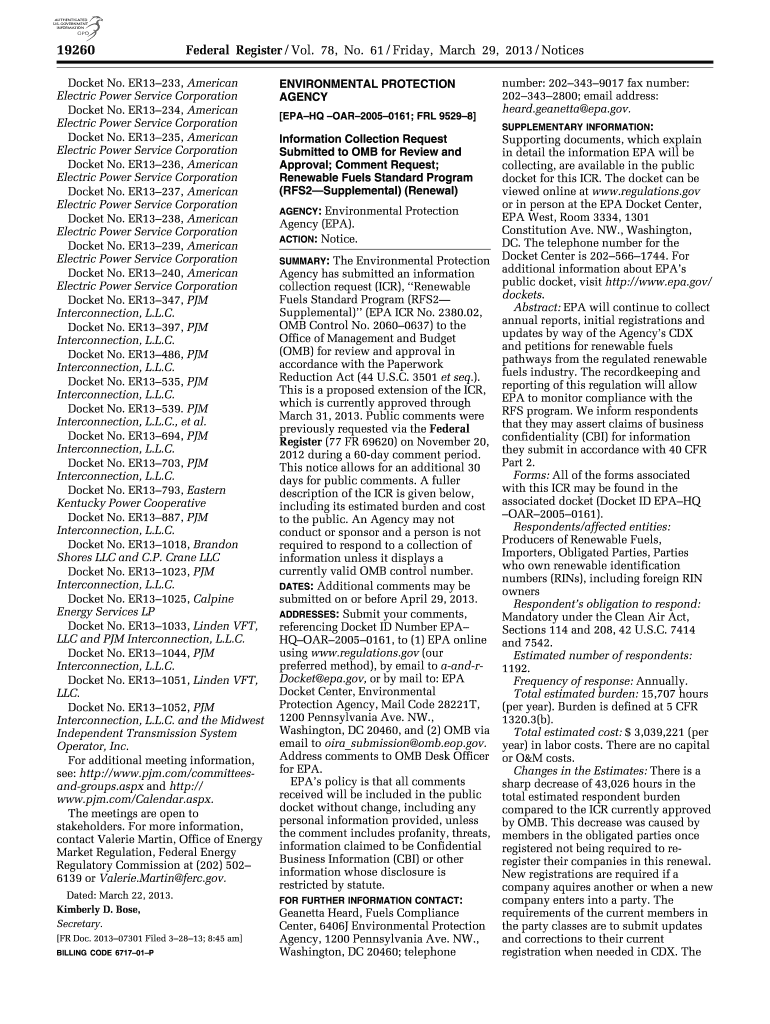
The Federal Register notice, titled "American Electric Power Service Corporation v," refers to an official government publication where federal agencies, like the Environmental Protection Agency (EPA), share regulations, proposed rules, public notices, and legal opinions. This notice specifically involves American Electric Power Service Corporation, focusing on regulatory and legal aspects concerning electric power services and environmental guidelines within the United States. It may include information related to environmental impact assessments, compliance with regulations, and public comment opportunities on energy-related projects.
How to Use the Federal Register Notice
To effectively use the Federal Register notice for "American Electric Power Service Corporation v," individuals and organizations should:
-
Identify Relevant Sections: Start by examining the table of contents or summary to locate sections pertinent to your interests or operations, such as updates on environmental regulations or legal determinations affecting electric power services.
-
Analyze Detailed Provisions: Read through detailed provisions, paying close attention to sections that describe regulatory requirements, deadlines for compliance, and potential legal implications for non-compliance.
-
Participate in Public Comments: If the notice opens the floor for public comments, consider submitting input or feedback within the designated period to influence regulatory decisions. Instructions for submitting comments are typically provided in the notice.
Who Typically Uses the Notice
The Federal Register notice is primarily used by:
-
Legal and Compliance Teams: Professionals responsible for ensuring their companies adhere to federal regulations will use these notices to stay informed about changes that may affect their operations.
-
Environmental Agencies and Advocacy Groups: These entities monitor notices for updates on environmental policies and standards to help shape future environmental strategies and campaigns.
-
Corporations in the Energy Industry: Companies like American Electric Power may use the notice to understand regulatory changes impacting their business operations, particularly those related to environmental compliance and energy distribution.


Important Terms Related to the Notice
-
Renewable Fuels Standard Program: A federal program that ensures increasing use of renewable fuels.
-
Environmental Impact Statements (EIS): Documents required for actions significantly affecting the environment, detailing the impacts and considerations involved.
-
Sole Source Aquifer: An aquifer that supplies 50% or more of drinking water for an area and is protected under the Safe Drinking Water Act.
Legal Use of the Notice
The legal applicability of the notice involves understanding and adhering to federal regulations and changes:
-
Compliance Requirements: Identify and implement measures to comply with new rules as detailed in the notice.
-
Litigation: Stay informed about potential litigation topics or changes in legal interpretations that could affect cases related to environmental or energy regulation.
Key Elements of the Notice
-
Summary of Content: A brief overview of what is included in the notice, usually found at the beginning, detailing changes or introductions of new rules.
-
Contact Information: Lists individuals or departments to contact for further details or clarifications.
-
Deadlines: Provides deadlines for public comment submission, compliance, or entry into force of specific regulatory actions.
Examples of Using the Notice
-
Case Study Example: An energy corporation uses the information in the Federal Register to adjust their compliance strategy after noting changes to emissions standards affecting their production plants.
-
Public Engagement: An environmental advocacy group uses the notice to organize a campaign around a proposed rule change, encouraging public comments to influence the final decision.
Who Issues the Form
The Federal Register notice is issued by the Office of the Federal Register and is a component of the National Archives and Records Administration (NARA). It is typically produced in cooperation with federal agencies such as the EPA or the Department of Energy, which are responsible for specific regulatory content within the notices.