






Definition & Objectives of the Statement of Work
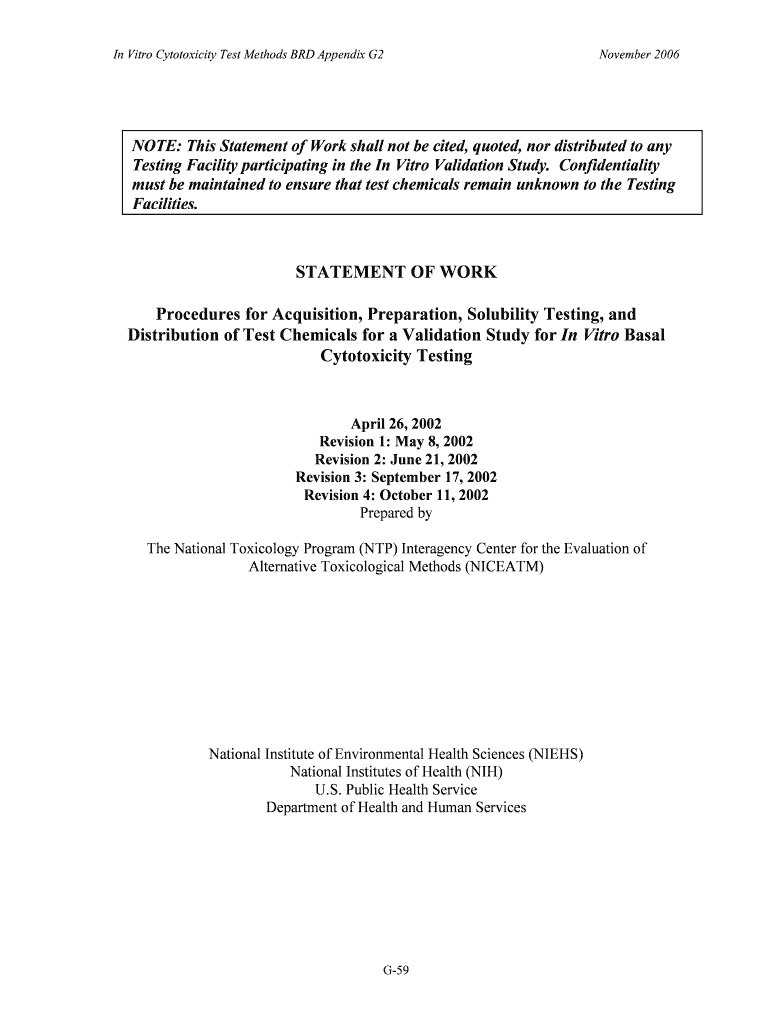
The "In Vitro Cytotoxicity Test Methods BRD Appendix G2 November 2006 Statement of Work" outlines the procedures and objectives for conducting a multi-laboratory study centered around in vitro basal cytotoxicity testing. Its primary goal is to evaluate the effectiveness of specific in vitro assays in predicting acute toxicity, thereby contributing to the reduction of animal testing in toxicology. The Statement of Work (SOW) describes essential tasks such as acquiring, preparing, and distributing test chemicals while adhering to Good Laboratory Practices (GLP).
How to Utilize the Statement of Work
To effectively utilize the Statement of Work for in vitro cytotoxicity testing, it is essential to follow the structured process outlined in the document. This includes the acquisition of test chemicals, preparation tasks, and evaluation of solubility for accuracy in the assays. Researchers and laboratory personnel should adhere strictly to the procedural guidelines to maintain compliance with regulatory standards and ensure the reliability of study outcomes.
Obtaining the Statement of Work Document
The Statement of Work for in vitro cytotoxicity testing methods is typically accessible through institutional repositories or directly from the overseeing organization managing the multi-laboratory study. Interested parties may need to contact the specific agency or consortium conducting the study to obtain a copy, ensuring they have access to all procedural details and requirements for participation.
Completion Steps for the Statement of Work
- Review Procedures: Familiarize with the outlined tasks, including the preparation, testing, and data collection processes associated with the chemical assays.
- Acquire Chemicals: Select the recommended 72 chemicals for testing, ensuring they meet the study requirements.
- Testing and Evaluation: Conduct solubility testing and in vitro assays according to specified methods.
- Data Reporting: Collect and compile data in formats as prescribed by the SOW, ready for multi-laboratory analysis.
- Adherence to GLP: Ensure all procedures are compliant with GLP standards to maintain the integrity of study results.
Importance of the Statement of Work
Understanding the importance of the Statement of Work in the context of in vitro cytotoxicity testing is crucial, as it provides a structured, standardized approach to evaluate potential toxicity of chemicals while minimizing the reliance on animal testing. This contributes to broader ethical and scientific advances in toxicology research.
Key Participants in the Study
Researchers, laboratory technicians, and project management teams are the primary users of the Statement of Work. They play critical roles in carrying out the study's technical components and ensuring that all activities adhere to GLP standards and project timelines.
Core Components of the Statement of Work
- Test Chemical Selection: Involves identifying 72 chemicals critical for the testing process.
- Procedure Outlines: Detailed steps for solubility determination and cytotoxicity testing.
- Data Management: Guidelines for data collection, analysis, and reporting.
- Compliance Requirements: Ensuring all activities are in line with GLP for scientific credibility and ethical responsibility.
Legal and Regulatory Considerations
The Statement of Work must comply with various legal and regulatory standards pertinent to chemical testing and laboratory practices. This includes adherence to GLP, confidentiality agreements, and safety protocols to protect researchers and maintain the legitimacy of study outcomes.
State-Specific Regulations
While the Statement of Work provides a generalized framework, state-specific regulations may influence certain aspects of the testing procedures or required documentation. Laboratories must consult local regulations to ensure full compliance while participating in the study.
Example Scenarios and Case Studies
Examples of the effective use of the Statement of Work can be found in case studies where reduction in animal testing was observed through the application of in vitro assays. For instance, in studies conducted across multiple states, the application of these methods demonstrated not only scientific efficacy but also regulatory approval and ethical compliance.
Versions and Alternatives
Given the developments in scientific research, it's possible that newer iterations or alternative methodologies to the 2006 Statement of Work may exist. Organizations engaged in current research should verify if their practices need alignment with updated standards or methodologies.