






Definition & Meaning
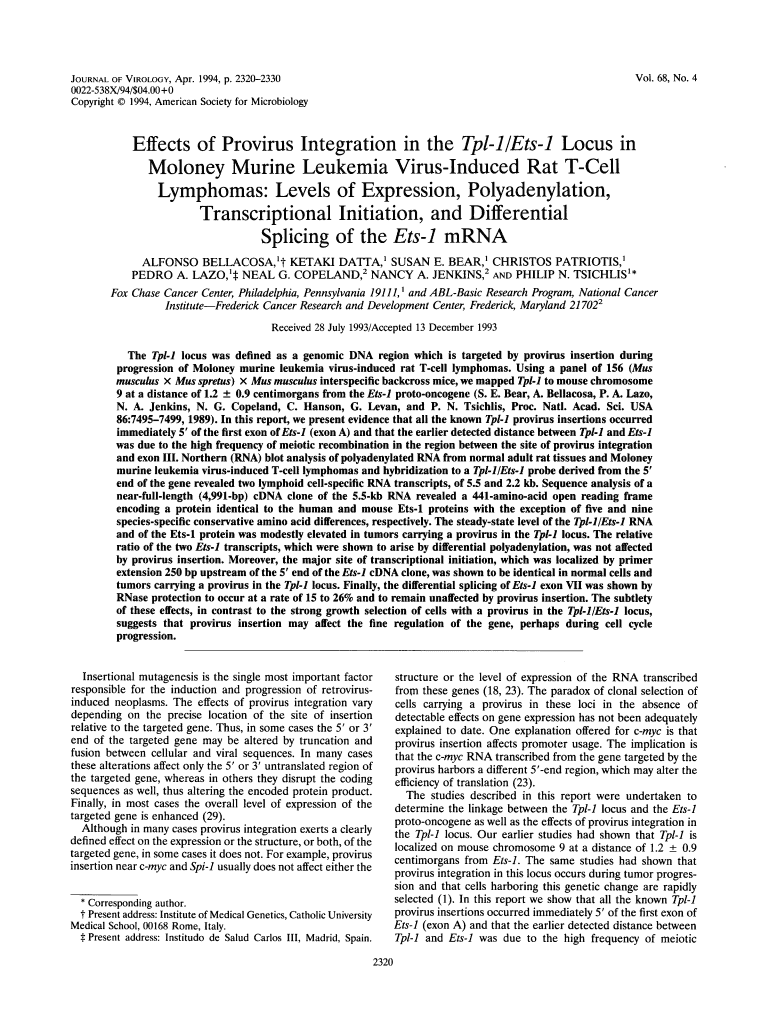
The Tpl-l locus is a significant genomic site identified by research aimed at understanding genetic expression and regulation. According to studies documented in the NCBI and NIH databases, it is associated with the integration of proviruses, affecting the expression and splicing of Proto-Oncogenes like Ets-1. This locus serves as a critical point for understanding viral impacts on gene regulation, particularly in the context of diseases such as leukemia in murine models. The study of such loci provides insights into genetic mechanisms that can influence disease progression and treatment responses.
How to Obtain the Tpl-l Locus Data
Accessing data related to the Tpl-l locus involves navigating databases such as NCBI and NIH. Researchers and scientists can retrieve relevant data by searching these databases using specific queries related to Moloney murine leukemia virus studies. The databases provide access to a variety of resources, including peer-reviewed articles, genomic sequences, and supplementary data. Users may need institutional access or a subscription to view certain materials, although many resources are freely available to the public.
Steps to Analyze the Tpl-l Locus
- Search Databases: Utilize NCBI or NIH search engines with keywords like "Tpl-l locus" or "Moloney murine leukemia virus."
- Review Research Articles: Examine scientific articles that outline experiments and studies related to the locus.
- Download Data Sets: Obtain genomic sequences or study data for in-depth analysis using bioinformatics tools.
- Utilize Bioinformatics Software: Employ software like BLAST to compare sequences or predict locus impacts on gene expression.
- Interpret Results: Analyze changes in gene expression or splicing patterns in the presence of provirus integration.
Why the Tpl-l Locus Matters
The Tpl-l locus's significance extends to its role in understanding oncogenic processes. By studying this locus, researchers can uncover how viral integrations affect gene regulation, leading to potential breakthroughs in cancer research and treatment. Understanding these mechanisms can also assist in developing therapies that target specific genetic alterations induced by viruses, which is crucial for addressing leukemia and related disorders.
Important Terms Related to the Tpl-l Locus
- Provirus: A form of the virus integrated into the DNA of the host cell.
- Ets-1 Proto-Oncogene: A gene involved in controlling cell growth, division, and differentiation; affected by provirus integration.
- Gene Expression: The process by which information from a gene is used to synthesize functional gene products like proteins.
- Splicing Patterns: The arrangement and joining of RNA segments into functional mRNA.
- Oncogenesis: The process of tumor formation due to gene regulation disruptions.
Key Elements of the Tpl-l Locus Research
- Provirus Integration: How viral DNA integrates into the host genome near the Tpl-l locus.
- Gene Expression Modulation: Changes in Ets-1 expression post-integration.
- Splicing Changes: Any alterations in RNA splicing due to provirus influence.
- Cellular Impact: Potential influences on cell cycle regulation and oncogenesis.
Examples of Using the Tpl-l Locus Data
Research involving the Tpl-l locus includes detailed studies on murine models, where scientists investigate how provirus insertion alters Ets-1 mRNA levels. These studies help elucidate mechanisms of leukemia development in rats and may have implications for similar human diseases. For example, altered Ets-1 expression levels are analyzed for their role in T-cell lymphoma progression, providing useful insights into leukemia biology.
Software Compatibility for Analyzing the Tpl-l Locus
Researchers need robust bioinformatics tools to work with data related to the Tpl-l locus. Programs like BLAST for sequence alignment, and other genome browsers and RNA-seq analysis software, are typically used to interpret genetic data. Ensuring compatibility with widely used analysis platforms is essential for seamless data integration and analysis. Users should verify that their computational tools support the formats of data obtained from NCBI and NIH databases.
Application Process & Approval Time for Research Access
Gaining access to certain restricted data sets may require an application process, particularly for protected data. This process involves submitting a research proposal, providing proof of institutional affiliation, and sometimes obtaining ethical clearance for studies involving genetic manipulation or sensitive data. The approval time can vary depending on the complexity and scope of the request. Users should prepare all required documentation in advance to expedite the process.
Disclosure Requirements for Research Utilizing the Tpl-l Locus
Researchers must adhere to ethical standards by disclosing their findings transparently. This includes publishing results in peer-reviewed journals, reporting all data accurately, and maintaining integrity in data interpretation. Compliance with disclosure requirements also involves detailing any potential conflicts of interest and providing access to supplementary data and methodologies to enable verification and replication of results by other researchers.