






Definition and Purpose of the COP1 Form
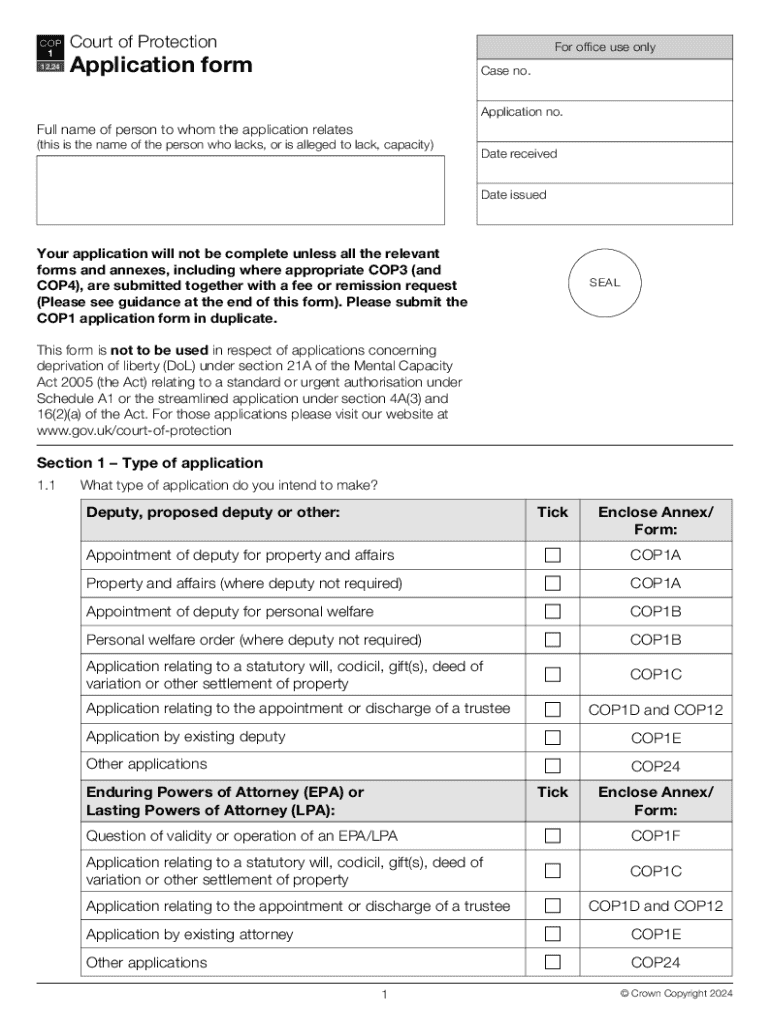
The COP1 form, or Court of Protection form, is a vital document for initiating applications related to the mental capacity and welfare of individuals who may lack the ability to make certain decisions for themselves. This form is often used to apply for the appointment of a deputy, personal welfare orders, or other legal instruments that help manage personal or financial affairs. Its primary function is to clearly capture and present detailed information about the applicant, the person concerned, and the nature of the application to guide decision-making within the legal framework governed by the Court of Protection.
How to Use the COP1 Form
To effectively use the COP1 form, it’s essential to thoroughly understand the information it requires and the correct process for completion. The process typically involves less straightforward steps due to the sensitivity of the cases it handles. Begin by gathering all necessary details about the person lacking capacity, including medical reports and relevant personal information. Ensure all sections of the form are filled out accurately, which may involve consulting with legal professionals. After completing the form, submit it to the relevant judicial body, often accompanied by additional documentation or supporting evidence as required.
Steps to Complete the COP1 Form
-
Identify the Type of Application: Start by determining which type of application you need to make, as the COP1 form covers a broad range of requests related to mental capacity.
-
Collect Necessary Information: Gather all required details, including the personal and medical information of the individual who may lack capacity.
-
Complete the Form Accurately: Fill out each section of the form meticulously, ensuring that no mandatory section is overlooked.
-
Include Supporting Documents: Attach necessary documents, such as medical reports or statements, to substantiate the application.
-
Review and Sign: Double-check all entered information for accuracy, and sign the form where required.
-
Submit the Form: Send the completed form and any additional materials to the appropriate Court of Protection office or legal entity overseeing such applications.
Key Elements of the COP1 Form
The COP1 form is structured to collect specific types of information necessary for its purpose:
- Applicant Details: Information about the individual or entity submitting the application.
- Details of the Person Lacking Capacity: Comprehensive information about the person the application concerns, including their name, date of birth, and any relevant mental health details.
- Type of Order or Request: Explicit declaration of the type of order or legal decision being sought.
- Supporting Evidence: Documentation providing evidence of the individual’s mental incapacity and the necessity for legal intervention.
Important Terms Related to the COP1 Form
Using the COP1 form requires a solid understanding of terms such as:
- Deputyship: A deputy is someone appointed by the Court of Protection to make decisions on behalf of someone who is unable to do so.
- Capacity: This refers to the ability of an individual to make decisions or undertake specific activities.
- Personal Welfare Orders: Legal instruments that grant powers to make decisions about personal health and housing.
Understanding these terms is crucial for accurately completing the form.
Legal Use of the COP1 Form
Within the United States, the COP1 form is legally used to submit requests that involve interventions in the personal or financial affairs of mentally incapacitated individuals. The legal foundation of the form ensures that decisions are made following rigorous standards and under suitable judicial oversight. All applications are subject to review, and any orders granted must align with the best interests of the person concerned, complying with relevant statutes and protective laws.
Role of the Court of Protection in the COP1 Process
The Court of Protection plays a crucial role in handling applications submitted through the COP1 form. This specialized court has the authority to make decisions on behalf of people who lack mental capacity, ensuring that their rights and benefits are protected. It evaluates the merits of each application, considers the evidence provided, and decides on the appointment of a deputy or issuance of welfare orders. The court's involvement is crucial for maintaining a fair and just process in addressing the needs of individuals unable to manage their personal or financial matters.
Who Typically Uses the COP1 Form
Various parties may utilize the COP1 form, including:
- Family Members: Those wishing to manage the affairs of a loved one who lacks capacity.
- Legal Representatives: Lawyers acting on behalf of clients needing intervention in their personal or financial affairs.
- Healthcare Providers: Professionals seeking to ensure proper consent and authorization for treatment or living arrangements.
Each applicant type has distinct motives and may require different sections and supporting documents.

Important Considerations for Completing the COP1 Form
Completing the COP1 form requires attention to detail to ensure that all information is precise and complete. Applicants should also be aware of any relevant deadlines and specific state-based regulations that might influence the application process. It's recommended to seek guidance from legal professionals or consult the Court of Protection's guidelines to enhance accuracy and compliance. Additionally, candidates must monitor any changes or updates in the legal requirements associated with COP1 to remain informed about their obligations.
State-Specific Rules for the COP1 Form
Although the COP1 form is used broadly across various jurisdictions, some states may impose additional requirements or have specific interpretations of the form based on local statutes. Factors such as differing legal definitions of capacity or varying processes for appointing deputies could affect the application. Those using the form should check state-specific guidelines or consult with local legal experts to ensure compliance with any localized rules or procedures.