







Definition and Meaning
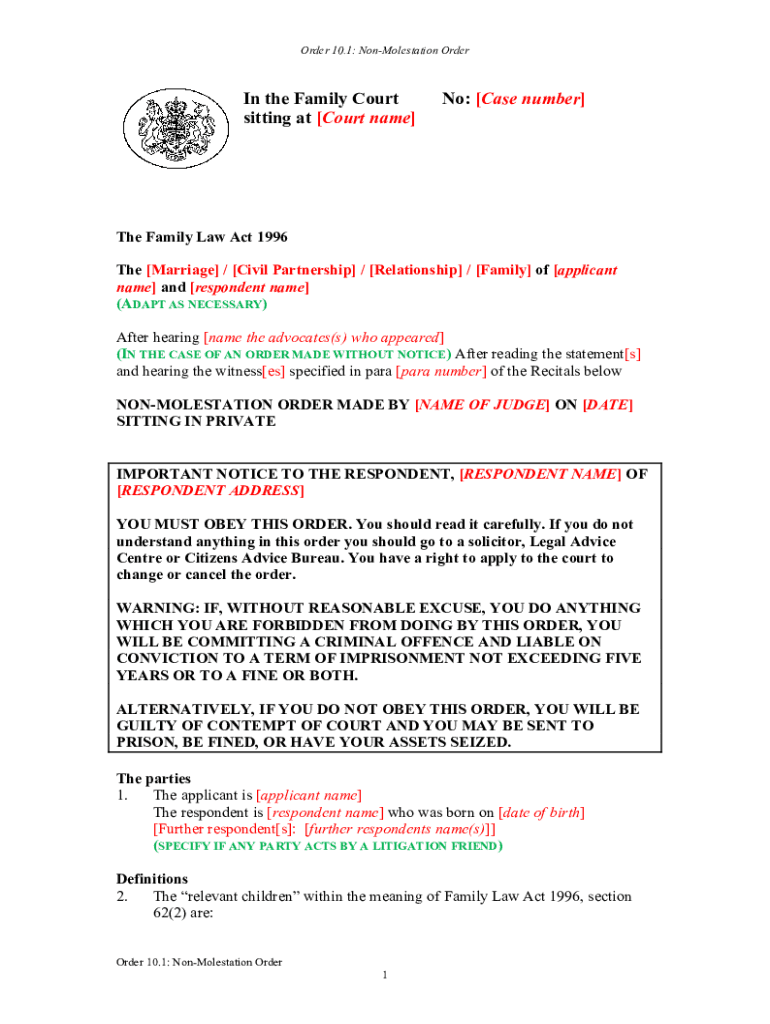
The document titled "judiciary ukwp-contentuploadsIn the Family Court No: Case number sitting at Court name" refers to a specific type of legal form used within the UK family court system. This form serves various purposes, including documenting court proceedings, issuing orders, and detailing case information. It plays a crucial role in maintaining legal clarity and providing an official record of the court's decisions.
- Purpose: The primary function of this form is to record essential details about a specific family court case, ensuring that all parties involved have a clear understanding of the proceedings and outcomes.
- Components: The form typically includes elements such as case numbers, court names, and details of the parties involved, which are vital for the accurate documentation and management of court cases.
- Utility: Lawyers, judges, and court officials use this document to facilitate legal processes, ensuring that each case is handled with due diligence and in accordance with the law.
How to Use the Form
To use the "judiciary ukwp-contentuploadsIn the Family Court No: Case number sitting at Court name" form effectively, individuals must understand its structure and purpose. Here are critical steps for its utilization:
- Identify the Appropriate Form: Since each form serves a unique function, ensure that this specific form is suited for your case type, whether it involves custody, divorce, or child protection.
- Gather Necessary Information: Collect all required details, including case numbers, participant names, and relevant dates, to fill out the form accurately.
- Complete the Form: Follow the instructions provided on the document, ensuring every section is filled out thoroughly. This may require the assistance of legal counsel to avoid errors.
- Submission: Submit the completed form to the designated family court, ensuring that all procedural requirements are met for acceptance.
How to Obtain the Form
Securing a copy of the "judiciary ukwp-contentuploadsIn the Family Court No: Case number sitting at Court name" form can be achieved through multiple channels:
- Court Website: Many court systems provide downloadable forms on their official websites, making it easy for parties to access the necessary documents.
- In-Person Requests: Visit the local family court office to request a physical copy of the form, where staff can also assist with any questions regarding its completion.
- Legal Counsel: Lawyers specializing in family law can provide and help fill out the form as part of their service, offering additional guidance through the legal process.
Steps to Complete the Form
Filling out the "judiciary ukwp-contentuploadsIn the Family Court No: Case number sitting at Court name" involves several detailed steps:
- Read Instructions Carefully: Each form comes with specific guidelines to ensure accurate completion.
- Fill Out Personal Information: Include accurate details about yourself and the other party involved to avoid any misidentification.
- Provide Case Details: Enter the case number and court name, as these specifics identify your case uniquely to the court system.
- Review and Edit: Before submission, carefully review all entries for accuracy and completeness, making any necessary corrections.
- Signatures: Ensure that all required signatures are in place, as unsigned forms are typically considered invalid.
Key Elements of the Form
Understanding the critical components of this family court form is essential for both legal professionals and individuals navigating the family court system:
- Case Number: This unique identifier links all actions and documents to your specific court case, streamlining administrative processes.
- Court Name: Ensures that the form is directed to and processed by the correct judicial authority.
- Participant Information: Captures all relevant details about the parties involved, facilitating effective communication and legal processing.
Legal Use of the Form
The legal application of this form is governed by family law provisions, and it must be used correctly to be valid:
- Compliance: Ensure alignment with legal requirements specific to family law and procedural standards. Improper use can result in delays or dismissals.
- Court Proceedings: This form acts as a crucial document for a range of family court matters, such as custody hearings and divorce settlements, aiding in the protection and enforcement of legal rights.
Important Terms Related to the Form
Familiarizing oneself with pertinent legal terminology can demystify the purpose and use of this form:
- Applicant: The individual or entity initiating the court action or request.
- Respondent: The party responding to the court action or request.
- Non-Molestation Order: An order designed to prevent harassment and protect individuals from domestic violence, often linked with the forms issued by family courts.
Examples of Using the Form
Several scenarios highlight the practical use of the "judiciary ukwp-contentuploadsIn the Family Court No: Case number sitting at Court name" form:
- Child Custody Case: Parents involved in a custody dispute may use this form to document court-ordered visitation rights and responsibilities.
- Divorce Proceedings: Parties can record and submit agreements or disputes related to asset division, enforcing legal frameworks for marital dissolution.
- Protection Orders: This form may be used to establish non-molestation or restraining orders, protecting vulnerable parties from harassment or abuse.




