






Definition & Meaning
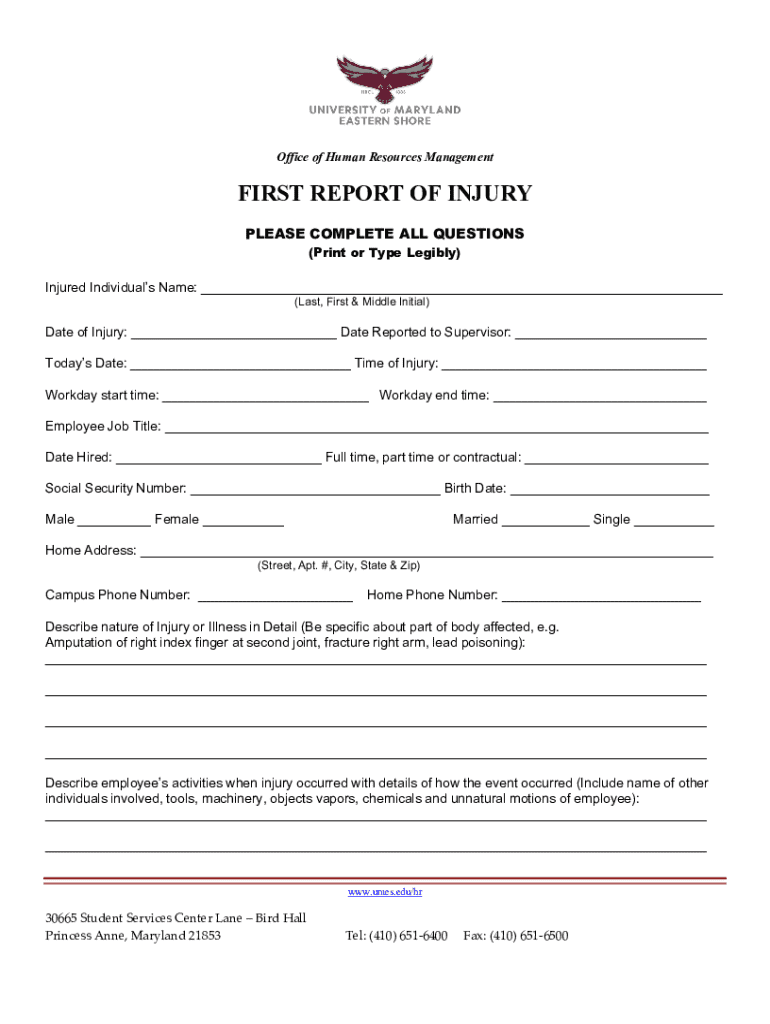
The First Report of Injury (FROI) is a pivotal document in the workers' compensation process, primarily used to officially notify an employer or their insurance carrier about a workplace injury or occupational disease. This document is essential to both the injured employee and the employer, as it initiates the formal claim process and ensures that there is a recorded account of the incident. Typically, it includes personal information about the employee, details of the injury, the circumstances leading up to the event, and any treatments received. The form serves as a foundational piece of documentation that may be referred to during legal proceedings, insurance evaluations, and safety audits.
Key Elements of the First Report of Injury
Several critical components are necessary for the First Report of Injury to be effective and comprehensive:
-
Personal Information: This section captures the basic personal details of the injured worker, including full name, address, employment position, and contact information. These details help identify the individual for both internal record-keeping and insurance purposes.
-
Incident Description: A detailed account of the injury or illness occurrence is required. This includes the date, time, and exact location of the incident. Describing the circumstances, such as the work being performed and any machinery or equipment involved, is crucial.
-
Injury Details: This involves specifying the type of injury or illness, the affected body part(s), and the initial diagnosis. It's important to note whether safety equipment was used and if it potentially played a role in mitigating the injury.
-
Medical Treatment: Information about the healthcare services provided to the employee, including the name of the facility, medical practitioner, and an outline of treatment received, is vital. Documentation of any follow-up care recommendations should also be included.
-
Witness Accounts: The form provides space to note any witness reports or contact information for employees who observed the incident. This corroborates the account of the event and supports the integrity of the claim.
Steps to Complete the First Report of Injury
Submitting a First Report of Injury correctly involves several methodical steps:
-
Gather Necessary Information: Before filling out the form, collect all relevant details pertaining to the incident, such as employee information, injury specifics, and any witness statements.
-
Fill Out the Form Accurately: Use legible handwriting or type the information, ensuring all sections are completed thoroughly. Avoid leaving any gaps, as missing information might delay the claim process.
-
Verify the Information: Double-check the entries for accuracy and completeness. Ensuring that names, dates, and descriptions are correct can prevent delays in processing.
-
Submit the Form: Depending on the employer's or insurance provider's preference, submit the form either online, by mail, or in-person. Confirm receipt to ensure it has been officially filed.
-
Retain Copies for Records: Keep a copy of the form and any associated documents for personal records and future reference, as this may be necessary for continued claims processing and potential legal proceedings.
Legal Use of the First Report of Injury
The First Report of Injury is not merely a routine formality; it holds significant legal importance. Filing this document promptly and accurately can impact the success of a workers' compensation claim:
-
Statute of Limitations: Most states enforce strict deadlines for the initial filing of a First Report of Injury. Failing to meet these deadlines can jeopardize the employee's right to benefits.
-
Employer Compliance: Employers are legally obligated to report any workplace injuries to their insurance provider via the FROI. Non-compliance or delayed reporting can result in penalties and affect the legitimacy of the employer's safety protocols.
-
Insurance Evaluation: The FROI serves as the primary source of information for insurance adjusters when evaluating claims. Discrepancies or incomplete forms can lead to claim denial or disputes.
Who Typically Uses the First Report of Injury
The use of the First Report of Injury form is widespread across various stakeholders involved in workplace injury management:
-
Injured Employees: These individuals use the FROI to ensure their injury is officially recognized and to initiate the workers' compensation claim process.
-
Employers: Employers fill out and submit the form as part of their duty to report workplace incidents to the relevant insurance companies or state workers' compensation boards.
-
HR and Safety Officers: These professionals often play a key role in compiling and submitting the form, ensuring compliance with internal and legal protocols.
-
Insurance Companies: They rely on the detailed information provided to assess claims and determine the scope of coverage and benefits.


State-Specific Rules for the First Report of Injury
Each state in the U.S. has variations in their requirements related to the First Report of Injury:
-
Filing Deadlines: Some states mandate filing within a few days of the incident, while others may provide a longer grace period.
-
Form Variants: Although the core elements remain similar, specific states may have distinct forms with additional fields or state-specific sections.
-
Submission Methods: Certain states might mandate electronic submission, while others accept paper forms. It's crucial for employers to be aware of their state's specific protocols.
-
Additional Documentation: States may require supplementary forms or documentation in conjunction with the FROI for a claim to be fully processed.
How to Obtain the First Report of Injury
Obtaining the First Report of Injury form is typically straightforward:
-
Employer's HR Department: Often, the first point of contact is the employer’s Human Resources department, which can provide the necessary documentation.
-
State Workers' Compensation Website: Many states offer downloadable versions of the FROI through their dedicated workers' compensation portals.
-
Insurance Provider: Insurance companies that handle workers' compensation often supply their insured employers with copies of the form as part of their service offerings.
-
Online Forms and Platforms: Various online document platforms such as DocHub offer templates, allowing users to fill out, manage, and submit the form electronically.
Penalties for Non-Compliance
Failing to comply with the requirements for filing the First Report of Injury can carry several repercussions:
-
For Employees: Not filing within the state-mandated timeframe may lead to forfeiture of the right to workers' compensation benefits.
-
For Employers: Non-compliance can result in fines and penalties. Additionally, employers may face higher insurance premiums and damage to their reputation.
-
Legal Consequences: Repeated violations or significant delays might attract legal scrutiny, impacting the company’s operational license and increasing liability risks.
In ensuring adherence to these compliance rules, stakeholders not only protect their interests but also uphold workplace safety standards and foster a culture of accountability.