CREDITOR LIST 07 1009-2026

Get Form
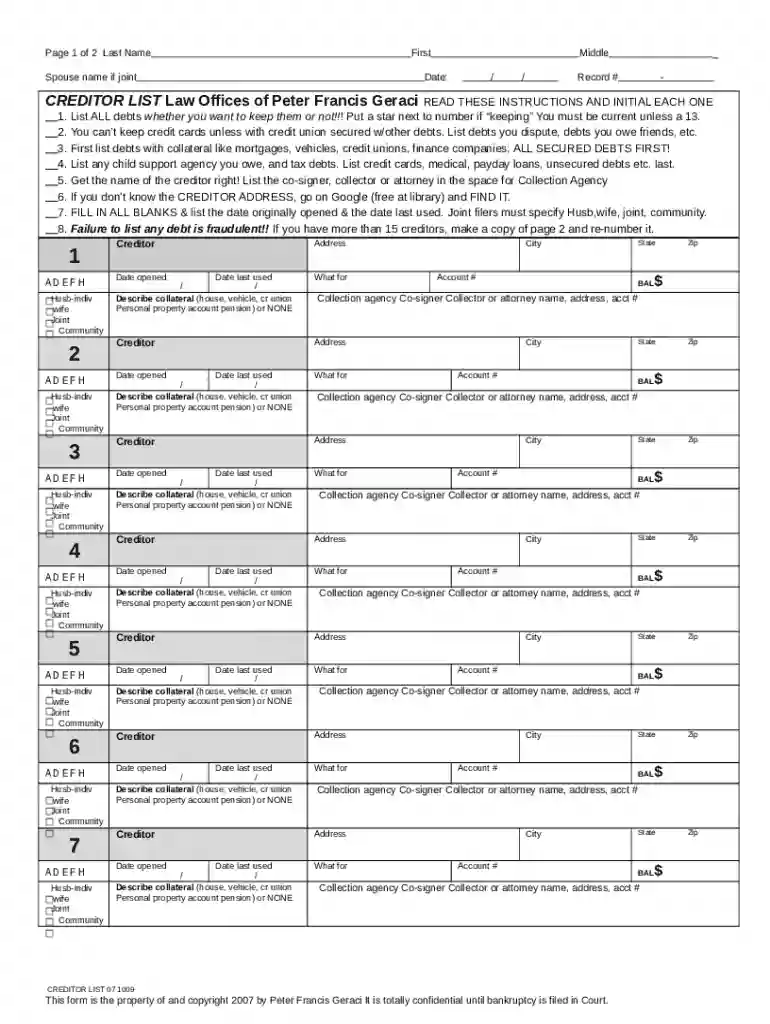
CREDITOR LIST 07 1009 Preview on Page 1

Here's how it works

01. Edit your form online
Type text, add images, blackout confidential details, add comments, highlights and more.

02. Sign it in a few clicks
Draw your signature, type it, upload its image, or use your mobile device as a signature pad.

03. Share your form with others
Send it via email, link, or fax. You can also download it, export it or print it out.

Definition & Meaning

The "CREDITOR LIST 07 1009" is a crucial document used in the bankruptcy process, primarily in the United States. This form is designed to detail all creditors to whom the individual filing for bankruptcy owes money. It incorporates both secured and unsecured debts, offering a comprehensive view of the financial obligations. By listing each creditor, the debtor ensures transparency and accuracy, which are vital for the successful processing of a bankruptcy case. The document requires specific information such as creditor names, addresses, account numbers, and the nature of the debts owed.

Key Elements of the CREDITOR LIST 07 1009

Several components are essential when completing the "CREDITOR LIST 07 1009". These include:

  • Creditor Information: List the names and addresses of all creditors, including any collection agencies or attorneys representing them.
  • Account Details: Provide the account numbers or unique identifiers associated with each debt obligation.
  • Debt Type: Specify whether the debt is secured or unsecured, and if secured, include descriptions of any collateral involved.
  • Joint Debts: Identify any debts that are jointly held with another party, offering clarification on shared financial responsibilities.
  • Disputed Debts: Highlight any debts that are under dispute, providing a detailed explanation of the nature of the disagreement.

Thorough completion of these elements ensures the creditor list reflects an accurate depiction of financial obligations.

How to Obtain the CREDITOR LIST 07 1009

To acquire the "CREDITOR LIST 07 1009", individuals usually need to contact their legal representative or the clerk's office of the bankruptcy court where they plan to file. Some online legal service platforms might also provide access to this form, especially if they assist with bankruptcy filings. It is essential to ensure the form is the latest version to comply with court requirements. Proper documentation and guidance from a legal expert are often recommended during this phase to avoid errors and compliance issues.

Steps to Complete the CREDITOR LIST 07 1009

Completing the "CREDITOR LIST 07 1009" involves several detailed steps:

  1. Gather Information: Collect all necessary information regarding creditors, including names, addresses, and amounts owed.
  2. Verify Entries: Double-check all entries for accuracy and completeness, ensuring no creditors are omitted.
  3. Categorize Debts: Organize debts into secured and unsecured categories, adding details like collateral where applicable.
  4. List Joint Debts: Identify any joint debts and specify the relationship with co-debtors, whether family or business partners.
  5. Review and Revise: Have a legal professional review the completed form to ensure it meets all legal standards and requirements.

Each step requires careful attention to detail to facilitate a smooth bankruptcy filing process.

Why Should You Use the CREDITOR LIST 07 1009

Using the "CREDITOR LIST 07 1009" is crucial for those filing for bankruptcy because:

  • Ensures Accuracy: It helps in accurately capturing all financial obligations.
  • Legal Requirement: The form is a mandatory requirement for legal bankruptcy proceedings.
  • Prevents Errors: Properly listing all debts prevents potential delays or rejections in your bankruptcy application.
  • Clarifies Financial Status: Provides a clear picture of the debtor’s financial commitments, aiding legal and financial advisors in offering better guidance.

This list is not only a regulatory formality but a critical tool in ensuring clarity and avoiding future financial disputes.

Legal Use of the CREDITOR LIST 07 1009

Legally, the "CREDITOR LIST 07 1009" is utilized during bankruptcy proceedings to:

  • Disclose Debts: Serve as an official record of all creditors to the court.
  • Aid Trustees: Assist the court-appointed trustee in determining the validity and classification of the debtor's liabilities.
  • Court Compliance: Fulfill legal obligations by ensuring no creditor is overlooked, thereby protecting the rights of both debtor and creditor.
  • Facilitate Proceedings: Expedite the bankruptcy process by offering a structured and transparent debt list.

Non-adherence to the proper use and completion of this form can result in legal challenges and delays in bankruptcy discharge.

Who Typically Uses the CREDITOR LIST 07 1009

Typically, the "CREDITOR LIST 07 1009" is used by:

  • Individuals: People filing for personal bankruptcy under Chapter 7 or Chapter 13.
  • Business Owners: Entrepreneurs initiating bankruptcy for business entities like LLCs or corporations.
  • Legal Representatives: Attorneys assisting clients through the bankruptcy filing process.
  • Bankruptcy Trustees: Officials who oversee the administration of bankruptcy cases and require comprehensive creditor information.

Understanding the user base is essential for tailoring the form completion process and ensuring every necessary detail is captured accurately.


decoration image ratings of Dochub

Penalties for Non-Compliance

Non-compliance with the "CREDITOR LIST 07 1009" can lead to:

  • Dismissal of Case: Failure to provide a comprehensive creditor list might result in the dismissal of the bankruptcy case.
  • Legal Repercussions: There could be legal and financial penalties for inaccuracies or omissions, including charges of fraud.
  • Delayed Proceedings: Incomplete or incorrect forms can cause significant delays in the bankruptcy process.
  • Denial of Discharge: In some cases, failure to list all creditors or obligations may lead to the denial of debt discharge, prolonging financial recovery.

Properly completing this form is crucial to avoid these severe consequences and ensure a smooth bankruptcy procedure.

be ready to get more

Complete this form in 5 minutes or less

Get form

Got questions?

We have answers to the most popular questions from our customers. If you can't find an answer to your question, please contact us.
Contact us
You can check your credit file to find out who you owe money to. It will show if you have any defaults, County Court judgments (CCJs) or decrees. This is the first step in dealing with your debt problems.
The original creditor is the company that gave you the loan or credit. An original creditor may attempt to collect a past due debt or account itself, or it may hire a debt collector. A debt collector is generally a third party who has been contracted to collect your debt or account.
Identify who your creditors are, including suppliers, lenders, and other third parties Make a list of everyone you owe money to, including suppliers, lenders, and other third parties. Check your credit report for any accounts you may have forgotten. Ask your accountant or bookkeeper for a list of creditors if you have one.
The first step is to order a copy of your credit report. Stop by AnnualCreditReport.com to pull a free copy of your report from one of the three major credit bureaus. Now take a look at your report specifically, look at the Creditor Account Information section and the Collection Agency Account Information section.
There are two main ways you can find out which collection agency you owe: Contact the original creditor to ask which collection agency now owns the debt. Check your credit report.

Security and compliance

At DocHub, your data security is our priority. We follow HIPAA, SOC2, GDPR, and other standards, so you can work on your documents with confidence.

Learn more
ccpa2
pci-dss
gdpr-compliance
hipaa
soc-compliance