






Definition and Purpose of a Texas Life Estate Deed
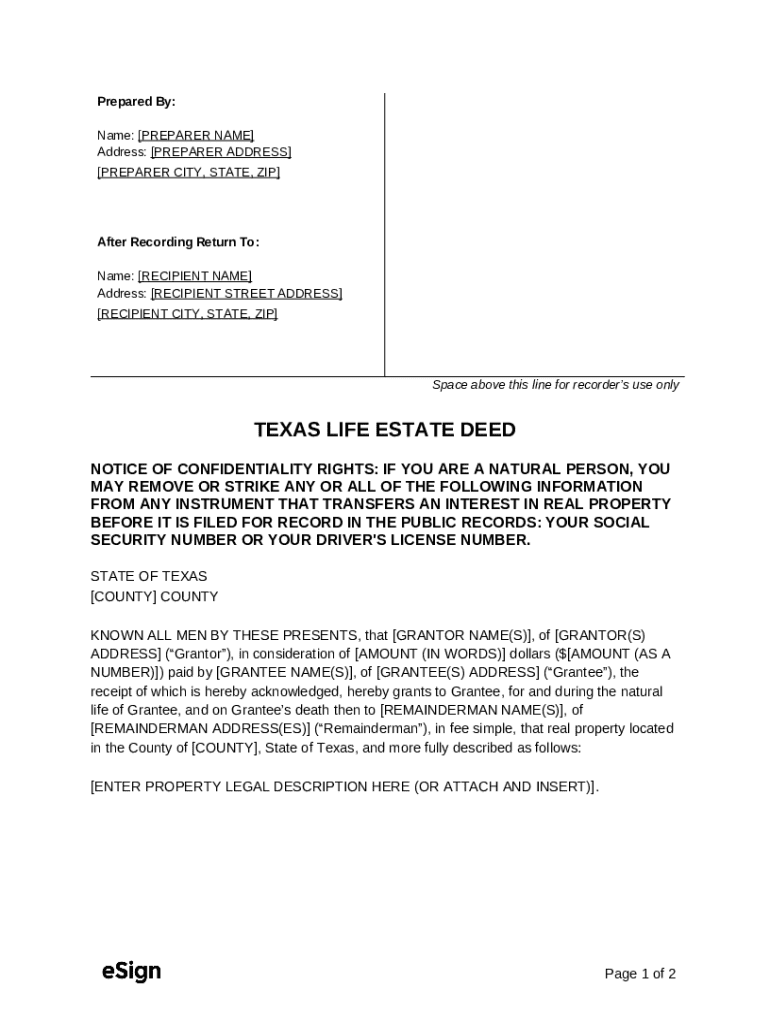
A Texas Life Estate Deed is a legal instrument used to transfer ownership of real property. It allows the Grantor to retain the right to use and benefit from the property for their lifetime (life estate). The remainder interest, or residual ownership, is passed to a designated individual known as the Remainderman upon the Grantor's death.
- Life Estate Interest: The Grantor maintains the right to occupy, use, and derive benefit from the property during their lifetime.
- Remainderman: The designated individual who receives full ownership of the property after the Grantor passes away.
- Transfer of Ownership: Unlike a full transfer, this deed allows for a sequential transfer of interest, providing various advantages for estate planning.
This deed type is often utilized to ease property transfer without the need for probate, securing a streamlined transfer process which protects the interests of both the Grantor and Remainderman.
Steps to Complete a Texas Life Estate Deed
Drafting a Texas Life Estate Deed requires precise attention to legal requirements and accurate information. The following steps outline this process:
-
Identify the Parties Involved: Start by identifying the Grantor, Grantee, and Remainderman. Ensure that these individuals are clearly named in the document.
-
Prepare a Legal Description of the Property: Include a formal description of the property, ensuring this aligns with government records for accuracy.
-
State the Terms: Specify the terms of the life estate, including the life estate interest retained by the Grantor and the remainder interest passing to the Remainderman.
-
Signatures and Witnesses: The document must be signed by the Grantor. Although not always mandatory, having witnesses can provide additional legal validation.
-
Notarization: The deed should be notarized to meet Texas legal standards and to ensure it holds up in legal settings.
-
Recording the Deed: Submit your deed to the County Clerk's office for recording. This step is crucial for the deed to take effect and for protecting against future property disputes.
Engaging a legal professional during this process is recommended to verify compliance with state-specific laws and individual requirements.
Legal Usage and Implications
The Texas Life Estate Deed is a critical tool for property and estate planning. Here are key legal uses and implications:
- Avoidance of Probate: Allows the property to bypass the probate process, facilitating a smoother transition to the designated Remainderman.
- Medicaid Planning: By transferring remainder interest, it can be used strategically in Medicaid planning to reduce property value within the estate.
- Protection from Creditors: The life estate protects the property from creditors’ claims against the Remainderman during the Grantor’s lifetime.
Attorneys often advise using life estate deeds for individuals seeking control over asset distribution, with the caveat that it may affect eligibility for certain benefits.
Key Elements of the Texas Life Estate Deed
Understanding the fundamental elements of a Texas Life Estate Deed is essential for drafting an effective legal document:
- Grantor's Rights: Specifically outlines the rights retained by the Grantor, including property use and income rights during their lifetime.
- Transfer Clauses: Establishes conditions under which the remainder interest transfers to the Remainderman.
- Confidentiality and Execution: Include confidentiality rights, signatures of all involved parties, and notarization instructions to ensure compliance.
Each component ensures the deed is legally sound and protects all parties’ interests.
Why Use a Texas Life Estate Deed
Using a Texas Life Estate Deed offers several advantages:
- Control Over Property: Retains control over the property during life while setting clear terms for future transfer.
- Reduced Tax Burden: Potential tax benefits as the property may retain its homestead exemption, reducing the tax financial liability.
- Legal Assurance: Legal assurances are in place for property transfer to selected beneficiaries with minimal legal hurdles.
Opting for this type of deed can significantly enhance estate planning outcomes while providing peace of mind for property owners and their families.
State-Specific Rules and Considerations
Texas laws govern the creation and utilization of life estate deeds, dictating nuances specific to its jurisdiction:
- Homestead Laws: Must consider Texas homestead laws, which impact how property rights are executed in a family setting.
- Marital Property: Community property laws may require consent or acknowledgment from the Grantor's spouse.
- Legal Requirements: The deed must meet statutory form requirements specific to Texas to be valid and enforceable.
Consulting with a Texas-based real estate attorney ensures compliance with all relevant legal standards and optimizes the deed’s effectiveness.
Important Terms Related to Texas Life Estate Deed
Familiarity with key terms enhances understanding and effective utilization of the Texas Life Estate Deed:
- Grantor: The individual transferring the life estate.
- Grantee/Remainderman: The future property owner upon the Grantor’s death.
- Life Tenant: Another term for the Grantor while they hold the life estate.
- Remainder: The property interest designated to the Remainderman.
Understanding these terms is foundational in drafting, interpreting, and executing a life estate deed.
Software and Digital Options for Texas Life Estate Deeds
Modern technology facilitates the creation and management of Texas Life Estate Deeds:
- Digital Platforms: There are online platforms for drafting deeds with pre-set templates tailored to Texas regulations.
- Document Workflow Software: Utilize software like DocHub for filling, signing, and sharing deeds electronically, enhancing efficiency and security.
- Integration with Other Tools: Integration with tools like Google Workspace streamlines the management and storage of legal deeds.
These innovations optimize the legal document workflow while ensuring secure and legally compliant digital record-keeping.