







Definition and Meaning
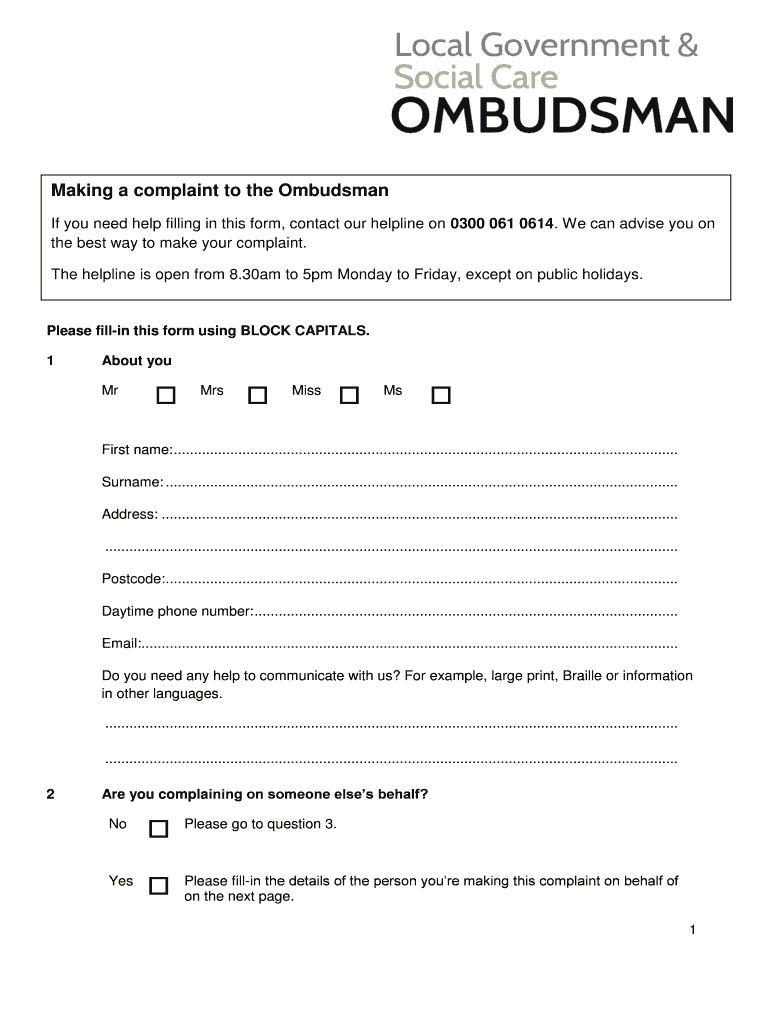
The "Complaint and Consent Form - Local Government and Social" is a crucial document used for filing complaints with local government entities, especially concerning social services. This form is typically utilized when a resident believes that a local government office or social services agency has acted improperly or violated regulations. The form allows individuals to outline their grievances and provide detailed information about the incident in question.
This document is often accompanied by a consent section, which permits the relevant authority to share personal information as part of the complaint investigation process. Understanding the full scope and purpose of this form is essential for effectively navigating local government systems.
How to Use the Complaint and Consent Form
When filing a complaint, users should begin by carefully filling out each section of the form. Start by providing personal information, such as your name, address, and contact details, which helps to identify the complainant and establish a point of contact. Next, detail the nature of the complaint, including specific incidents, dates, times, and any witnesses present.
Include any supporting documentation, such as emails, photographs, or letters, that can substantiate the claim. In the consent section, indicate whether you permit the investigator to access and share your personal information during the inquiry. Users should review all information for completeness and accuracy before submission to avoid delays in processing.
Steps to Complete the Complaint and Consent Form
- Gather Information: Collect all necessary details regarding the complaint, including dates, locations, and involved parties.
- Complete Personal Information: Fill in your contact information accurately to ensure proper record-keeping and communications.
- Document the Complaint: Clearly and precisely describe the incident or issue prompting your complaint.
- Attach Supporting Documents: Include any relevant evidence that supports your claim.
- Consent Section: Decide on consenting to the sharing of your personal information during the complaint process.
- Review and Submit: Double-check all entries for errors or missing information, then submit the form via your preferred method.
Legal Use of the Complaint and Consent Form
This form serves several legal functions within the local government and social services context. It is a formal means of requesting an investigation into alleged misconduct, violations, or service failures. The submission of this form implies cooperation with the investigative process, including possible follow-up interviews or additional document requests. Legal protections may apply, safeguarding the complainant’s rights and maintaining confidentiality when sharing personal information.
Key Elements of the Complaint and Consent Form
- Personal Information: Includes the name, address, and contact information of the complainant.
- Details of Complaint: A narrative section detailing the events, actions, or policies contested.
- Consent Declaration: An option for the complainant to allow investigation-related sharing of personal data.
- Supporting Documentation: Spaces or sections designated for additional evidence like documents or witness lists.
Examples of Using the Complaint and Consent Form
Residents experiencing issues with local housing services might use this form to file a complaint about inadequate living conditions not addressed by the housing authority. Similarly, if a social worker fails to deliver appropriate care or services, affected individuals can detail their grievances using this medium. The form is a pathway to request that interventions or corrective actions be taken by a local body.
Who Typically Uses the Complaint and Consent Form
The primary users are citizens and residents who interact directly with local government or social service agencies. This includes individuals facing challenges with municipal services, such as public housing residents, recipients of social welfare benefits, or those affected by local educational policies. Advocacy groups or legal representatives sometimes assist clients in completing these forms to ensure proper understanding and thorough documentation.


Compliance and Penalties for Non-Compliance
While completing the form is often voluntary, failing to submit a detailed and truthful account can impact the effectiveness of the complaint process. Inaccuracies or falsifications knowingly presented may lead to the complaint being dismissed. Also, withholding consent for necessary information sharing might limit the scope of the investigation and lead to delays in resolving the matter. Users should be aware of voluntary disclosure agreements and adhere to submission deadlines to avoid procedural complications.
Form Submission Methods (Online / Mail / In-Person)
The form can be submitted in multiple ways, offering flexibility to the complainant:
- Online: Most local government websites provide digital submission portals for convenience and efficiency.
- Mail: Paper forms can be mailed to the specified address on the form, ensuring a tangible record of submission.
- In-Person: Delivering the form directly to the local office permits immediate confirmation of receipt and allows for direct queries or assistance.




