Definition and Meaning of Modelo 200
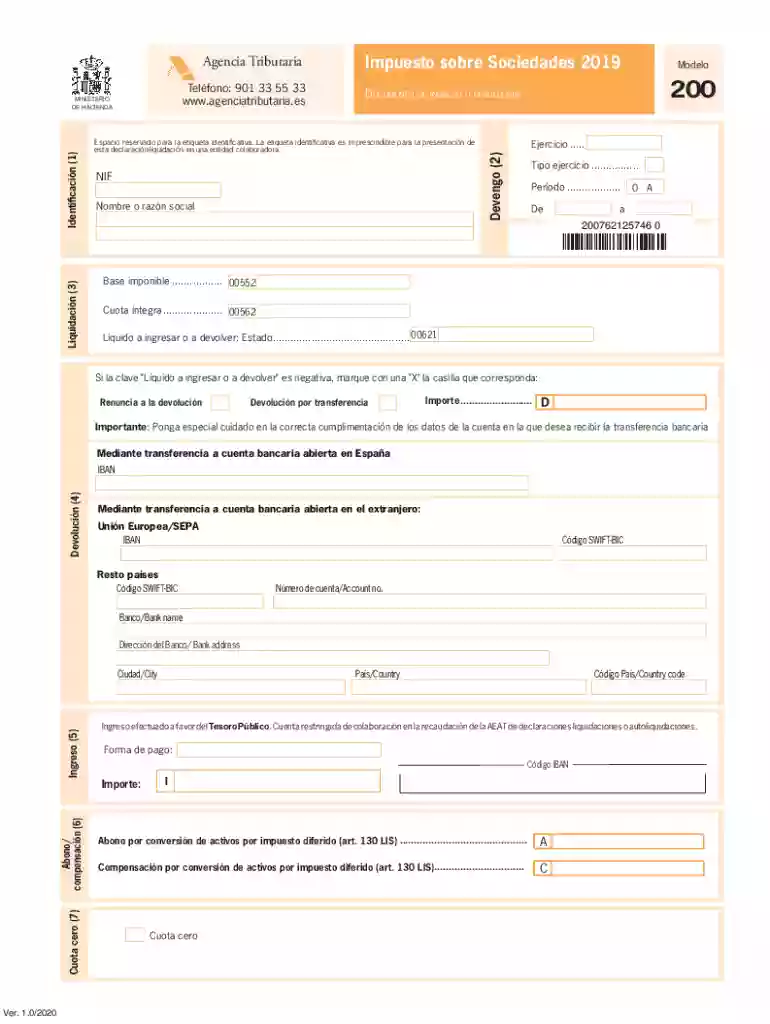
Modelo 200 is a corporate tax form used in Spain for reporting and calculating the Impuesto sobre Sociedades, or corporate tax. It serves as a formal declaration of income, detailing the taxable income a corporation generates within a fiscal year and the taxes owed or refunds expected. This form plays a crucial role in ensuring compliance with Spanish tax obligations for entities engaging in business activities, capturing all relevant financial data across various income streams.
Key Features of Modelo 200
- Corporate Tax Declaration: Establishes the framework for declaring corporate income and tax liabilities.
- Comprehensive Reporting: Captures diverse financial details pertinent to business operations, including revenue streams and eligible deductions.
- 2019 Focus: Specific to the fiscal year 2019, reflecting the business environment and tax regulations of that period.
Steps to Complete the Modelo 200
Completing the Modelo 200 requires careful attention to detail and adherence to a structured process. This includes ensuring accuracy in financial reporting and understanding each section's requirements.
- Gather Financial Information: Collect comprehensive financial documentation, including revenue, expenses, assets, and liabilities.
- Understand Each Section: Familiarize yourself with all parts of the form, including identification, income or refund details, and instructions for accurate completion.
- Calculate Taxable Income: Accurately calculate taxable income by deducting allowable expenses and losses from total revenue.
- Determine Tax Due or Refund: Compute the corporate tax owed or calculate any refund the corporation is eligible to receive.
- Provide Bank Details: If expecting a refund, supply current banking information for a direct bank transfer.
- Review and Finalize: Double-check all entries for accuracy and completeness before submission.
Common Mistakes to Avoid
- Inaccurate Calculations: Ensure all numerical entries are correct to prevent misreporting tax liabilities or refunds.
- Omitting Mandatory Fields: Review each section to ensure no required information has been overlooked.
Importance of Filing Modelo 200
Filing the Modelo 200 is essential for businesses operating legally and transparently within Spain. Accurate submission upholds a company’s legal obligations and ensures correct tax contribution.
- Legal Compliance: Companies must comply with Spanish tax law by submitting accurate and timely tax declarations.
- Financial Accountability: Provides a detailed account of a corporation’s financial activities and tax contributions.
- Avoid Penalties: Correct filing prevents legal penalties and potential audits by tax authorities.
Legal Use of Modelo 200
Modelo 200 carries significant legal implications, ensuring corporations adhere to tax laws. Proper understanding and application help maintain compliance and avoid legal repercussions.
Legal Considerations
- Adherence to Tax Laws: Filing respects legal mandates for corporate tax declaration.
- Protection Against Penalties: Timely and accurate submission prevents hefty fines and legal challenges.
Who Typically Uses the Modelo 200
Modelo 200 is predominantly used by various business entities engaged in commercial activities within Spain. This includes:

Business Entity Types
- Limited Liability Companies (LLCs): Obligated to report their corporate activities for tax purposes.
- Corporations: Utilize the form to declare annual financial activities.
- Partnerships: Required to file if operating under a corporate structure within Spain.
Required Documents for Modelo 200
Filing the Modelo 200 demands a thorough compilation of relevant financial documents, ensuring all information needed for accurate reporting and compliance is available.
Document Checklist
- Financial Statements: Includes income statements, balance sheets, and cash flow statements.
- Tax Identification Number: Essential for proper identification of the reporting entity.
- Banking Information: Necessary for processing tax payments or receiving refunds via bank transfer.
Penalties for Non-Compliance
Failure to file the Modelo 200 correctly or punctually can result in several penalties, significantly impacting corporate operations. Understanding these implications encourages timely compliance.
Types of Penalties
- Financial Fines: Monetary penalties assessed based on the severity of the filing error or delay.
- Increased Scrutiny: Late or inaccurate submissions may trigger audits or additional scrutiny from tax authorities.
- Legal Action: Severe breaches can lead to legal proceedings against the corporation.
Software Compatibility for Completing Modelo 200
Navigating the complexities of Modelo 200 filing can be streamlined through the use of specialized tax software, ensuring accuracy and ease of use.
Compatible Software Options
- TurboTax: While primarily a tool for personal tax returns, adaptations or expert versions can assist corporate filings.
- QuickBooks: Provides financial management tools that help prepare the necessary documentation for tax filing.
- DocHub: For document editing and collaboration; aids in the preparation process through efficient document handling capabilities.
Incorporating these structured elements within the filing process aids compliance, enhances accuracy, and reduces the risk of filing errors.