






Definition & Meaning
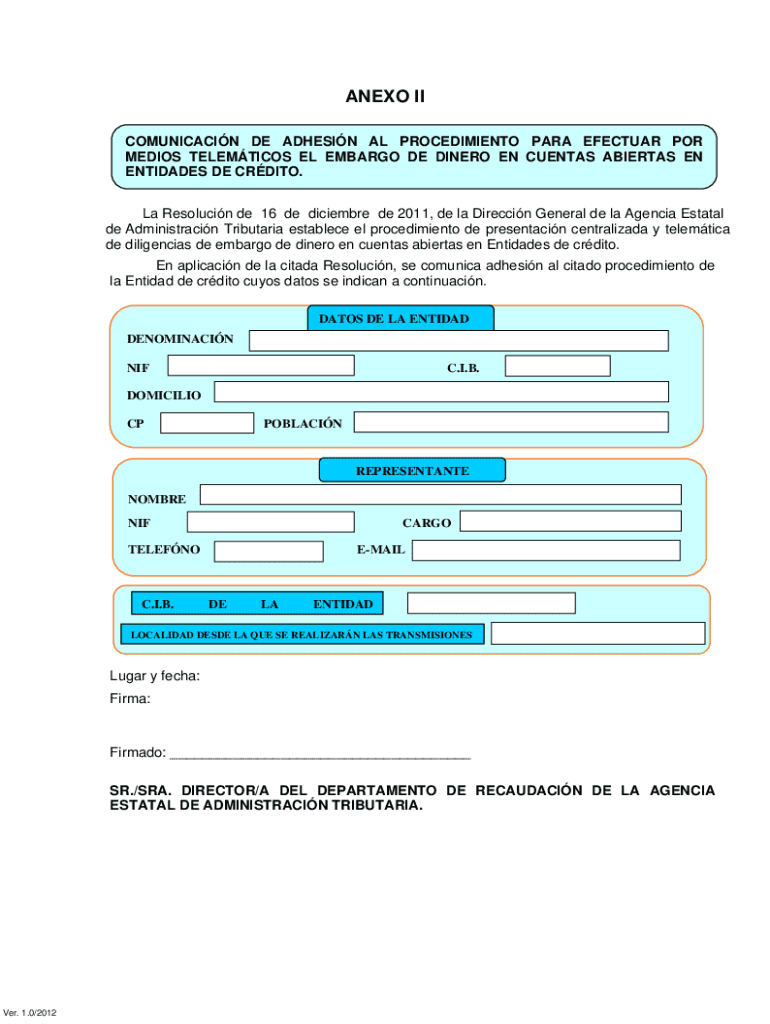
The term "Anexo Ii," meaning "Annex II" in English, commonly refers to supplementary forms or attachments that provide additional details or information required by a primary document. In various contexts, particularly legal or bureaucratic, "Anexo Ii" can be associated with forms that support processes such as tax filings, compliance mandates, or legal declarations. In these scenarios, it typically includes specific information mandated by regulatory authorities to ensure thoroughness and accuracy in documentation.
How to Obtain the Anexo Ii
Obtaining the "Anexo Ii" often involves visiting the official website of the governmental or regulatory body responsible for its issuance. For forms associated with tax or legal compliance in Spain, such as those governed by the Agencia Tributaria, individuals may need to access these through an online portal or request them through specific contact points provided by the agency. Necessary credentials or authorizations might be required, and there could be options to download or request a physical copy by mail.
Steps to Complete the Anexo Ii
-
Identify Required Information: Before filling out the form, gather all necessary details relating to your entity, such as identification numbers, financial data, and representational information.
-
Fill Out Entity Details: Input the specific details about the entity submitting the form, ensuring accuracy in names, addresses, and registration numbers.
-
Provide Representative Information: Include data about the legal representative involved, such as name, contact information, and authorization to act on behalf of the entity.
-
Attach Supporting Documents: Attach any additional required documents, which might include financial statements, legal authorizations, or compliance records.
-
Review and Confirm Accuracy: Double-check all entered information for accuracy to prevent errors or rejections.
-
Submit the Form: Decide on the submission method—whether online, via mail, or in person—and ensure it reaches the appropriate authority by any deadlines.
Key Elements of the Anexo Ii
-
Entity Identification: Essential information related to the business or individual entity is fundamental, ensuring proper recognition by regulatory bodies.
-
Representative Authorization: Clearly indicates who is authorized to act on behalf of the entity, complete with supporting authorization documents if needed.
-
Legal Compliance Sections: Related to specific legal requirements that the entity must disclose or adhere to, facilitating transparency and adherence.
-
Supplementary Information: Fields that capture additional data relevant to the primary document to ensure that full context and necessary details are provided.
Who Typically Uses the Anexo Ii
"Anexo Ii" is frequently used by entities required to comply with specific legal or regulatory requirements, such as corporations, financial institutions, or individuals involved in legal proceedings. It is particularly relevant for organizations operating within jurisdictions that stipulate detailed reporting for compliance purposes, such as tax submissions or legal declarations. Professionals such as accountants, lawyers, or compliance officers may engage with this form as part of their duties on behalf of their clients or employers.


Legal Use of the Anexo Ii
The legal use of "Anexo Ii" is primarily driven by its role in regulatory compliance. Entities utilize this form to demonstrate adherence to legal or financial regulations, including providing evidence of liability, assets, or any obligations due under law. For instance, in the context of the Spanish Tax Agency, the form could be used to affirm compliance with fiscal responsibilities. Ensuring the accuracy and completeness of the information on these forms is crucial to avoid potential legal repercussions.
Penalties for Non-Compliance
Failure to properly complete or submit the "Anexo Ii" can result in significant penalties, which might include fines, legal action, or revocation of licenses. Depending on the jurisdiction and the governing body involved, neglecting to submit accurate and timely forms may be seen as a breach of legal obligations and can lead to broader scrutiny of a business's operations. Therefore, understanding and fulfilling all related requirements is essential to maintaining good standing with regulatory authorities.
Software Compatibility
For streamlined processing, the "Anexo Ii" often supports digital submissions, making it compatible with various software platforms. Solutions like DocHub, which offer editing and signing capabilities, can be utilized for filling out and submitting forms online. Additionally, accounting or tax software like TurboTax or QuickBooks may assist in generating necessary documentation or computations relevant to completing the form. Ensuring the software's compatibility with the form’s digital specifications is essential for efficient processing.
State-Specific Rules for the Anexo Ii
In cases where "Anexo Ii" applies to regional or state-level regulations, it is essential to consider state-specific rules that might impact the form's preparation or submission. Variations in tax rates, legal requirements, or compliance criteria can necessitate adjustments to the form's content. Entities operating across multiple regions should stay informed on the nuances of each applicable jurisdiction to ensure complete and accurate submission in line with local regulations.