01. Edit your form online
Type text, add images, blackout confidential details, add comments, highlights and more.

Type text, add images, blackout confidential details, add comments, highlights and more.

Draw your signature, type it, upload its image, or use your mobile device as a signature pad.

Send it via email, link, or fax. You can also download it, export it or print it out.
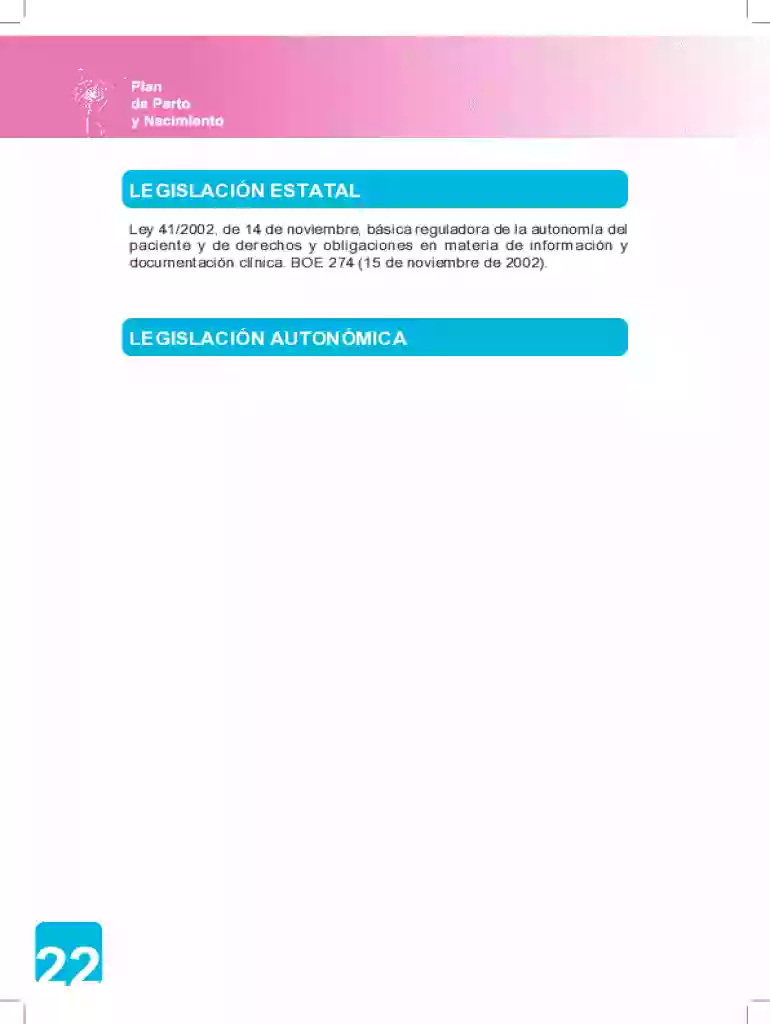
The "Plan de Parto en el Embarazo" is a detailed document that expectant mothers use to outline their preferences and expectations regarding childbirth. This plan serves as a communication tool between the mother-to-be and her healthcare providers, ensuring that all parties are aware of her needs and desires during labor and delivery. The plan can include preferences for pain management, types of interventions, and the support system desired during birth. By conveying specific expectations, the birth plan helps in creating a personalized birthing experience, allowing healthcare professionals to cater effectively to individual needs.
A birth plan itself doesn’t hold legal weight but serves as a guide to inform healthcare providers of your preferences. It is important to communicate the plan clearly and review it with medical staff to ensure mutual understanding. Informed consent laws require that any deviation from the plan due to medical necessity be discussed with the mother or her designated healthcare proxy.
While birth plans are personal documents, certain states may have specific guidelines or requirements for labor and delivery that could impact the plan. It is advisable to research state laws and hospital policies regarding procedures such as mandatory newborn screenings or infant care practices.
Primarily, expectant mothers create birth plans. However, their partners, family members, doulas, and healthcare providers are also critical in implementing these plans. Each plays a role in supporting the mother’s choices and ensuring the birthing process aligns with her written preferences whenever possible.
While the classic birth plan remains popular, digital tools and applications now allow for interactive templates and form submissions. These newer forms can integrate real-time updates and allow easy sharing with multiple parties involved in the birthing process.
At DocHub, your data security is our priority. We follow HIPAA, SOC2, GDPR, and other standards, so you can work on your documents with confidence.