Definition & Meaning
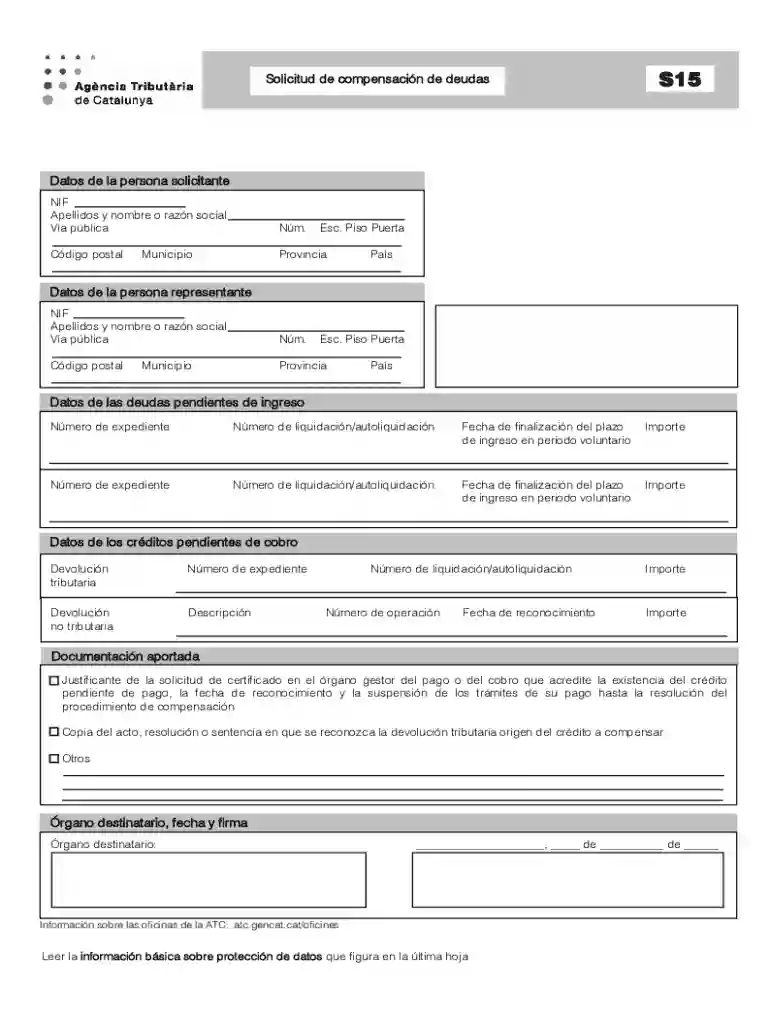
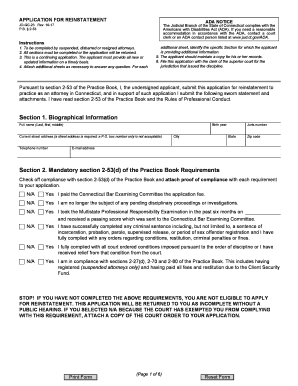
The "Solicitud De Compensación De Deudas" is a formal request form used for debt compensation. This form allows individuals or entities to offset outstanding debts with credits they may have, streamlining financial obligations. Originating from certain tax authorities, especially relevant to the Agencia Tributaria de Cataluña, it ensures taxpayers can efficiently manage their fiscal responsibilities by matching owed debts against potential credits, ultimately reducing the amounts payable. The form encompasses various sections requiring detailed inputs such as personal data, debt specifics, and documentation verification.
How to Use the Solicitud De Compensación De Deudas
To accurately complete the "Solicitud De Compensación De Deudas," follow a structured approach:
- Gather all necessary documents, including debt details and available credits.
- Fill in personal information, ensuring accuracy to avoid processing delays.
- Complete sections detailing the debts to be compensated, aligning with the exact amounts and creditors.
- Include relevant documentation as evidence for any credits claimed.
- Review the completed form to ensure all information is correct and comprehensive.
Typical users of this form are individuals with debts, business entities managing multiple financial accounts, and legal or financial advisors filing on behalf of clients.
Important Terms Related to Solicitud De Compensación De Deudas
Understanding key terms within this form is essential for its effective completion:
- Applicant: The individual or entity applying for debt compensation.
- Debt Compensation: The process of offsetting debts against credits.
- Taxes and Credits: Refers to fiscal obligations and entitlements that might be considered for compensation.
- Agencia Tributaria de Cataluña: The taxing authority associated with processing these forms in specific regions.
Being familiar with these terms ensures clarity and alignment with the requirements of the form.
Key Elements of the Solicitud De Compensación De Deudas
The form is made up of several pivotal sections, which must be filled with precision:
- Personal Information: Includes name, address, tax identification number, and contact details.
- Debt Details: Contains specifics about the debts you wish to compensate, such as creditor names and amounts.
- Credits Section: Lists available credits you are applying against the debts, requiring documentation proof.
- Documentation: Supports both debts and credits through relevant paperwork like statements or official notices.
Each section demands attention to detail to ensure the processing of the compensation request is seamless.
Steps to Complete the Solicitud De Compensación De Deudas
Taking a methodical approach can simplify filling out the form:
- Compile Necessary Information: Gather all debts, credits, and personal identification documents.
- Accurate Data Entry: Begin with the personal data section, ensuring all fields are correctly filled out.
- Detail Debts and Credits: Enter precise amounts and creditor information, attaching any supportive documentation.
- Validate All Entries: Double-check information for accuracy to prevent delays.
- Submit the Form: Follow the appropriate submission method—either online, via mail, or in-person to the relevant authority.
Following these steps ensures a comprehensive submission process.
Required Documents
Submitting the "Solicitud De Compensación De Deudas" necessitates providing various documents:
- Proof of Debts: Statements or invoices that demonstrate due amounts.
- Evidence of Credits: Documentation such as tax returns or financial statements verifying entitled credits.
- Identification: Valid ID like a passport or driver's license to confirm identity.
- Authorization: If applicable, power of attorney documents when representatives file on behalf of the applicant.
Collecting and verifying these documents beforehand accelerates the form processing.
Form Submission Methods (Online / Mail / In-Person)
The submission process offers flexibility through several methods:
- Online Submission: Typically allows for faster processing and confirmation; requires access to a secure online portal.
- Mail: Involves sending the completed form and all necessary documents to the specified address, suitable for those who prefer or require physical submission.
- In-Person: Direct submission at a relevant agency's office, beneficial for immediate advice or corrections.
Choosing the appropriate method can depend on personal preference and the urgency of the compensation request.
Eligibility Criteria
Eligibility is contingent upon certain factors:
- Debt and Credit Status: Applicants must have existing debts and corresponding credits that can be validated and offset.
- Taxpayer Type: Primarily available for individuals or registered business entities within the jurisdiction.
- Compliance with Regulations: Ensuring all past filings and obligations have been met, and the applicant is in good standing with tax entities.
Meeting these criteria is essential to process the compensation request effectively and legally.