01. Edit your form online
Type text, add images, blackout confidential details, add comments, highlights and more.

Type text, add images, blackout confidential details, add comments, highlights and more.

Draw your signature, type it, upload its image, or use your mobile device as a signature pad.

Send it via email, link, or fax. You can also download it, export it or print it out.
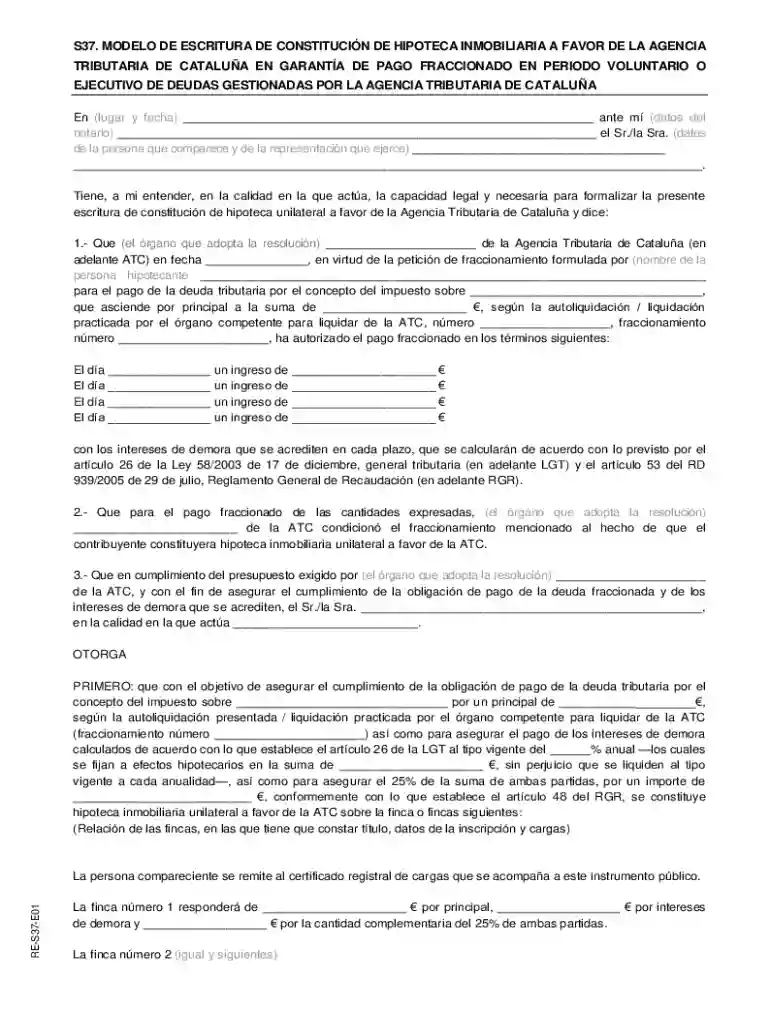
The "Modelo De Escritura De Constitución De Hipoteca Inmobiliaria" is a formal document used primarily to establish a real estate mortgage under Spanish law. This document plays a crucial role in defining the terms and conditions of a mortgage agreement between a debtor and a creditor. It outlines the framework through which the property in question is used as collateral to secure a loan. This ensures the creditor's interest is protected until the debt is fully repaid. Within the context of the United States, understanding such documents can be critical for individuals dealing with international real estate transactions, especially those involving Spanish entities.
Using this document effectively requires a thorough understanding of its components and implications. It is crucial to engage with legal professionals specializing in Spanish and international real estate law to ensure compliance with all legal requirements. This document is typically used during the mortgage negotiation phase to formalize the terms once an agreement is reached.
This document serves as a legally binding contract under the jurisdiction of Spanish law, though principles of mortgaging can be understood internationally. In the U.S., while such specific Spanish terms may not apply directly, the concept remains significant, especially for professionals handling international real estate portfolios. It's advisable for American entities to adjust the document to comply with domestic laws if similar legal instruments are needed.
While the document is specifically related to Spanish law, various states in the U.S. have specific rules regarding real estate and mortgages that may affect its use. Understanding these differences is vital for accurate international dealings, particularly in states with significant Spanish-speaking populations or strong ties to Spanish trade. Legal counsel can provide insights relevant to state-specific regulations regarding such international documents.
This document is mainly used by lenders, borrowers, real estate attorneys, and notaries involved in the execution of property mortgages. It is also utilized by international real estate investors and financial institutions managing global portfolios involving Spanish properties. Understanding this form offers strategic advantages for businesses and individuals engaging in cross-border real estate investments.


At DocHub, your data security is our priority. We follow HIPAA, SOC2, GDPR, and other standards, so you can work on your documents with confidence.