






Definition and Meaning of Devolución de Ingresos Indebidos
The "Devolución de Ingresos Indebidos" refers to the process of claiming a refund from tax authorities for payments made erroneously or in excess. This process ensures that taxpayers are not unduly burdened by overpaid taxes and allows for the rectification of financial transactions within the tax system. Typically, this involves corrections to self-assessments or other declarations that resulted in excess payments to the government. Understanding this process is crucial for taxpayers to safeguard their financial interests and ensure compliance with tax regulations.
How to Use the Devolución de Ingresos Indebidos
To utilize the Devolución de Ingresos Indebidos, taxpayers must follow a structured approach:
-
Identify Errors: Begin by reviewing tax payments to pinpoint any discrepancies or overpayments.
-
Gather Documentation: Assemble necessary records, such as payment receipts and transaction records, to support the claim.
-
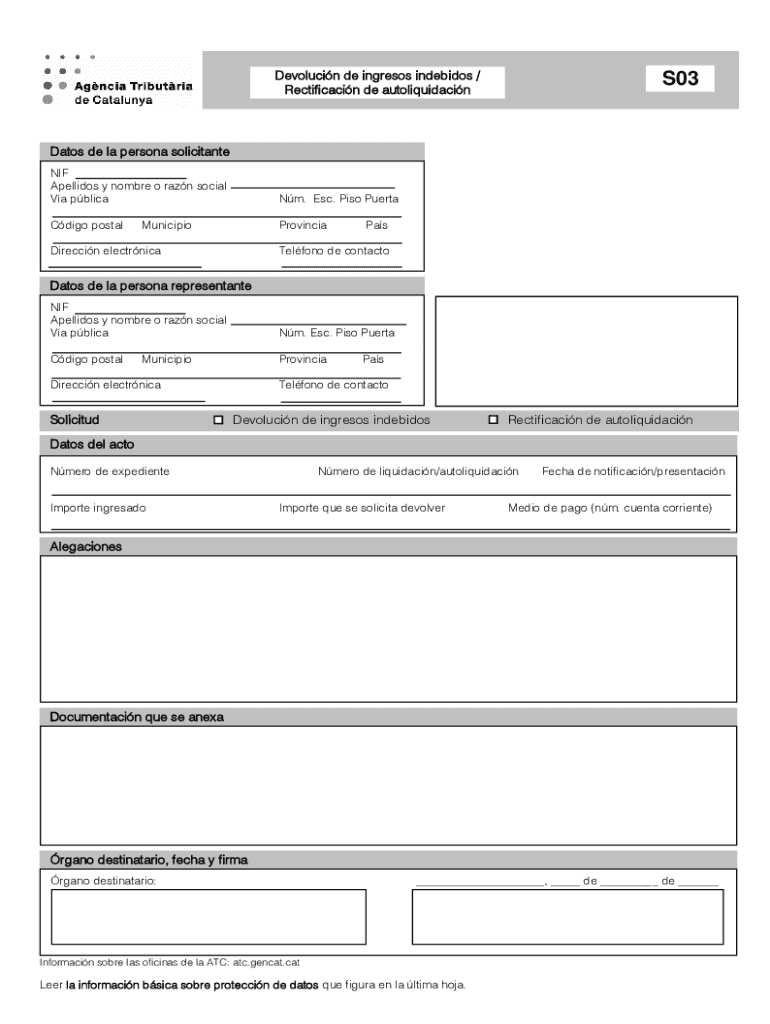
Complete the Form: Fill out the Devolución de Ingresos Indebidos form, detailing the nature of the error and the amount claimed.
-
Submit the Request: Forward the completed form and supporting documents to the relevant tax authority, typically online or via mail.
-
Follow Up: Keep track of the submission status and respond to any requests for further information from the tax authorities.
Using this process ensures a systematic way to recover any undue payments efficiently.
Steps to Complete the Devolución de Ingresos Indebidos
Completing the Devolución de Ingresos Indebidos form requires careful attention:
-
Taxpayer Information: Enter personal details, including full name, tax identification number, and contact information.
-
Details of Overpayment:
- Specify the tax period and type of tax involved.
- Outline the exact amount overpaid and the method of payment used.
-
Reason for Refund: Clearly explain the error or reason for overpayment, referencing any relevant documentation.
-
Supporting Documents: Attach any documents that validate the mistake, such as bank statements or previous tax assessments.
-
Signature and Confirmation: Ensure the form is signed and dated, confirming the accuracy of the information provided.
Adhering to these steps will contribute to a smoother refund process.
Required Documents for Devolución de Ingresos Indebidos
When preparing a claim for Devolución de Ingresos Indebidos, several key documents are required:
- Proof of Payment: Receipts or bank statements showing the payment made to the tax authority.
- Identification Documents: A copy of a government-issued ID or tax identification card.
- Previous Tax Returns: Copies of any relevant tax returns that demonstrate where the error occurred.
- Correspondence with Authorities: Any past communication with tax officials addressing the issue.
Including these documents strengthens the claim and demonstrates transparency.
Legal Use of the Devolución de Ingresos Indebidos
The legal framework for Devolución de Ingresos Indebidos involves:
- Tax Code Compliance: Ensuring any refund claims adhere to the statutes outlined in the applicable tax codes.
- Responsibility of Proof: The onus is on the taxpayer to demonstrate that an overpayment occurred and substantiate any claims with evidence.
- Time Limits: Recognize the limit within which claims must be filed to prevent forfeiture of rights to a refund.
Understanding these legal parameters supports a rightful and timely claim.
Penalties for Non-Compliance in Claiming Devolución de Ingresos Indebidos
Failure to comply with procedures for claiming Devolución de Ingresos Indebidos may lead to:
- Denial of Refund: Incomplete or incorrect submissions could result in claim rejection.
- Interest and Penalties: Continued errors without rectification may attract penalties or interest charges.
- Legal Action: Prolonged non-compliance might trigger audits or legal consequences from tax authorities.
Compliance with the submission process and timely rectifications are essential to avoid these penalties.
Who Issues the Devolución de Ingresos Indebidos Form
The form for Devolución de Ingresos Indebidos is typically issued and managed by:
- Federal Tax Authorities: For federal tax overpayments, the U.S. Internal Revenue Service (IRS) is the responsible body.
- State Tax Departments: In cases involving state taxes, the respective state's Department of Revenue will handle claims.
Taxpayers should ensure they are addressing the correct authority based on the type and scope of the tax payment in question.
Filing Methods: Online, Mail, or In-Person
Taxpayers can submit the Devolución de Ingresos Indebidos through various channels:
- Online Submission: Many tax authorities offer digital platforms for filing claims, providing convenience and immediate confirmation.
- Mail: Traditional mail submissions are an option, requiring physical copies of the form and documents.
- In-Person: Some jurisdictions may allow or require personal submission at a tax office, particularly for complex cases.
Selecting the right method depends on personal preference, urgency, and the specific guidelines of the managing authority.