Purchase and sale agreement 2026

Get Form
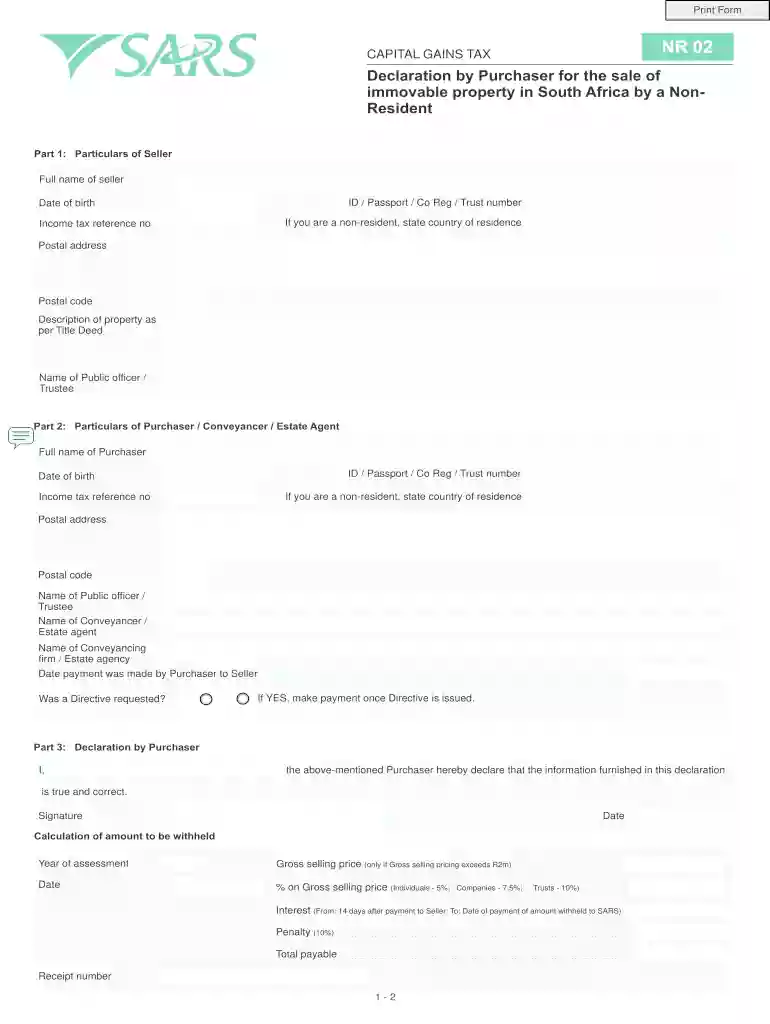
sale of property agreement south africa Preview on Page 1

Here's how it works

01. Edit your sale of property agreement south africa online
Type text, add images, blackout confidential details, add comments, highlights and more.

02. Sign it in a few clicks
Draw your signature, type it, upload its image, or use your mobile device as a signature pad.

03. Share your form with others
Send simple example of propperty purchase agreement south africa via email, link, or fax. You can also download it, export it or print it out.

Understanding the Purchase and Sale Agreement

A purchase and sale agreement is a legally binding document outlining the terms agreed upon by parties involved in a real estate transaction. This agreement ensures both buyers and sellers are on the same page about the conditions of the purchase. Typically, it includes essential details like the property address, final sale price, deposit amounts, and agreed closing date.

Important Terms Related to Purchase and Sale Agreements

When dealing with a purchase and sale agreement, it's crucial to understand these key terms:

  • Earnest Money Deposit: A deposit made by the buyer to demonstrate commitment to purchasing the property. This amount is often held in escrow until closing.
  • Contingencies: Specific conditions that must be met for the transaction to proceed. Common contingencies include financing, inspection, and appraisal conditions.
  • Closing Costs: Fees and expenses outside of the property cost that both buyers and sellers might pay to complete a transaction.

Legal Use and Binding Nature

The legal enforceability of a purchase and sale agreement is based on its comprehensiveness and the clarity of terms. For it to be valid, the agreement must be signed by all parties involved. The document serves as the foundation for legal recourse in the event of a dispute, as it precisely outlines each party's responsibilities and expectations.

Key Elements of Purchase and Sale Agreements

A standard purchase and sale agreement typically contains the following components:

  1. Identification of Parties: Names and information of both the buyer and seller.
  2. Property Description: Detailed description and address of the property.
  3. Sale Price and Payment Terms: The agreed sale price and how it will be financed or paid in full.
  4. Closing Date: Proposed date for the finalization of the sale.
  5. Contingencies and Conditions: Obligations that must be satisfied before the sale proceeds.
  6. Representations and Warranties: Assurances made by the seller regarding the property's condition.

Steps to Complete a Purchase and Sale Agreement

Completing a purchase and sale agreement involves several critical steps:

  1. Negotiation: Both parties agree on terms such as price and closing date.
  2. Drafting and Review: The agreement is drafted, often with legal assistance, and reviewed by both parties for accuracy and fairness.
  3. Signatures: Once both parties agree on the terms, they sign the document to make it legally binding.
  4. Escrow Management: The earnest money deposit is held in an escrow account until closing.
  5. Inspection and Appraisal: The buyer conducts inspections and appraisals as per the contingency terms.
  6. Final Agreement and Closing: If all conditions are met, the sale proceeds to closing, where the title is transferred and payment is finalized.

Who Typically Uses Purchase and Sale Agreements

Purchase and sale agreements are primarily used in real estate transactions between individual buyers and sellers. However, they are also utilized by:

  • Real Estate Agents: To facilitate and document property sales.
  • Attorneys: In providing legal guidance and ensuring compliance with state laws.
  • Investors: When purchasing properties for investment purposes.

State-Specific Rules for Purchase and Sale Agreements

Real estate transactions often vary by state, and understanding local regulations is critical. For instance, some states require specific disclosures about the property’s condition, while others might have particular rules about earnest money or closing procedures. It’s advisable to consult real estate professionals familiar with state-specific requirements.

Examples of Using Purchase and Sale Agreements

Consider a scenario where an individual wants to sell a home. A purchase and sale agreement would document the buyer's offer and any seller concessions. Alternatively, in commercial real estate, such agreements also cover complex factors like zoning and environmental assessments, ensuring a clear understanding of transaction stipulations.

Differences Between Digital and Paper Versions

Modern real estate transactions often use digital purchase and sale agreements. Digital versions offer the convenience of electronic signatures and easier management. Differences include:

  • Efficiency: Faster turnaround for reviews and modifications.
  • Access: Easily accessible from anywhere, accommodating remote transactions.
  • Security: Enhanced protection through digital encryption and audit trails.

Software Compatibility for Managing Agreements

Managing and drafting purchase and sale agreements efficiently can involve utilizing various software solutions:

  • DocHub: Simplifies editing, signing, and sharing documents.
  • DocuSign and Adobe Sign: Popular for electronic signature capabilities.
  • Real Estate Platforms: Such as Zillow, which offer integrated tools for contract management.

Understanding the nuances of a purchase and sale agreement, including its structure and legal implications, is essential for anyone involved in buying or selling property. Comprehensive knowledge ensures a seamless and legally compliant real estate transaction.

be ready to get more

Complete this form in 5 minutes or less

Get form

Got questions?

We have answers to the most popular questions from our customers. If you can't find an answer to your question, please contact us.
Contact us
A PS Agreement is not a final contract. It is signed after the two parties agree to the terms, but before the official closing where ownership changes hands to the buyer. It is not an insurance policy. It is up to the buyer to do due diligence and have the necessary inspections.
A PO is created before there is an agreement between the parties: The buyer sends the PO to the seller, who then has the choice of whether to accept it. With a purchase agreement, the parties have worked out their agreement beforehand, and the purchase agreement is the written expression of that agreement.
A contract of purchase and sale is a legally applicable real estate contract that specifies the terms and conditions under which a property will be transferred from the seller to the buyer. These contracts, often known as sale and purchase agreements, govern the conditions of both parties sales transactions.
A Purchase Agreement is a legally binding document outlining the terms and conditions related to the sale of goods, while a Contract of Sale is a legal contract that details the transfer of ownership of an asset from a seller to a buyer.
An Agreement of Purchase and Sale is a written contract between a seller and a buyer for the purchase and sale of a particular property.

Security and compliance

At DocHub, your data security is our priority. We follow HIPAA, SOC2, GDPR, and other standards, so you can work on your documents with confidence.

Learn more
ccpa2
pci-dss
gdpr-compliance
hipaa
soc-compliance

People also ask

Purchase is a process through which a person gets the ownership of some goods or properties transferred in his name from another, on payment of money. Similarly, sale is a process through which the ownership of some goods or properties is transferred from one person (seller) to another person (buyer), for a price.
A purchase and sale agreement (PSA) may be one of the first legal documents you come across. A PSA is a contract that acts as a kind of preliminary agreement between the buyer and seller about the price and terms of the transaction.
A sales and purchase agreement (SPA) is a legally binding document critical to transactions between buyers and sellers, detailing the terms and conditions agreed upon. Often utilized in real estate, SPAs also extend to various business sectors.

property sales agreement