




01. Edit your form online
Type text, add images, blackout confidential details, add comments, highlights and more.

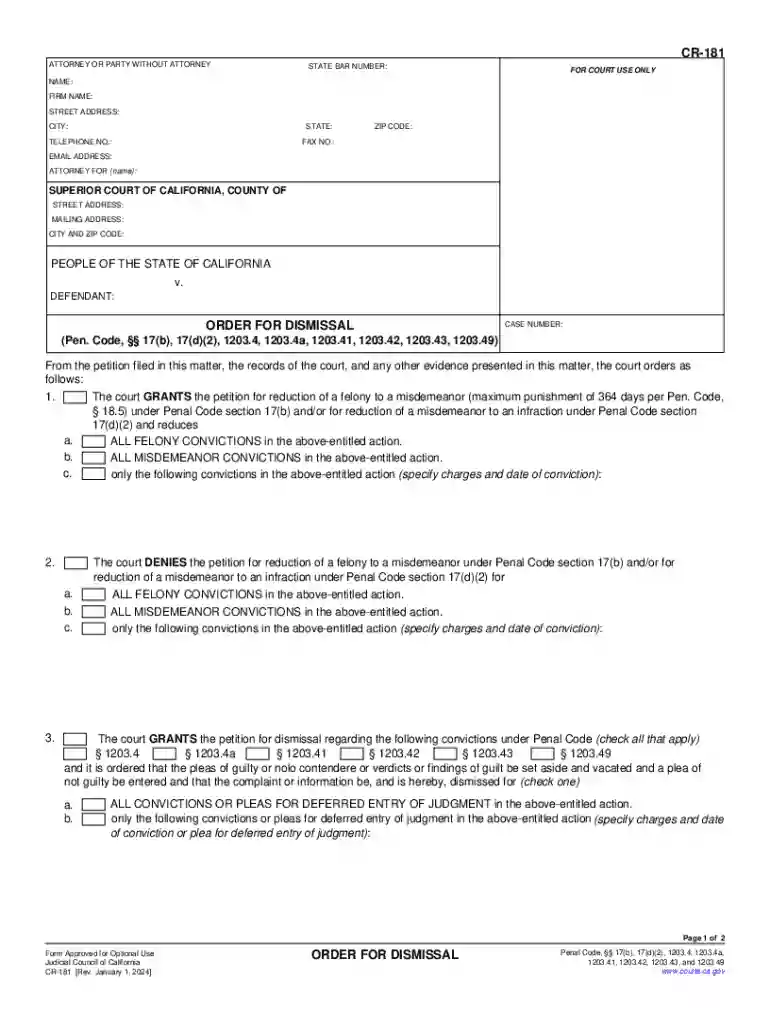
Type text, add images, blackout confidential details, add comments, highlights and more.

Draw your signature, type it, upload its image, or use your mobile device as a signature pad.

Send it via email, link, or fax. You can also download it, export it or print it out.
A Petition for Dismissal, commonly known in some jurisdictions as a form CR-181, is a legal avenue through which individuals who have been convicted of a misdemeanor or felony can request the court to dismiss their conviction. This legal process is primarily aimed at helping individuals move forward with their lives by reducing the legal barriers that their criminal record might impose. Understanding the nuances and requirements of this petition can significantly impact its success, making it crucial to follow detailed instructions accurately.
To properly complete a Petition for Dismissal, follow these detailed steps:
Obtain the Correct Form: Ensure you have the correct version of the CR-181 form, which can typically be sourced from the Superior Court's website or a legal aid organization.
Fill Out Personal Information: Include your name, address, and contact details accurately. This forms the basis of the petition and is essential for identification.
Specify Conviction Details: Clearly state the conviction you wish to be dismissed, including the case number, date of conviction, and the exact charges. Providing precise details ensures transparency and accuracy.
Disclose Required Information: Depending on your case, you may need to disclose additional information such as conditions related to prior cases, if you’re a human trafficking victim, or specifics regarding firearm possession restrictions.
Attach Supporting Documents: Compile and attach any necessary supporting documents, such as proof of completed sentence obligations or character references.
Review and Edit: Carefully review the completed form for any errors or omissions. Accuracy is vital to avoid processing delays.
The petition is predominantly used by individuals who have completed all aspects of their sentence, including probation or parole, and seek to clear their record. This process is beneficial for:


Eligibility to file a Petition for Dismissal can depend on several factors, including but not limited to:
Ensuring all eligibility criteria are met is crucial to filing a successful petition.

Since laws can vary significantly from state to state, it’s essential for the petitioner to be aware of specific rules applicable in their jurisdiction. For example:
Understanding these differences is critical as it can affect whether the dismissal is granted.
Filing a Petition for Dismissal has significant legal implications, including:
Grasping these nuances helps individuals make informed decisions regarding their petition.
When preparing your petition:
Timeliness is crucial when it comes to filing:
Understanding these deadlines ensures that your petition is handled in a timely manner, increasing its chances of approval.
To illustrate, consider the case of an individual in California convicted of a low-level misdemeanor who, after completing their probation, successfully petitioned the court for dismissal. This allowed the individual to secure stable employment despite their past conviction, demonstrating the practical benefits of filing a Petition for Dismissal. Such examples highlight the potential positive outcomes and reinforce the importance of understanding the requirements and processes involved.
We've got more versions of the Instructions for Filling Out a Petition for Dismissal form. Select the right Instructions for Filling Out a Petition for Dismissal version from the list and start editing it straight away!
At DocHub, your data security is our priority. We follow HIPAA, SOC2, GDPR, and other standards, so you can work on your documents with confidence.




Ask the court to reduce or dismiss a criminal conviction in order to minimize the convictions impact on employment and other areas. Get form CR-180.Read more
Jul 22, 2026 Use the internal appeal first. Most service rules give a departmental appeal or revision. Raise the no-material point clearly there. Move theRead more
Nov 17, 2021 To request dismissal for an infraction or misdemeanor, applicants should submit forms CR-180, Petition for Dismissal, and CR-181, Order forRead more


