






Definition and Meaning
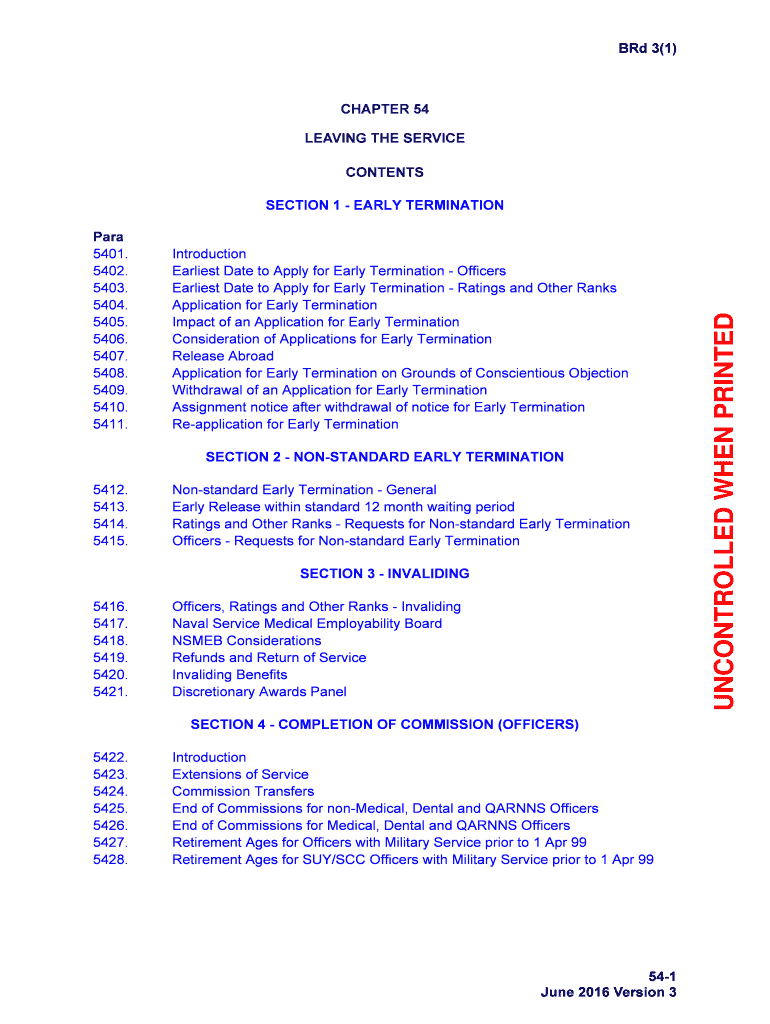
BRd 3(1) Chapter 54 Leaving the Service Contents Section 1 outlines essential procedures and regulations for Royal Navy personnel wishing to leave service. These procedures include early termination, resignations, and various discharge types. It provides a structured format for understanding eligibility, application processes, and the effects on service commitments. This guide distinguishes between standard and non-standard terminations and addresses medical and administrative discharges.
How to Use the Form
To navigate BRd 3(1) Chapter 54, users need to identify their specific circumstances within the service. The form guides users on how to complete different sections accurately, ensuring that all required information is provided. Users should pay careful attention to the detailed instructions on completing relevant sections, such as those for medical discharge, with an emphasis on providing comprehensive supporting documentation.
Important Terms Related to the Form
- Early Termination: Leaving the service before the fulfillment of a service contract under specific conditions.
- Invaliding: Discharging someone from service due to medical reasons.
- Conscientious Objection: Leaving the service based on moral or ethical beliefs against military service.
- Administrative Discharge: Release from service due to reasons like unsuitability or misconduct.
Steps to Complete the Form
-
Identify the Appropriate Category: Determine whether the departure falls under early termination, invaliding, conscientious objection, or administrative discharge.
-
Gather Necessary Documentation: Collect all relevant documents, such as medical records for medical discharge or letters of intent for resignation.
-
Complete the Relevant Sections: Fill out each section of the form thoroughly, ensuring that all required fields are addressed.
-
Submit the Form: Follow outlined submission procedures, ensuring all documentation is attached.
Eligibility Criteria
Eligibility to use BRd 3(1) Chapter 54 is dependent on specific criteria based on the type of discharge or termination sought. For early termination, personnel must meet particular service duration requirements. For medical discharges, certification by a medical board is essential. Each discharge type has distinct eligibility criteria reflecting the nature of the departure.


Key Elements of the Form
- Service Commitment: Details about the length of the contract and time served.
- Discharge Type: Identifies the classification of the departure.
- Supporting Documentation: Highlights necessary documents to accompany the form.
- Approval Authority: Specifies who within the chain of command must approve the request.
Examples of Using the Form
An officer may use the form to resign due to personal reasons, supplying additional documentation to the resignation section. A sailor seeking medical discharge would emphasize detailed medical evaluations, showcasing how health impacts service capabilities. Each scenario requires tailored completion based on individual circumstances and supporting facts.
Legal Use of the Form
Legal use of BRd 3(1) Chapter 54 ensures that the departure process adheres to military regulations and contractual obligations. Proper use of the form helps avoid legal repercussions and ensures a clear, documented exit strategy. The completion of the form in accordance with military legal standards upholds the integrity and structure of naval operations.
Versions or Alternatives to the Form
There may be alternative versions or amendments to BRd 3(1) that refine procedures or update regulations to reflect new policies. Personnel should verify they have the most current form version or note alternatives that might be applicable based on changes in service regulations or personal circumstances.
State-Specific Rules for the Form
While the document primarily caters to Royal Navy personnel, users in U.S.-centric environments need to ensure language, legal requirements, and process alignments meet federal standards relevant to armed services. This requires understanding jurisdictional differences and maintaining compliance with both UK and U.S. military service regulations where applicable.