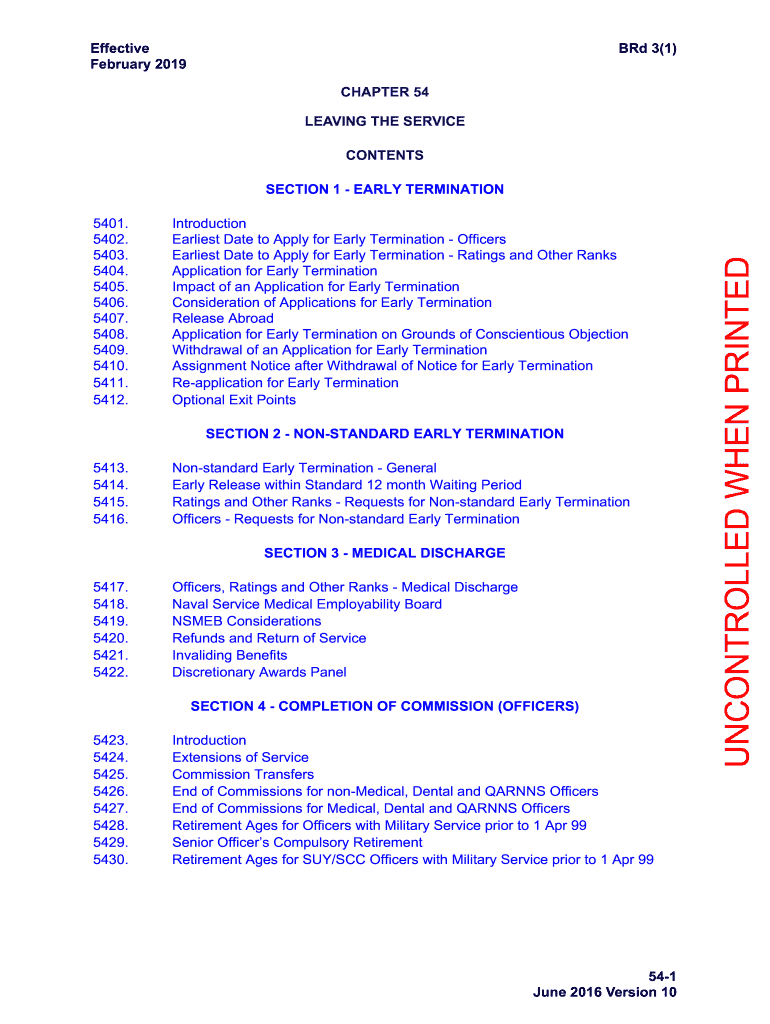







Definition and Purpose of Chapter 54 - Royal Navy
Chapter 54 of the Royal Navy's documentation provides comprehensive guidelines on the procedures and regulations for service personnel leaving the Royal Navy. This chapter outlines the various types of discharges, including early termination, medical discharge, and resignation by officers. Additionally, it explains the administrative discharges applicable to different scenarios within the service. The intention of Chapter 54 is to inform personnel of their rights, responsibilities, and the implications of leaving the service, covering issues like pay, pensions, and reserve liability.
Key Discharge Types
- Early Termination: Allows service personnel to leave before their engagement period ends under certain conditions.
- Medical Discharge: Reserved for personnel deemed medically unfit to continue service.
- Resignation by Officers: Details the formal process officers must follow if they choose to leave voluntarily.
- Administrative Discharges: Covers discharges not classified under early termination or medical, often involving specific administrative protocols.
The chapter's goal is to ensure a clear understanding of exit procedures, protecting both the interests of the Royal Navy and the departing personnel.
How to Obtain the Chapter 54 - Royal Navy
Personnel seeking access to Chapter 54 - Royal Navy can retrieve it through several official channels. Typically, it is available within the Royal Navy’s internal documentation systems, where service members have designated access based on their rank and role. Navy administration offices also provide assistance and guidance on accessing specific sections or the entire chapter when necessary. For personnel stationed abroad or unable to access physical copies, digital versions may be available through secure military intranets or communication with their administrative headquarters.
For additional access, personnel can request a copy through their commanding officer, who can facilitate the acquisition process through authorized channels. It is important to ensure compliance with any security measures in place to protect sensitive information.
Steps to Complete Formalities Under Chapter 54 - Royal Navy
Navigating the exit process as outlined in Chapter 54 requires adherence to a structured set of steps. Here are the general procedures:
- Initial Consultation: Personnel should first seek an interview with their immediate superior or HR representative to discuss intention and begin the discharge process.
- Document Submission: Collect and submit all required documentation, which may include service history, medical records, and any prior correspondence related to the discharge.
- Eligibility Verification: The administration will verify eligibility based on service duration, behavior, health status, and any underlying conditions.
- Formal Application: Complete and submit the formal application form for discharge, detailing the type of discharge sought.
- Exit Interview and Briefing: Attend an exit interview and briefing session to understand the implications for pay, pension, and future liabilities.
- Confirmation of Discharge: Receive official confirmation, which outlines the terms and final settlement of dues and obligations.
Following these steps ensures a smoother transition out of service and helps mitigate potential issues in the post-service period.
Who Typically Uses the Chapter 54 - Royal Navy
Chapter 54 is primarily utilized by Royal Navy personnel contemplating leaving the service. This includes those considering early retirement, seeking discharge due to medical reasons, or simply looking to transition to civilian life. It is also a critical resource for commanding officers and HR personnel overseeing exit procedures, ensuring all discharges comply with official guidelines and regulations.
Additionally, Chapter 54 aids personnel involved in administrative roles, ensuring they have the necessary information to process discharges effectively. Legal advisors within the Navy may also refer to this chapter when assisting clients with post-service benefits and obligations.


Key Elements of the Chapter 54 - Royal Navy
Understanding Chapter 54 involves recognizing its core components, which provide a foundation for processing discharges:
- Eligibility Criteria: Outlines who can apply for each discharge type.
- Application Procedures: Details the necessary paperwork and process for filing an application.
- Waiting Periods: Specifies mandatory waiting periods for certain types of discharges.
- Implications for Benefits: Explains how leaving the service affects pay, pension, and other benefits.
- Documentation Requirements: Lists the documents needed for various discharge processes.
- Post-Discharge Obligations: Highlights any reserve duties or liabilities that remain after departing.
These elements are structured to facilitate a comprehensive understanding and ensure compliance with all regulatory expectations.
Implications of Leaving the Service
Understanding the consequences of leaving the Royal Navy is crucial for personnel planning their exit. Pay and pension considerations are at the forefront, with Chapter 54 providing clear guidance on how these are calculated and distributed post-discharge. Departing personnel must also understand reserve liabilities, which might obligate them to be available for recall under certain circumstances.
Additionally, this chapter ensures personnel are aware of how their discharge type can affect future civilian employment, especially regarding roles within government or positions requiring security clearances. Addressing these implications effectively prepares service members for a successful transition to civilian life.
Required Documents for Discharge
To complete the discharge process, service members are required to submit several essential documents, which include:
- Service History Records: Detailed documentation of the individual's service duration, promotions, and assignments.
- Medical Records: Important for those pursuing a medical discharge.
- Discharge Application Form: Official forms tailored to the specific type of discharge being sought.
- Identification Records: Verification of identity and service number.
- Official Summary of Discharge Type: Outlines the selected discharge category and its justification.
Compiling these documents ensures that applications are processed smoothly and without unnecessary delays, facilitating a seamless transition.
Legal Use and Compliance with Chapter 54 - Royal Navy
Chapter 54 serves as a legally binding guideline within the Royal Navy, ensuring all discharges are conducted in line with established military law and practice. This chapter helps protect the rights of service members, ensuring they receive due benefits and acknowledgment for their service while also safeguarding the Navy's interests and maintaining operational readiness.
Compliance with this regulation is mandatory, and failure to adhere can result in administrative penalties or delays. Both service members and commanding officers must ensure they fully understand and apply the regulations as outlined, mitigating risks associated with non-compliance.