






Definition and Meaning
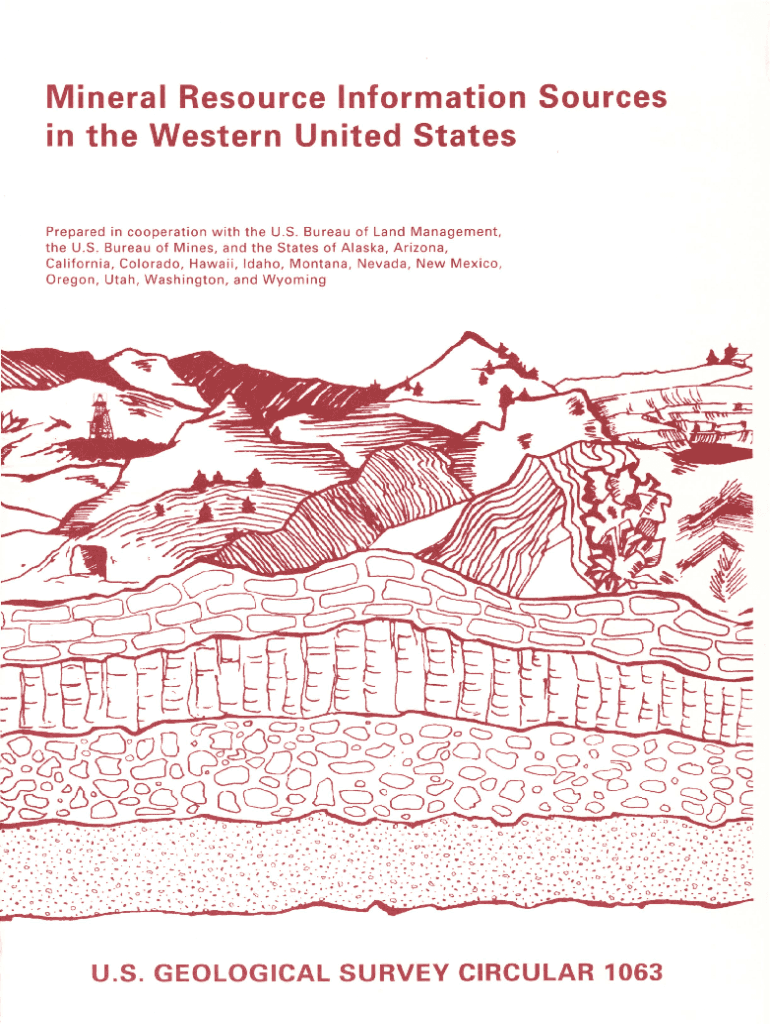
The document titled "Mineral Resource Information Sources in the Western United States" acts as a comprehensive guide that provides detailed insights into the various minerals found in the western part of the U.S. It encompasses the roles and responsibilities of both federal and state agencies engaged in the collection, analysis, and dissemination of data related to mineral resources. The document helps users understand the geological contexts and production statistics for various minerals while providing information on accessing geological publications and maps. This serves as an essential resource for anyone involved in geological research or resource management.
How to Use the Mineral Resource Information Sources in the Western United States
Understanding and using this document effectively involves several steps:
-
Identify the Relevant Agencies: The document lists federal agencies like the U.S. Geological Survey and the U.S. Bureau of Mines, along with state-specific geological surveys. Users need to identify which agency's data is most relevant to their needs.
-
Accessing Data: Instructions on how to access different types of data — such as maps or specific mineral production statistics — are included. These guidelines aid in navigating the resources provided by the agencies.
-
Analyzing Geological Contexts: For academic or industrial purposes, understanding the geological settings where minerals are found is crucial. The document provides contextual information to facilitate thorough analysis.
-
Utilizing Publications: Guidance on acquiring publications and maps is available, which can further help in detailed research or planning activities.
Key Elements of the Document
Several critical sections are included:
-
Mineral-specific Data: Detailed information about specific minerals, including where they are found, how they are extracted, and their economic value.
-
Geological Maps and Publications: Access to regional maps and geological publications that provide comprehensive data.
-
Agency Involvement: Roles and contributions of agencies at different government levels.
State-specific Rules and Variations
State-specific rules may influence the accessibility and distribution of mineral resource information. Each state may have different regulations regarding the publication or sharing of data:
-
Licensing Requirements: Some states may require licensing or approval to access certain datasets.
-
Public Access Regulations: Varying regulations concerning public access to geological information or exploration results.
Understanding these state-specific rules ensures that users comply with legal requirements while accessing relevant data.
Who Typically Uses this Document
The target audience includes:
-
Geologists and Researchers: Individuals seeking detailed mineral data and geological insights.
-
Government Officials: Policymakers and public administrators working on land use or mineral resource regulations.
-
Industry Stakeholders: Companies involved in mining, resource management, and related fields.
Legal Use of the Document
Adhering to legal frameworks is crucial:
-
Copyright and Licensing: Users must respect copyright laws and licensing agreements when using the document for commercial or academic purposes.
-
Data Use Regulations: Compliance with state and federal guidelines when applying data from the document is necessary to avoid legal repercussions.
Important Terms Related to the Document
Understanding terminology aids in effective navigation:
-
Mineralogy: The study and science of minerals.
-
Geological Survey: An organization responsible for providing data about geological and mineral resources.
-
Production Statistics: Data reflecting the amount and value of minerals extracted over a period.
Examples of Using the Document
Various examples demonstrate practical applications:
-
Academic Research: Utilizing insights from the document for research papers or projects related to Earth's geology.
-
Resource Management: Companies can use the data to guide exploration activities or investment decisions.
Steps to Complete Information Acquisition
-
Determine Specific Needs: Identify what type of mineral data or geological information is required.
-
Access Appropriate Sections: Use the document's guidelines to locate relevant sections.
-
Contact Agencies: Where necessary, reach out to federal or state agencies for additional information or clarification.
-
Analyze and Apply: Analyze the obtained data and apply it to the intended purpose, whether for research, development, or policy-making.
By following these detailed insights, users can effectively navigate and maximize the utility of the "Mineral Resource Information Sources in the Western United States" document, gaining extensive and valuable data pertinent to their specific needs.