






Definition & Meaning
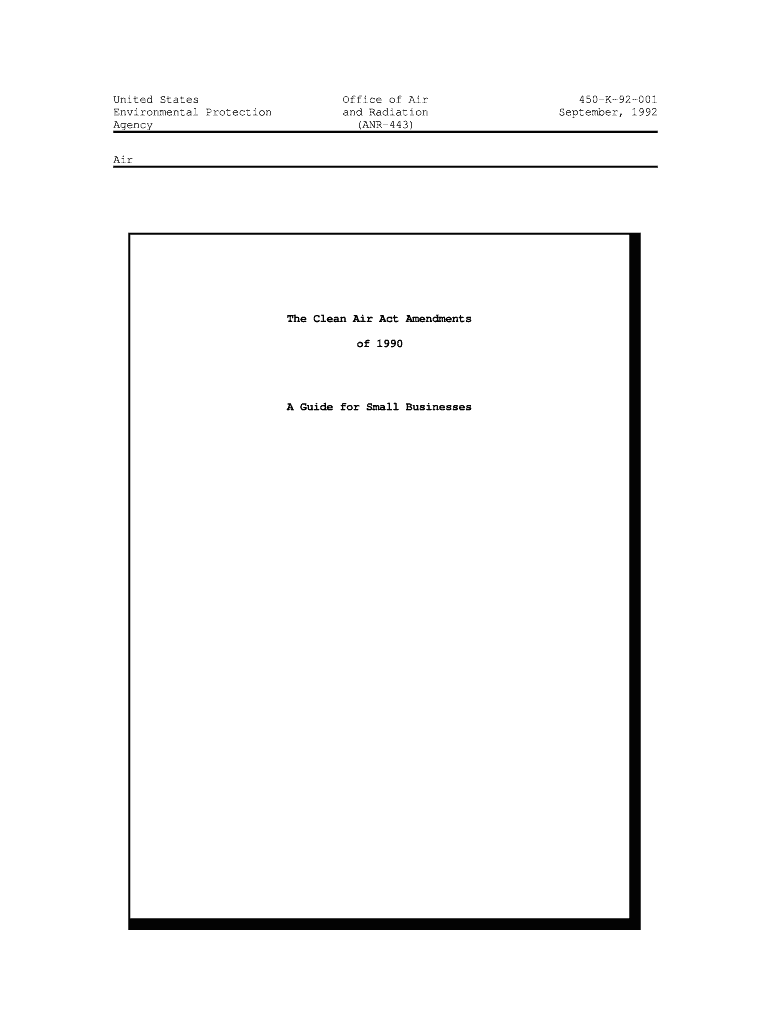
The "Summary of the Clean Air Act Laws and Regulations US EPA" is a comprehensive guide that outlines the amendments made to the Clean Air Act in 1990. This document serves to inform businesses, particularly small businesses, about their responsibilities and the federal controls in place regarding air pollution management. It highlights various pollutants like ground-level ozone and toxic air pollutants and provides an overview of the Acts’ objectives in promoting air quality while fostering economic growth.
Historical Context
- The Clean Air Act was established in 1963, with significant amendments made in 1990 to address escalating air quality issues.
- The 1990 amendments introduced regulatory measures for controlling air pollution and reducing emissions from factories and vehicles.
Significance for Businesses
- The document details compliance requirements and offers guidance on managing emissions effectively.
- It is instrumental for businesses seeking to align operations with federal regulations to avoid penalties and leverage available assistance programs.
Key Elements of the Summary
The document covers several critical components essential for comprehensive understanding and compliance with the Clean Air Act.
Air Pollution Control Measures
- Federal controls are imposed on various pollutants, including volatile organic compounds and particulate matter.
- Special focus is placed on ground-level ozone and its role in air quality degradation.
Assistance Programs
- Provides information on programs designed to aid small businesses in meeting air quality standards.
- Offers guidance on financial assistance and technical support available through the EPA.
Motor Vehicle Emissions
- Specific provisions target emissions from motor vehicles, a significant source of urban air pollution.
- Regulations include standards for exhaust emissions and fuel composition.
How to Use the Summary
To efficiently utilize the "Summary of the Clean Air Act Laws and Regulations US EPA," users should consider the following approaches:
Understanding Compliance Requirements
- Review the specific regulations that apply to your business operations and identify your compliance obligations.
- Use the guide to develop a compliance strategy tailored to minimize emissions effectively.
Accessing Assistance and Resources
- Leverage the assistance programs mentioned to seek support in managing air quality initiatives.
- Contact the EPA for technical advice and further guidance on navigating federal regulations.
Who Typically Uses the Summary
This summary is mainly used by businesses, regulatory bodies, and environmental organizations. It holds particular significance for:


Small and Medium Enterprises (SMEs)
- SMEs are directly impacted by the Clean Air Act’s mandates and benefit from understanding their obligations.
- Many SMEs utilize this summary to access resources that help them comply with air quality regulations without compromising economic viability.
Environmental Agencies
- State and local environmental agencies reference the document to align state-level regulations with federal guidelines.
- These agencies use the summary to educate the public and industries on air quality standards.
Steps to Complete the Summary
Though not an actionable document in the traditional sense, understanding and implementing the summary involves several key steps:
- Educate Staff: Ensure that your management and operational teams are informed about the regulations and requirements.
- Audit Emissions: Conduct an internal audit of your emissions to identify areas of non-compliance.
- Develop a Compliance Plan: Create a step-by-step compliance plan using the guidelines from the summary as a foundation.
- Engage with EPA Resources: Utilize assistance programs for financial and technical support when implementing compliance measures.
Important Terms Related to the Summary
Understanding the following terms is crucial when navigating the summary:
- Volatile Organic Compounds (VOCs): Organic chemicals that have a high vapor pressure at room temperature and are key contributors to ozone formation.
- Particulate Matter (PM): A mixture of tiny particles and droplets in the air that can be harmful when inhaled.
- SIP (State Implementation Plan): State-level plans developed to ensure compliance with the national air quality standards specified by the EPA.
Legal Use of the Summary
The legal use of the summary is vital for ensuring adherence to federal and state regulations regarding air quality. It includes:
Compliance Assurance
- Legal frameworks empower the EPA to enforce the provisions of the Clean Air Act.
- Non-compliance can result in significant penalties, making understanding and implementing the summary crucial.
Reporting and Documentation
- Businesses must maintain accurate records of emissions and compliance efforts.
- The summary assists in outlining reporting requirements to meet federal mandates.
State-by-State Differences
While the Clean Air Act provides a federal framework, implementation can vary at the state level due to differing environmental priorities and conditions.
Regional Implementation
- States may have unique programs and standards to address specific air quality issues pertinent to their environmental context.
- Businesses should refer to state-specific resources in conjunction with the federal summary to ensure comprehensive compliance.
Examples of Using the Summary
Real-world application of the summary highlights its practical benefits in achieving compliance and promoting sustainable practices.
Case Study: Manufacturing Sector
- A manufacturing plant used the summary to identify necessary emissions reduction measures, leading to a 30% decrease in airborne pollutants.
- By participating in EPA-sponsored programs, the plant improved its environmental footprint and compliance standing.
By adhering to these detailed blocks, businesses and organizations can effectively utilize the "Summary of the Clean Air Act Laws and Regulations US EPA" to ensure compliance, improve air quality, and contribute to sustainable development efforts.