






Definition and Meaning
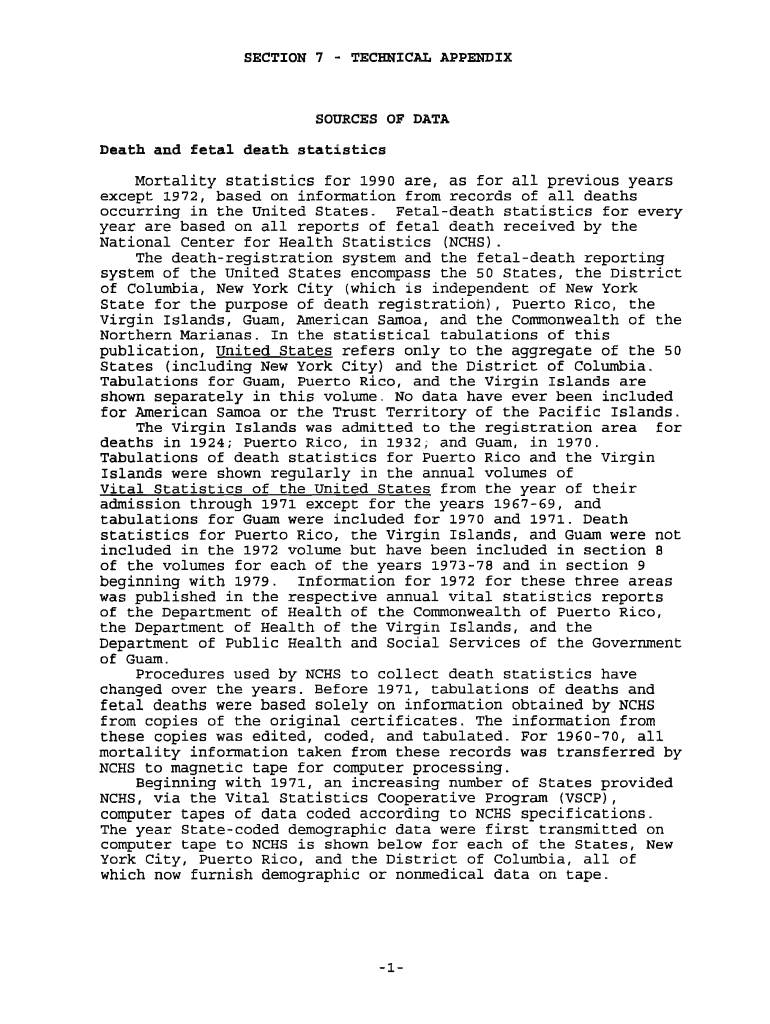
"All data related to deaths - Office for National Statistics" encompasses a comprehensive dataset that details mortality statistics within the United States. Primarily managed by the Office for National Statistics, this data forms an essential part of public health records, providing insights into mortality rates, causes of death, and demographic variations. It includes information on both natural causes and external factors affecting mortality, which can be pivotal for research and policy-making in health sectors.
Key Elements of the Data
The dataset contains several critical elements that are integral to understanding and analyzing mortality statistics. Key components include:
- Demographic Information: Age, sex, race, and geographic location of deceased individuals.
- Causes of Death: Detailed classification of causes, including disease outbreaks, chronic illnesses, and accidental deaths.
- Temporal Data: Annual and seasonal trends in mortality rates.
- Historical Context: Changes and patterns in mortality statistics over time.
These elements provide a multi-dimensional view necessary for comprehensive public health analysis.
How to Use the Data
To utilize the "All data related to deaths," individuals and organizations can analyze patterns and trends in mortality rates to formulating public health policies, conduct academic research, or assess the effectiveness of health interventions. Specific use cases include:
- Public Health Policy Development: Utilizing data insights to address public health challenges and allocate resources efficiently.
- Academic Research: Supporting epidemiological studies and demographic research.
- Healthcare Planning: Predicting healthcare needs based on mortality trends.
Different fields can adapt this data to suit various needs, from governmental to academic applications.
Important Terms and Classifications
Understanding the dataset requires familiarity with certain terms and classifications used in mortality statistics:
- ICD Codes: International Classification of Diseases codes used globally to categorize diseases and conditions.
- Mortality Rate: The frequency of deaths in a given population within a specific time frame.
- Life Expectancy: A statistical measure that estimates the average number of years a person can expect to live.
- Cohort Analysis: A method of examining the mortality experience of a particular population group over time.
These terms are vital for interpreting the dataset accurately and effectively.
Legal Use and Compliance
The data must be used following legal regulations that protect personal information and ensure ethical application:
- Data Privacy Laws: Compliance with data protection laws such as HIPAA, ensuring privacy and security.
- Ethical Reporting: Ensuring that data interpretation and presentation do not mislead or harm communities.
Legal compliance is crucial for institutions utilizing this data to ensure the privacy and respect of individuals.
Obtaining the Data
Access to this dataset is typically available through official publications from the Office for National Statistics and other authorized channels. To obtain it:
- Visit Official Websites: Access data from government or academic institution websites.
- Request Access: Apply for data access via formal request procedures if required.
- Utilize Public Libraries: Many public and university libraries provide access to such datasets.
Accessing official datasets ensures the information is accurate and up-to-date.
Examples of Applications
Real-world examples demonstrate the practical use of this data:
- Public Health Interventions: Analyzing mortality trends to develop targeted health interventions.
- Epidemiological Studies: Using data for research studies on disease spread and health outcomes.
These applications highlight the data's role in practical decision-making processes.
Digital vs. Paper Versions
The data is typically accessible in both digital and traditional paper formats:
- Digital Version: Offers easy access, analysis using software, and integration with other datasets.
- Paper Version: Useful for archival research or when digital resources are unavailable.
Choosing between versions depends on the specific needs and resources of the user.
State-by-State Differences
There may be variations in how mortality data is collected and reported across different states, affecting comparisons:
- Reporting Standards: Differences in data collection procedures and standards.
- State Regulations: Varied state laws and regulations impacting data availability and granularity.
Understanding these differences is essential for interpreting this dataset accurately across different jurisdictions.