






Definition & Meaning
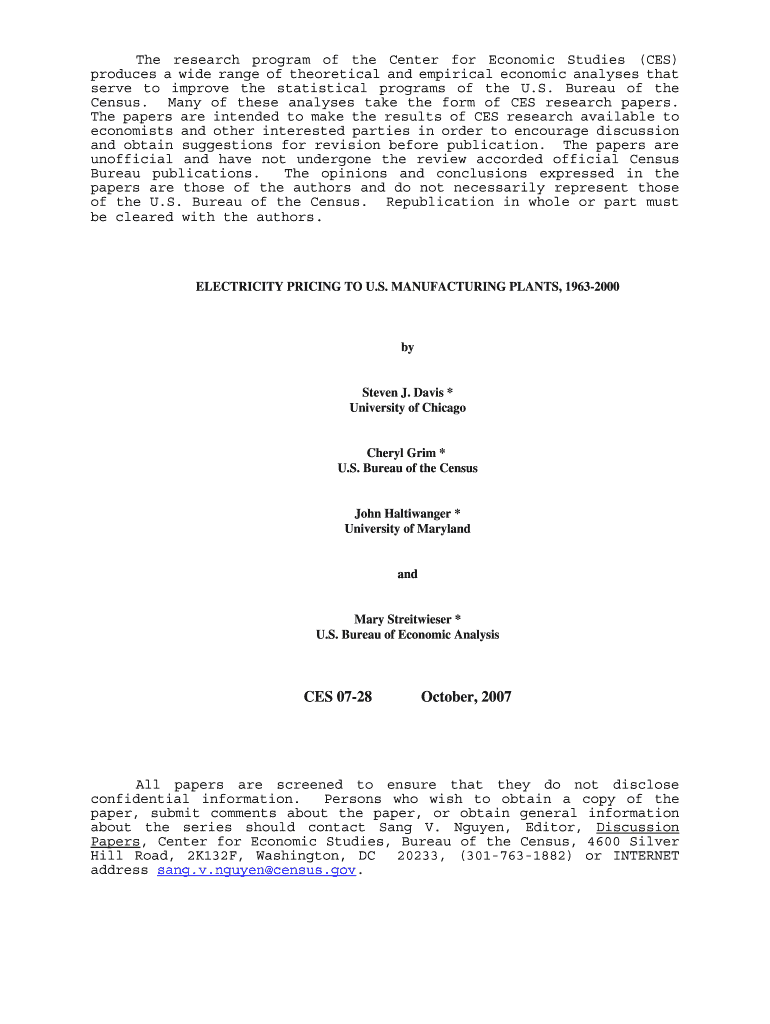
The "CES 07-28 October, 2007 - U S Census Bureau - www2 census" refers to a special event or program coordinated by the Center for Economic Studies (CES) at the U.S. Census Bureau. This program likely aimed to analyze economic data collected over a specific time frame, such as electricity pricing patterns among U.S. manufacturing plants. This workshop or study period might have involved data sharing and analysis procedures, serving as a collaborative effort to improve understanding of economic trends relevant to that period. The purpose was to provide detailed insights into how the economic landscape impacted manufacturing and possibly broader sectors, with a focus on data comprehension and analysis strategies.
How to Use the CES 07-28 October, 2007 - U S Census Bureau - www2 census
Utilizing this form or program requires a clear understanding of the type of data and analysis the CES was focusing on. Participants would need to:
-
Review Pre-Existing Research: Examine previous studies or publications from the CES to familiarize themselves with the central themes or focus areas.
-
Data Analysis: Engage with the data sets provided or derived from the event. This may involve statistical analysis software to handle complex datasets.
-
Collaborative Learning: Utilize the forum for knowledge exchange, potentially engaging in workshops, seminars, or panel discussions organized during the event period.
-
Apply Findings: Implement insights from the CES analysis in practical scenarios, such as policy formation or economic forecasting, based on findings related to economic indicators like pricing trends and consumer behavior.
Steps to Complete the CES 07-28 October, 2007 - U S Census Bureau - www2 census
Participants engaging with this program would typically follow a multi-step process:
-
Registration: Sign up or notify the CES of attendance or participation, often requiring information submission to confirm a role in the event.
-
Pre-Event Preparation: Gather relevant documents, set up necessary software tools, and ensure familiarity with the focus topics.
-
Active Participation: During the event, attend sessions, engage with experts, and actively participate in discussions and data analysis activities.
-
Data Submission or Feedback: Provide any required data submissions or complete feedback sessions to assist in the overall goals of the study.
-
Follow-Up: After the event, analyze personal or organizational outcomes, potentially publishing findings or integrating insights into ongoing projects.
Why You Should Participate in CES 07-28 October, 2007 - U S Census Bureau - www2 census
Involvement in this CES program could offer several benefits:
-
Access to Unique Data: Engage directly with comprehensive data sets that are not publicly available, allowing for novel insights.
-
Networking Opportunities: Connect with leading economists, policymakers, and other stakeholders in the field of economic research.
-
Improved Analytical Skills: Enhance statistical or econometric analysis skills by working with real-world data under expert guidance.
-
Contribute to Policy Recommendations: Participants could influence future policies by providing valuable insights into economic patterns and trends.
Who Typically Uses the CES 07-28 October, 2007 - U S Census Bureau - www2 Census
This program or form is typically designed for:
-
Academics and Researchers: Those involved in economic studies or data analysis at universities or think tanks.
-
Policy Makers and Government Agencies: Officials looking for data-driven insights to inform policy formulation.
-
Industry Analysts: Professionals from sectors affected by manufacturing trends such as energy, manufacturing, and supply chain.
-
Graduate Students: Those studying economics, social sciences, or related fields, seeking practical data analysis experience.


Key Elements of the CES 07-28 October, 2007 - U S Census Bureau - www2 Census
Significant components of the program or study might include:
-
Data Collection and Distribution: Describing the methodologies for data gathering during this period.
-
Analytical Framework: Outlining the models or techniques used in analyzing economic data.
-
Reporting and Publications: Emphasis on generating reports that document findings and contribute to academic and policy-making communities.
Form Submission Methods
Submission for participation or data might occur through various channels:
-
Online Portals: The U.S. Census Bureau or CES might have provided an online platform for registering participation or submitting data reports.
-
Email Communications: Submissions and inquiries could be handled via official email channels, ensuring a streamlined communication process.
-
Mail or In-Person: In some cases, physical submission of data sets or related documents might have been required, depending on the nature of participation.
Required Documents
Participants likely needed to prepare a collection of documents, including:
-
Identification and Professional Affiliation: Proof of identity and professional qualifications or affiliations.
-
Study Proposals or Abstracts: If conducting specific research, detailed proposals or abstracts highlighting intended research areas and goals.
-
Data Access Agreements: Legal or formal agreements for accessing certain confidential data sets that may have been used during the event.