






Definition and Meaning
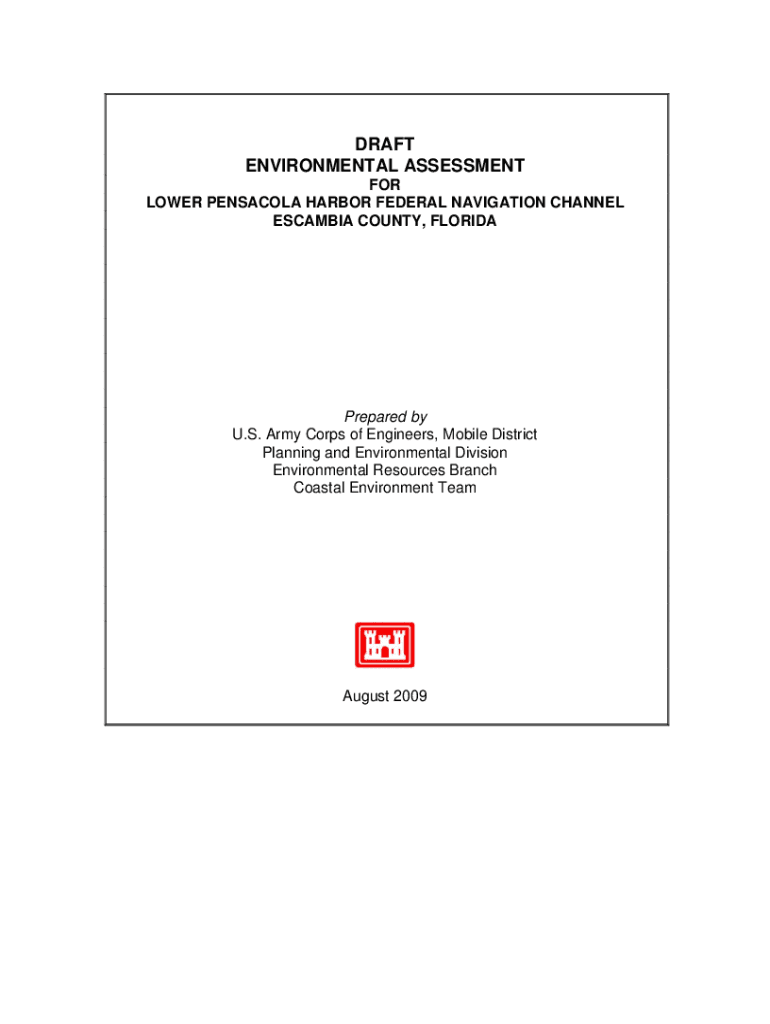
The "Draft Environmental Assessment - Mobile District - U.S. Army" is a document prepared by the U.S. Army Corps of Engineers to evaluate the potential environmental impacts of proposed projects in the Mobile District, which includes the Lower Pensacola Harbor Federal Navigation Channel. This assessment is crucial for understanding how proposed dredging and disposal operations might affect the local environment, aiming to ensure that navigation improvements do not compromise ecological integrity. It includes an analysis of existing conditions, proposed activities, potential impacts, and mitigation strategies to maintain compliance with environmental laws.
How to Use the Document
This draft Environmental Assessment can be used by stakeholders, including governmental agencies, environmental groups, and local communities, to review the proposed project's potential impacts. By examining the document, users can understand the details of intended dredging and disposal activities, evaluate the assessment's conclusions regarding environmental impacts, and participate in public discussions or hearings. It serves as a basis for decision-making and for providing constructive feedback to the U.S. Army Corps of Engineers, ensuring projects align with environmental protection goals.
Steps to Complete the Draft Environmental Assessment
-
Review Existing Conditions: Begin by thoroughly analyzing the documented current state of the environment within the project area.
-
Proposed Action and Alternatives: Understand the proposed project details and any considered alternatives, assessing their respective impacts.
-
Impact Analysis: Evaluate the environmental, social, and economic impacts as outlined, focusing on areas such as water quality, wildlife habitat, and cultural resources.
-
Mitigation Measures: Examine suggested mitigation procedures and their effectiveness in minimizing adverse impacts.
-
Compliance and Consultation: Verify that the project complies with all applicable laws and regulations. Note any consultations with environmental agencies, tribal nations, or public stakeholders.
-
Public Involvement: Participate in public review periods, provide feedback, and engage in advocacy activities to influence the final assessment outcome.
Who Typically Uses the Document
The draft Environmental Assessment is primarily utilized by:
- Environmental Consultants: To provide expertise on potential environmental impacts.
- Government Agencies: To ensure projects meet federal and state environmental requirements.
- Community Organizations and NGOs: To advocate for environmental protection and community interests.
- Business Leaders and Developers: To assess the feasibility and compliance of proposed projects.


Key Elements of the Assessment
- Project Description: A detailed account of proposed activities including scope, location, and methodologies.
- Affected Environment: An analysis of current environmental conditions, addressing ecosystems, air, water, and human health.
- Environmental Consequences: Detailed projections of the short-term and long-term effects on local ecosystems, wildlife, and habitats.
- Mitigation Strategies: Proposed measures to avoid, reduce, or compensate for adverse effects.
- Public Involvement and Feedback: Documentation of public consultations and concerns raised during the review process.
Legal Use of the Document
The document serves as a legal requirement under the National Environmental Policy Act (NEPA), ensuring that all government projects consider their environmental impact. It is a crucial component of the decision-making process, used to demonstrate due diligence and compliance with environmental laws. The document provides legal standing for the project's approval or rejection based on its environmental impact findings.
Important Terms Related to the Assessment
- Ecosystem Services: Benefits provided by natural environments that support human life and economic activity.
- Dredging: The removal of silt and debris from the bottom of bodies of water, crucial for maintaining navigational channels.
- Mitigation Bank: A site where resources (wetlands, streams) are restored, established, enhanced, or preserved for compensatory mitigation.
- Public Scoping: The process of determining the range and depth of environmental issues to address in a draft assessment.
Examples of Using the Document
- Case Study Analysis: Utilize previous assessments in the Mobile District as reference examples for determining typical impacts and mitigation strategies.
- Project Planning Meetings: Facilitate discussions among planners and stakeholders using the environmental assessment to address critical aspects of the proposed project.
- Legal Reviews: Assist legal teams in evaluating compliance with federal environmental laws using specific details outlined in the assessment.
Versions or Alternatives to the Document
Different forms or stages of environmental assessments may exist, catering to various requirements:
- Environmental Impact Statement (EIS): A more detailed analysis required when a project significantly affects the environment.
- Categorical Exclusion (CATEX): Used when a project is determined not to have a significant impact, thus bypassing the need for a full assessment.
- Finding of No Significant Impact (FONSI): A decision document that concludes no significant effect on the environment post-assessment.
These variations ensure that projects are assessed at appropriate levels depending on their scale and potential impacts.