






Definition and Scope of "The Aging Military Aviator - U S Army Aeromedical Research"
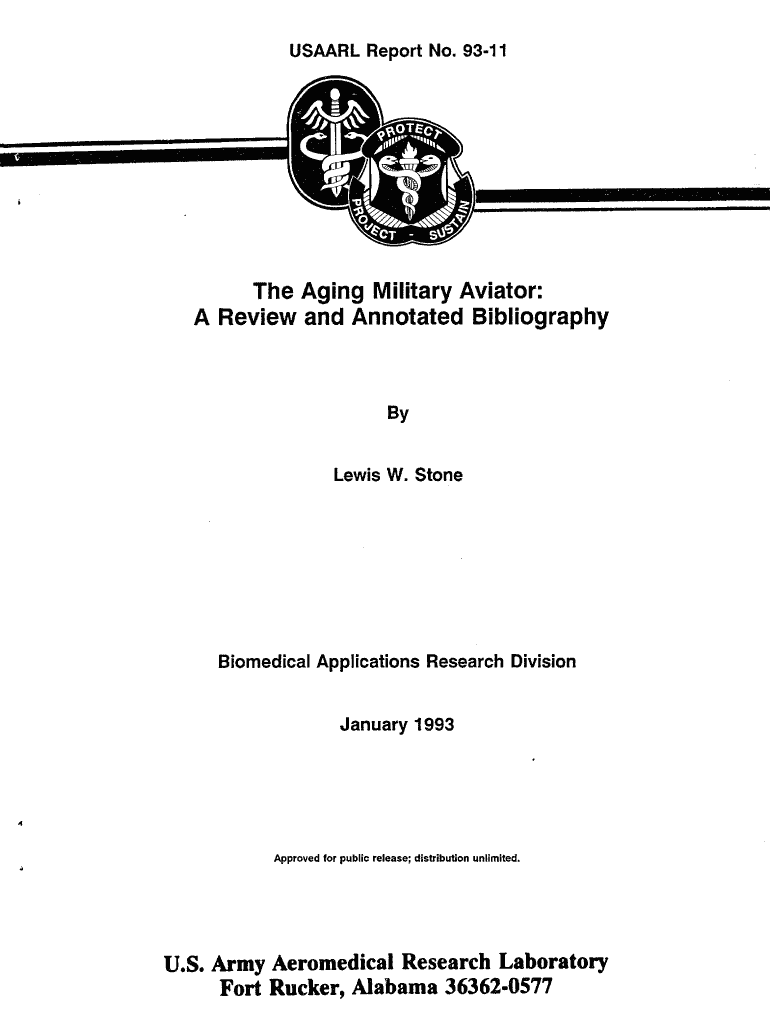
"The Aging Military Aviator - U S Army Aeromedical Research" references a study encapsulated in the document titled "USAARL Report No. 93-11," authored by Lewis W. Stone. This report provides an extensive examination of how aging affects military aviators, focusing on physiological and sensory system changes that may impair performance. Despite military aviators generally being healthier than their civilian counterparts, there remains a notable gap in understanding the full impact of age-related changes on performance. The report calls for further research and highlights the necessity for developing coping strategies to mitigate these effects.
Importance of "The Aging Military Aviator - U S Army Aeromedical Research"
The investigation into the aging military aviator is pivotal for maintaining safety and operational effectiveness in military aviation. The study sheds light on the complex dynamics of aging and performance in high-stakes environments. It underscores the significance of addressing age-related issues, not only for individual well-being but also for ensuring mission readiness and safety. The insights gained from this research are vital for shaping military policies, developing training programs, and formulating health strategies to support aging aviators.
Steps to Access the Report
-
Visit the Official Source: Primarily, access the report through the U.S. Army Aeromedical Research Laboratory's official communication channels or archives.
-
Request or Access Online: If available, utilize online military archives or libraries to procure digital copies. Reach out to military academic publishers or research gatekeepers for access.
-
Library Resources: Locate the report in university libraries or military research libraries that house related aeromedical research.
-
Direct Inquiry: Contact the research authors or associated military departments for guidance on accessing the report.
Key Elements of the Report
-
Physiological Insights: The report delves into how aging affects physiological systems, including cardiovascular, vestibular, and musculoskeletal systems, impacting pilot agility and endurance.
-
Sensory System Changes: Analyzes alterations in vision and hearing, crucial for maintaining situational awareness and operational precision.
-
Performance Metrics: Discusses the challenges in assessing and quantifying performance changes that correlate with age among aviators.
-
Regulatory Framework: Reviews the FAA's 'age 60' rule in commercial aviation, providing a comparative context within military operations.
Legal and Ethical Considerations
The FAA's 'age 60' rule and its implications for aging pilots provide a regulatory backdrop against which military policies are reviewed. Ethical considerations around age discrimination and the balance between experience retention and safety assert the need for transparent and equitable regulatory practices. The research stresses the development of unbiased assessment tools to evaluate aviator competence irrespective of age.
Who Benefits from the Research
-
Military Command and Policy Makers: Utilize the findings to shape age-sensitive policies, fostering an inclusive operational environment.
-
Aviation Medicine Specialists: Apply insights to improve health monitoring and intervention protocols for aging pilots.
-
Training Instructors: Develop tailored training regimes that accommodate the physiological changes noted in aging pilots.
-
Aging Aviators: Gain awareness and tools to self-manage age-related changes effectively.
Examples and Case Studies
The report includes real-world examples and case studies that illustrate aging aviators' struggles and adaptations. These examples highlight the need for continuous adjustment in training and operational tactics to accommodate natural aging processes. Reviewed scenarios include adjustments in cockpit ergonomics, modified training schedules, and enhanced health monitoring regimes tailored for older aviators.
Versions and Alternatives
-
Older Reports: Early studies on aging in aviation set a foundational understanding, focusing primarily on commercial aviation pilots.
-
Current Studies: Updated research continually builds on Stone's 1993 findings, exploring newer dimensions of aging-related challenges and interventions in military aviation.
-
Civilian Aviation Research: Comparative studies in civilian contexts offer additional perspectives, often influencing military aviation policies.
State-Specific Rules and Practices
While the U.S. military follows federal protocols, variations can exist based on state affiliations, particularly concerning National Guard units. State-funded military research programs might implement distinct practices or guidelines, making regional understanding essential for comprehensive policy application.