





Definition and Purpose of Long-Term Care Options Form H1204
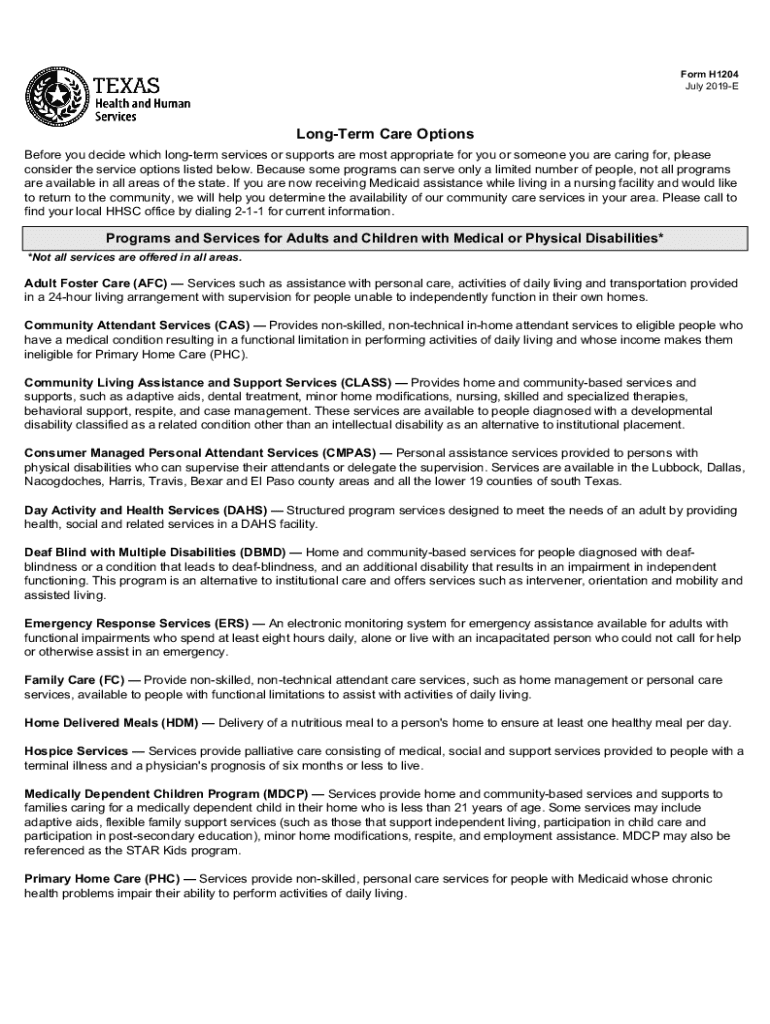
The Long-Term Care Options Form H1204 is a comprehensive document that outlines available long-term care solutions designed to aid individuals with medical, physical, intellectual, or developmental disabilities. It serves as a vital resource in guiding individuals to choose appropriate care programs, such as Adult Foster Care and the Program of All-Inclusive Care for the Elderly. The form is particularly important for those receiving Medicaid assistance and considering a transition from nursing facilities to community living. This form not only informs users about various care options but also emphasizes the importance of assessing local service availability.
How to Use the Long-Term Care Options Form H1204
Using the Long-Term Care Options Form H1204 efficiently can greatly support individuals and families in selecting suitable care programs. Here’s how you can navigate this form:
- Identify Needs: Begin by listing the specific care requirements based on medical or physical disabilities.
- Review Options: Thoroughly examine the listed care programs, paying special attention to how each option can meet identified needs.
- Assess Compatibility: Consider the compatibility of these options with the individual's current living situation and future goals.
- Seek Local Services: Check for availability of the desired services in your state or locality to ensure applicability.
- Plan Transition: For those planning to move from a nursing facility, evaluate how each program supports the transition to community-based living.
Steps to Complete the Long-Term Care Options Form H1204
Completing the Long-Term Care Options Form H1204 involves several sequential steps:
- Gather Information: Collect all relevant medical records and personal information to accurately fill out the form.
- Fill Personal Details: Start by providing personal and contact information.
- Select Care Options: Choose the long-term care options that seem most appropriate for the individual’s needs.
- Document Preferences: Clearly state any preferences regarding the type of long-term care facility or program desired.
- Review and Sign: Ensure all information is correct before signing the document.
- Submit: Follow the submission guidelines, whether by mail, online, or in-person, as required.
Important Terms Related to Long-Term Care Options Form H1204
Several terms are integral to understanding and utilizing the Long-Term Care Options Form H1204 effectively:
- Adult Foster Care: A program that provides personal care services in a family-like setting.
- Community Attendant Services: Support services enabling individuals to perform activities of daily living.
- Medicaid: A federal and state program that assists with medical costs for individuals with limited income.
- Program of All-Inclusive Care for the Elderly (PACE): A program offering comprehensive services to help elders remain in their communities.
Key Elements of the Long-Term Care Options Form H1204
The form is structured to include several key elements:
- Eligibility Information: Criteria for various care programs.
- Service Descriptions: Detailed explanation of each care option.
- Methods of Service Delivery: Information on how services are provided, whether at home or in community settings.
- Financial Considerations: Details about costs and potential financial assistance through Medicaid.
Who Typically Uses the Long-Term Care Options Form H1204
The primary users of the Long-Term Care Options Form H1204 are:
- Individuals with Disabilities: Those with medical, physical, intellectual, or developmental disabilities.
- Families of Disabled Individuals: Family members seeking care options for loved ones.
- Medicaid Beneficiaries: Individuals planning to transition from nursing facilities to community living.
- Healthcare Professionals: Advisors and coordinators in charge of recommending specific care programs.


Legal Use of the Long-Term Care Options Form H1204
Understanding the legal framework within which the Long-Term Care Options Form H1204 operates is crucial:
- ESIGN Act Compliance: Electronic submissions must adhere to the ESIGN Act requirements for legal validity.
- Privacy Protection: Information must be handled according to HIPAA guidelines to ensure privacy and confidentiality.
- Medicaid Regulations: Must comply with state and federal Medicaid rules when detailing services and eligibility.
Examples of Using the Long-Term Care Options Form H1204
Here are practical examples highlighting the form's application:
- Case Study 1: A 70-year-old Medicaid recipient transitions from a nursing facility to community-based living through Adult Foster Care, using the form to outline preferences and care needs.
- Case Study 2: An individual with an intellectual disability uses the form to explore and engage Community Attendant Services, enabling a more independent lifestyle.
- Scenario 3: A family reviews the comprehensive list of care options on the form, deciding on PACE for an elder parent needing integrated community services.