






Definition & Meaning
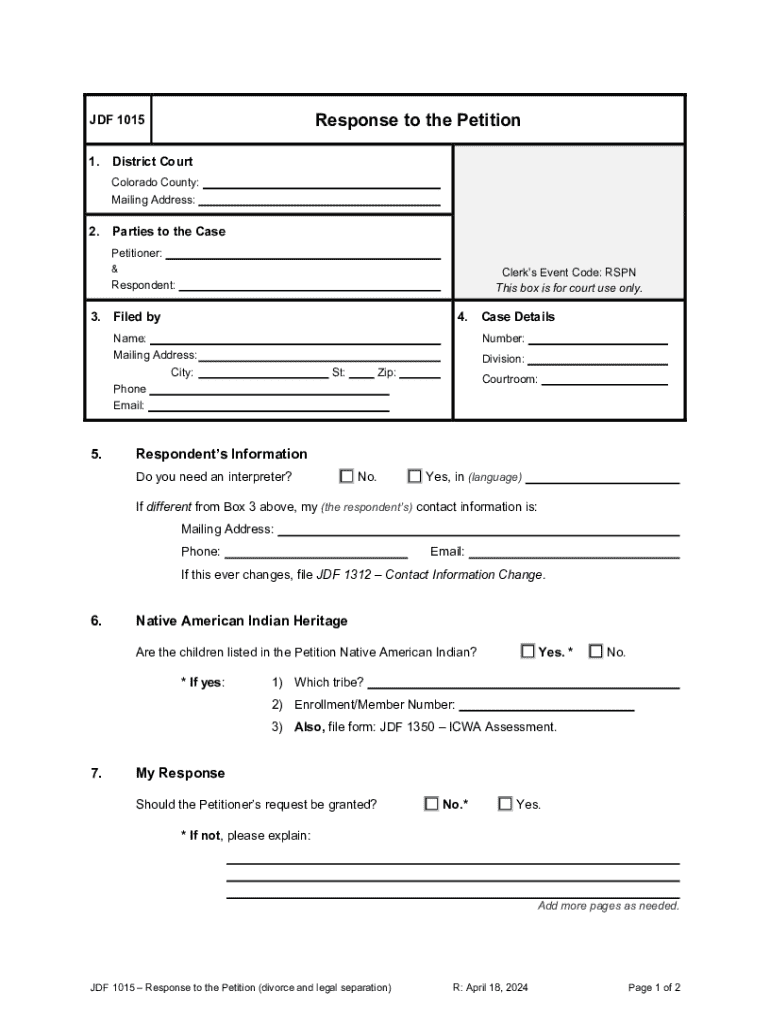
The "Response to the Petition" is a legal document typically used in divorce or legal separation cases within the Colorado District Court system. This form allows the respondent to formally address the claims brought forth by the petitioner, ensuring that their version of events and requests are also recorded. The document plays a pivotal role in guiding the court through the specific issues and requests each party seeks resolution on, such as property division, child support, and marital status.
Primary Functions
- Acknowledgment of Petition: The form serves as an official acknowledgment of the divorce or separation petition filed by the other party.
- Assertion of Rights: It enables the respondent to assert their rights and outline their stance on the issues raised, including custody and financial obligations.
How to Obtain the Response to the Petition
To procure the "Response to the Petition" form, you can visit the Colorado Judicial Branch's official website, where they offer downloadable forms. Alternatively, local district court clerks can provide physical copies upon request. Importantly, ensure you get the correct version tailored for the specific legal proceedings you are involved in.
Online Access
- The form is available for download in PDF format through the Colorado Judicial Branch's website.
- Ensure you have a PDF reader installed, as most legal forms require this software for viewing and printing.
Court Clerks
- Visit the local district court in your area for a physical copy.
- Court clerks can offer guidance on additional paperwork that might be necessary for your case.
Steps to Complete the Response to the Petition
Filling out the "Response to the Petition" form requires careful attention to detail to accurately convey your position. The following step-by-step guide will assist in ensuring the form is completed correctly.
-
Identify Parties:
- Provide the full legal names of both the petitioner and the respondent.
- Include case numbers and specific court details.
-
Respond to Allegations:
- Clearly address each point raised in the original petition, agreeing or contesting each claim.
-
Request for Court Orders:
- Specify the orders you are seeking, such as custody arrangements or property division requests.
-
Sign and Notarize:
- Ensure the form is signed in front of a notary public to authenticate your response.
Key Elements of the Response to the Petition
The form contains several critical components that structure the response comprehensively. These elements ensure that both legal requirements and personal stances are adequately represented.
Respondent Information
- Includes personal details such as name, address, and involvement in the case.
- Provides contact information for further proceedings.
Respondent's Requests
- Articulates requests regarding children, property, and other marital assets.
- Details the desired outcome from the court's decision.
State-Specific Rules for the Response to the Petition
Colorado has distinct regulations concerning the "Response to the Petition" form, emphasizing timely submissions and specific procedural steps.
Filing Deadlines
- Colorado requires the response to be filed within a specified period after receiving the petition, typically 21 days for respondents within the state.
Legal Variations
- Specific conditions may apply depending on whether the case involves minor children or significant shared assets.
Why Should You Respond to the Petition
Responding to the petition is crucial as it formally documents your side of the story in the court record. Failure to respond can lead to default judgments where the court may rule in favor of the petitioner by default due to lack of contestation.
Consequences of Non-Response
- Loss of legal rights to contest issues presented in the petition.
- Potential court orders without your input, impacting personal and financial interests.
Who Typically Uses the Response to the Petition
The form is primarily utilized by individuals undergoing divorce or legal separation. However, it is also relevant to legal representatives advocating on behalf of their clients.


Typical Users
- Respondents in divorce proceedings without legal representation seeking to assert their rights personally.
- Legal professionals tasked with drafting formal responses for their clients.
Important Terms Related to Response to the Petition
Understanding the terminology used within the "Response to the Petition" is essential for clarity and accuracy.
- Petitioner: The person who initiates the case.
- Respondent: The individual responding to the case.
- Petition for Dissolution of Marriage: The formal request by one spouse to end the marriage.
In conclusion, the "Response to the Petition" form is a multifaceted document essential for clearly communicating your legal standing in divorce or separation cases. By understanding its components, how to obtain it, and guidelines for completion, respondents can ensure they effectively navigate the legal proceedings.