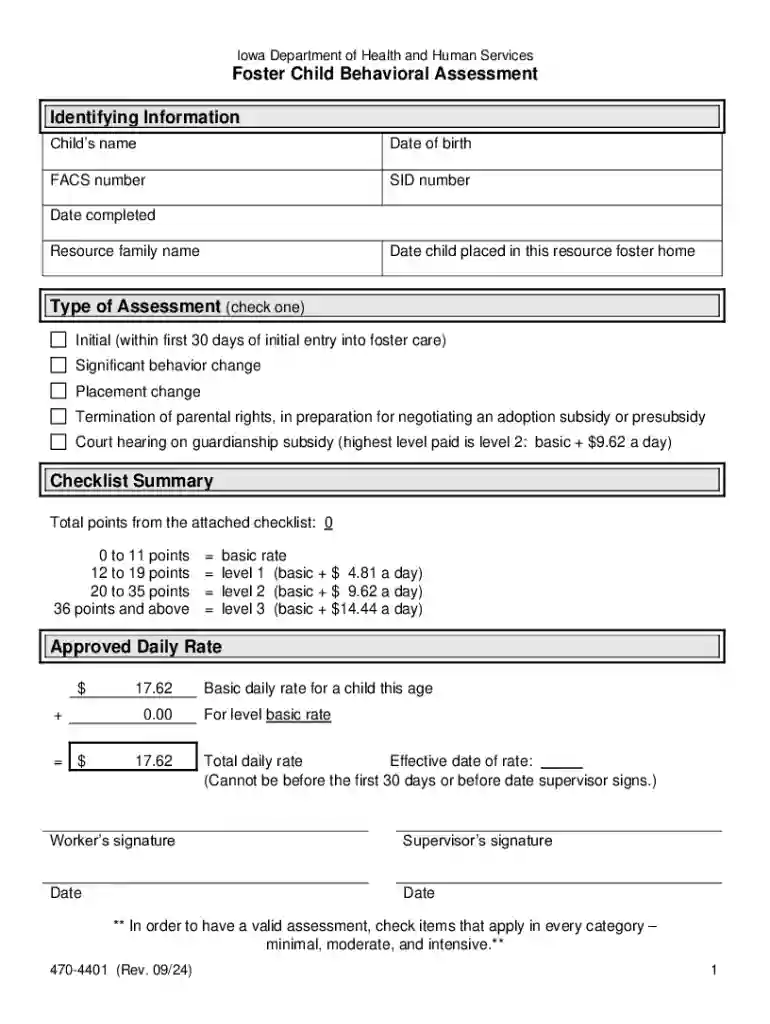
Foster Child Behavioral Assessment 2026

Get Form
Foster Child Behavioral Assessment Preview on Page 1

Here's how it works

01. Edit your form online
Type text, add images, blackout confidential details, add comments, highlights and more.

02. Sign it in a few clicks
Draw your signature, type it, upload its image, or use your mobile device as a signature pad.

03. Share your form with others
Send it via email, link, or fax. You can also download it, export it or print it out.

Definition and Meaning of Foster Child Behavioral Assessment

The Foster Child Behavioral Assessment is a systematic process used to evaluate and understand the behavioral, emotional, and physical care needs of children in foster care. It is an essential tool for tailoring support and interventions to meet the unique needs of each foster child. The assessment considers various factors, such as emotional wellbeing, social interactions, and health concerns. This comprehensive evaluation helps ensure that foster children receive appropriate care and support in their foster placements.

Key Aspects of the Assessment

  • Emotional Needs: Identification of any emotional or psychological challenges the child may face, such as anxiety or depression.
  • Behavioral Challenges: Evaluation of behaviors that may require intervention, including aggression or withdrawal.
  • Physical Health: Consideration of any physical health issues that need to be addressed to support overall wellbeing.

How to Use the Foster Child Behavioral Assessment

Utilizing the Foster Child Behavioral Assessment involves a structured approach to gather and analyze information about the foster child’s needs. It requires collaboration among caregivers, social workers, and mental health professionals.

  1. Initial Review: Begin by collecting all relevant background information about the child, including previous assessments and case histories.
  2. Observation: Conduct observations in various settings to understand the child's behavior in different environments.
  3. Interviews: Engage with caregivers, teachers, and other individuals involved in the child's life to gather insights.
  4. Scoring and Analysis: Use specific tools and checklists to score and analyze the child's behaviors and needs.

Steps to Complete the Foster Child Behavioral Assessment

Completing this assessment involves several critical steps to ensure accuracy and comprehensiveness.

  1. Preparation: Collect the child’s previous records and any documents related to past assessments or interventions.
  2. Engagement: Meet with the child to build rapport and observe their interactions and responses in a comfortable setting.
  3. Data Collection: Use standardized tools to gather data on various aspects of the child’s behaviors and emotional states.
  4. Collaboration: Work with a multidisciplinary team, including healthcare providers and educators, for a well-rounded perspective.
  5. Documentation: Record findings thoroughly and discuss them within the team to formulate a collaborative care plan.

Key Elements of the Foster Child Behavioral Assessment

The assessment evaluates several key elements to construct a comprehensive view of the child's needs.

Emotional and Behavioral Health

  • Emotional Wellbeing: Assessment of the child's ability to cope with stress and adapt to new situations.
  • Behavioral Adjustments: Identifying any maladaptive behaviors and determining appropriate interventions.

Physical Health and Care Needs

  • Medical History: Consideration of past and current health issues.
  • Daily Care Requirements: Assessment of the child’s need for any special care or accommodations.

Legal Use of the Foster Child Behavioral Assessment

The legal framework surrounding the Foster Child Behavioral Assessment ensures that the collected data is used to advocate for the child's best interests.

  • Confidentiality: Information gathered through the assessment is protected under strict confidentiality laws to prevent unauthorized access.
  • Compliance with Regulations: The assessment process aligns with federal and state regulations governing child welfare practices.
  • Use in Court: Findings from the assessment can be used to support court decisions regarding foster care placements and parental rights.

State-Specific Rules for the Foster Child Behavioral Assessment

Regulations and guidelines for conducting the Foster Child Behavioral Assessment can vary by state, necessitating an understanding of specific regional requirements.

Variations in Implementation

  • Documentation Requirements: States may have unique forms or fields required for accurate reporting.
  • Frequency of Assessment: Some states mandate regular reassessments according to specific timelines.

Who Typically Uses the Foster Child Behavioral Assessment

A variety of professionals are involved in utilizing the assessment to ensure comprehensive care for foster children.


  • Social Workers: Lead the assessment process and facilitate communication among all parties involved.
  • Mental Health Professionals: Provide expertise in psychological analysis and interpreting behavioral patterns.
  • Educators: Offer valuable insights into the child’s behavior in educational settings.
decoration image ratings of Dochub

State-by-State Differences

Understanding state-by-state differences is crucial for effectively employing the Foster Child Behavioral Assessment. These differences may influence how assessments are conducted and how the results are utilized.

  • Implementation Protocols: Protocols can vary significantly, with some states requiring more frequent updates and others having distinct documentation requirements.
  • Resource Allocation: States may provide varying levels of support and resources based on the assessment outcomes.
be ready to get more

Complete this form in 5 minutes or less

Get form

Got questions?

We have answers to the most popular questions from our customers. If you can't find an answer to your question, please contact us.
Contact us
Children and youth enter foster care because they have been abused, neglected, or abandoned by their parents or guardians. All of these children have experienced loss and some form of trauma.
The foster care system involves first identifying home situations where children are not safe. In these situations, social workers in state child welfare agencies step in to protect children. The goal of foster home care is for trained, licensed, and loving foster families to take children into their homes.
Foster care is a temporary, court-monitored service provided by States to promote the safety, permanency, and well-being of children and youth. The Federal government supports State foster care services through program funding and legislation.
Behavior Assessment System for Children (BASC) How it works: A parent or teacher is given a broad range of questions about a childs behavior. That includes questions about his social skills, ways of thinking and ability to adapt.
In the United States, foster home licensing requirements vary from state to state but are generally overseen by each states Department of Child Protective Services or Human Services. In some states, counties have this responsibility, often in coordination with non-profit Foster Family Agencies (FFAs).

Security and compliance

At DocHub, your data security is our priority. We follow HIPAA, SOC2, GDPR, and other standards, so you can work on your documents with confidence.

Learn more
ccpa2
pci-dss
gdpr-compliance
hipaa
soc-compliance
be ready to get more

Complete this form in 5 minutes or less

Get form

People also ask

Fostering means taking care of someone elses child in your own home. Sometimes a child cannot live with their own family, either on a short-term or long-term basis. This could be because of illness in the family, the death of a parent, neglect, abuse or violence in the home.
Per month, that can be about $400 to $3,000 or more. You might receive a monthly stipend from the state or foster agency to help cover the costs of raising a foster child. This amount varies but is typically between $400 to $1,000 per month, depending on the childs age, medical needs, and the state you live in.

Related links