






Definition & Meaning
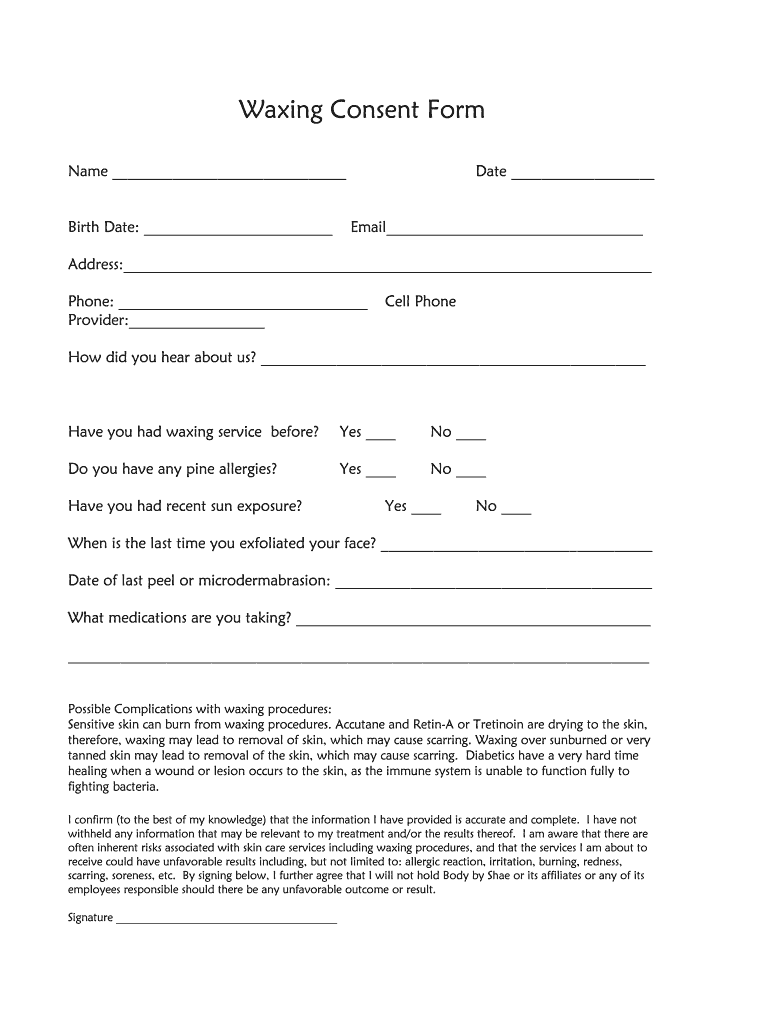
The "Waxing Consent Form - bodybyshaecom" is a document designed to collect personal and medical information from clients prior to a waxing service. It serves as an agreement between the client and the service provider, outlining potential risks associated with waxing procedures and ensuring clients acknowledge and understand these risks. By completing the form, clients provide informed consent, ensuring they disclose any medical conditions or allergies that may affect the safety of the service.
Key Elements of the Waxing Consent Form
Several critical components are included within the "Waxing Consent Form - bodybyshaecom," each serving a distinct purpose:
- Personal Information: Collects basic client details like name, contact information, and age.
- Medical History: Gathers information on any past or current medical conditions that might interact with waxing services.
- Allergies: Documents any known allergies to specific products or ingredients used in waxing.
- Acknowledgement of Risks: Highlights potential risks such as skin sensitivity or adverse reactions.
- Legal Disclaimer: Protects the service provider from liability by having clients acknowledge their voluntary participation and awareness of risks.
How to Use the Waxing Consent Form
To effectively utilize the "Waxing Consent Form - bodybyshaecom," follow these steps:
- Download the Form: Access the form through the service provider's platform or website.
- Complete Personal and Medical Sections: Fill in personal information, medical history, and any known allergies.
- Read Carefully: Review the risks and conditions outlined within the form.
- Sign and Date: Provide a signature to confirm consent and understanding of the terms.
- Submit to Provider: Ensure the completed form is returned to the service provider before the service appointment.
Steps to Complete the Waxing Consent Form
Accurate completion of the form requires careful attention to detail:
- Enter Personal Information: Fill in your full name, contact information, and date of birth.
- Medical and Allergy Disclosure: Clearly state any medical conditions and allergies that could impact the service.
- Review Risk Factors: Carefully read the sections outlining possible risk factors and complications.
- Acknowledgement and Consent: Check the boxes acknowledging the risks and providing consent to proceed.
- Sign and Date: Ensure all required signatures and dates are included to validate the form.
Legal Use of the Waxing Consent Form
The consent form serves as a legal agreement between the client and the service provider. It protects both parties by:
- Ensuring Informed Consent: The form documents that clients have been informed of potential risks and have consented to proceed.
- Liability Protection: Acts as a safeguard for service providers against claims of negligence or unforeseen complications.
- Compliance with Regulations: Aligns with legal requirements for service providers to have documented consent for procedures.
Who Typically Uses the Waxing Consent Form
The form is commonly used by:
- Clients seeking waxing services: To ensure their safety and provide informed consent.
- Service Providers like spas and salons: To secure legal and medical information necessary for providing safe services.
- Healthcare Providers: Occasionally involved when medical conditions require additional consultations.


State-Specific Rules for the Waxing Consent Form
Regulations can vary by state, influencing consent form usage:
- Age of Consent: Some states may require parental consent for minors undergoing waxing.
- Health Regulations: Different states might have specific regulatory requirements about client health disclosures.
- Record-Keeping: States may have varying rules on how long consent forms need to be retained by businesses.
Examples of Using the Waxing Consent Form
Several scenarios illustrate the importance of this form:
- First-Time Clients: Essential for clients new to waxing to understand the process and risks involved.
- Clients with Medical Conditions: Particularly critical for those with conditions like diabetes or skin disorders.
- Allergic Reactions: Ensures clients with allergies are aware and protective of triggers during the waxing process.