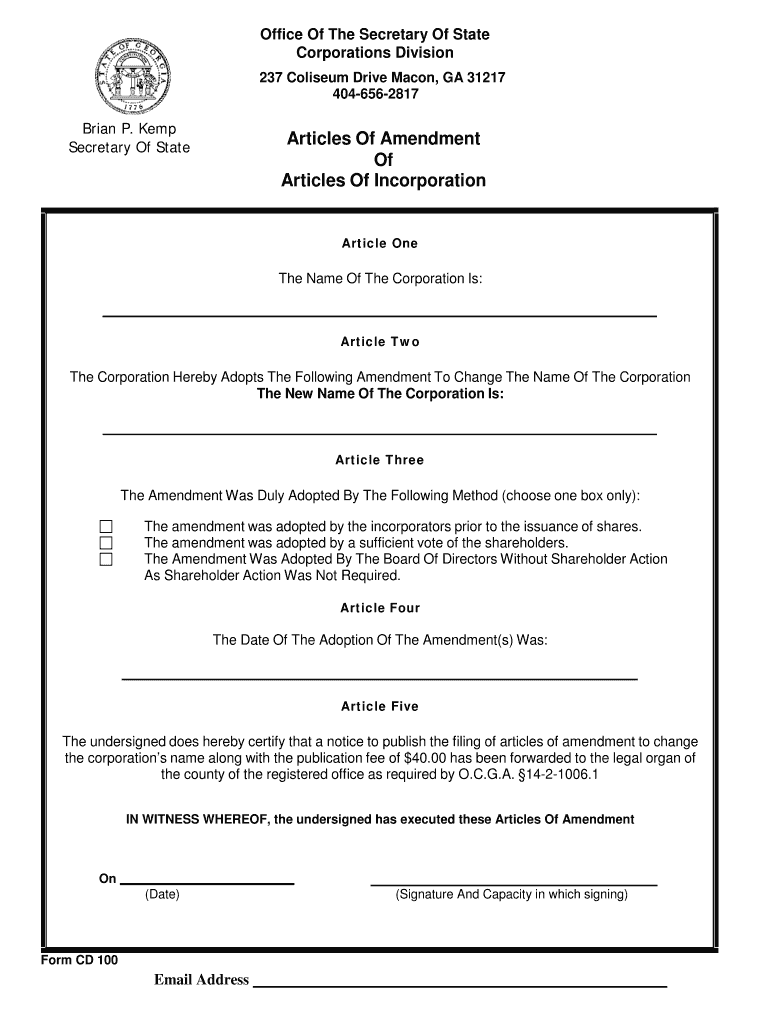







Understanding the Certificate of Conversion in Georgia
The certificate of conversion is a significant legal document utilized in Georgia for changing a business entity—such as the conversion from a limited liability company (LLC) to a corporation, or vice versa. This process is governed by the Official Code of Georgia Annotated (OCGA) 14-11-212, which outlines the requirements and procedures for obtaining this certificate. Understanding its components and implications is crucial for business owners considering restructuring their organization.
Key Elements of a Georgia Certificate of Conversion
A Georgia certificate of conversion includes several essential components:
-
Entity Information: The document must specify the name of the entity being converted and its legal structure before conversion, along with details of the new entity type.
-
Adoption of Amendments: It should outline the method by which the conversion was approved. Typically, this involves resolutions or consents from members or shareholders.
-
Effective Date: The form needs to include the date the conversion becomes effective, which can either be immediate or a specified future date.
-
Signature Requirement: Authorized representatives of the converting entity must sign the document, along with all necessary credentials reflecting their authority.
Steps to Complete the Certificate of Conversion
Completing a certificate of conversion in Georgia requires careful adherence to specific steps. Here’s a clear sequence to follow:
-
Determine Eligibility: Ensure that your entity meets the eligibility requirements to convert to the desired entity type under OCGA 14-11-212.
-
Draft the Certificate: Create the Georgia certificate of conversion template, ensuring all mandatory fields are filled in correctly.
-
Obtain Member Approval: Facilitate a meeting or vote among members or shareholders to approve the conversion, capturing this in written form.
-
Submit the Certificate: File the completed certificate with the Georgia Secretary of State’s office, paying any associated fees for processing.
-
Receive Confirmation: Await confirmation from the Secretary of State, which can be a sign that your conversion has been officially recognized.
Why Consider a Certificate of Conversion?
There are several strategic reasons a business might choose to file for a certificate of conversion:
-
Liability Management: Owners may wish to change their business structure to limit personal liability, especially when moving from a sole proprietorship to an LLC.
-
Capital Raising: Converting to a corporation allows a business to issue shares, potentially attracting a broader range of investors.
-
Tax Considerations: Different business structures can have varied tax implications, necessitating a review of the most favorable setup under current tax law.
Important Terms Related to Georgia's Certificate of Conversion
Familiarity with specific terminology can enhance understanding of the conversion process:
-
OCGA 14-11-212: The specific code section that governs business entity conversions in Georgia.
-
Articles of Incorporation: The foundational documents required for a corporation, which may need to be filed after a successful conversion from an LLC.
-
Member Approval: The consent or vote required from existing owners or stakeholders to authorize the conversion.
Examples of Use Cases for the Certificate of Conversion
Practical scenarios can illustrate the utility of the certificate of conversion:
-
From LLC to Corporation: A tech startup initially established as an LLC seeks venture capital funding and decides to convert to a corporation to issue preferred stock to investors.
-
From Corporation to LLC: An established manufacturing business experiences higher tax burdens as a corporation and converts to an LLC to benefit from pass-through taxation.
Compliance and Legal Considerations
When filing a Georgia certificate of conversion, compliance with state regulations is vital. Failure to follow the procedures outlined in OCGA 14-11-212 can lead to penalties, including potential denial of the conversion request or issues in liability protection. It's advisable to seek legal guidance when navigating this process to ensure all requirements are met properly.
Conclusion on the Importance of the Certificate
The Georgia certificate of conversion is not merely a formality; it is a critical document that facilitates necessary changes in business structures, allowing organizations to adapt to shifting strategic goals. Understanding its requirements, steps, and implications can help business owners navigate this transition more effectively.