01. Edit your form online
Type text, add images, blackout confidential details, add comments, highlights and more.

Type text, add images, blackout confidential details, add comments, highlights and more.

Draw your signature, type it, upload its image, or use your mobile device as a signature pad.

Send it via email, link, or fax. You can also download it, export it or print it out.
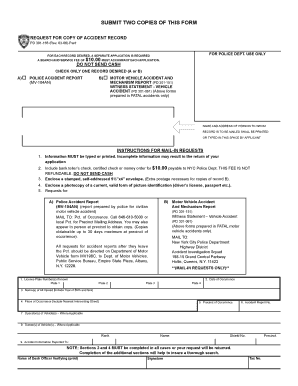
The RA-90 form is a specialized complaint form used by tenants in New York State to report instances where their landlord fails to renew a lease or provide a signed copy under the Rent Stabilization Code. This form serves as an essential tool for tenants to document and officially submit their complaints to the New York State Division of Housing and Community Renewal (DHCR). By using the RA-90 form, tenants can ensure that they are abiding by the legal requirements for lodging a complaint and facilitating a formal investigation into their landlord's compliance with lease renewal obligations.
To effectively leverage the RA-90 form, tenants should follow a systematic approach:
Gather Information: Collect all relevant details about your tenancy, including the lease agreement, communication records with the landlord, and any supporting documents that substantiate your complaint.
Complete the Form: Download the RA-90 form from the official DHCR website or request a copy via mail. Fill out the form thoroughly, ensuring to address all sections, especially the ones detailing your rental history and the nature of your complaint.
Provide Evidence: Attach copies of any evidence that supports your complaint. This may include emails, letters, or any documented interactions with your landlord regarding the lease renewal issue.
Submit the Form: Once completed, you can submit the form to the DHCR either electronically through their online portal or by mailing it to their designated office address.
Filling out the RA-90 form can be navigated through a series of straightforward steps:
Tenant Information: Start by entering your personal and contact details, including your full name, address, and phone number.
Property Details: Provide specifics about the rental property, such as the address, apartment number, and any relevant identifiers.
Complaint Description: Clearly articulate the nature of your complaint, emphasizing how your landlord failed to meet lease renewal requirements.
Supporting Documentation: Identify and list any attached documents that will support your claim, such as copies of the original lease and any correspondence regarding lease renewal.
Sign and Date: Conclude by signing and dating the form to certify the accuracy of the information provided.
The primary users of the RA-90 form are tenants residing in rent-regulated apartments within New York State. These tenants rely on the form to assert their rights under the Rent Stabilization Code, especially in situations where there is a dispute regarding lease renewals. It's particularly valuable for individuals who encounter difficulties in obtaining lease renewals or signed copies of their leases from non-compliant landlords.


The RA-90 form has significant legal importance as it directly ties to tenant rights under New York’s Rent Stabilization Code. By formally filing this complaint form, tenants can initiate an official review and potential enforcement actions against landlords who do not adhere to lease renewal protocols. It provides tenants with a pathway to distribute their grievances within a legal framework and can lead to official DHCR investigations into the landlord's practices.
Certain essential elements are incorporated into the RA-90 form:
The RA-90 form is specifically designed in compliance with New York State regulations, addressing state-specific legal frameworks regarding rental agreements and tenant protections. The Rent Stabilization Code mandates the conditions under which landlords must provide lease renewals, thus tailoring the RA-90 form exclusively to align with these local legal standards.
Failure by landlords to comply with lease renewal obligations, as reported via the RA-90 form, can lead to significant penalties under New York law. These may include:
Understanding these penalties highlights the significance of the RA-90 form as a means of enforcing tenant rights and compelling landlord compliance.
At DocHub, your data security is our priority. We follow HIPAA, SOC2, GDPR, and other standards, so you can work on your documents with confidence.