Definition & Meaning
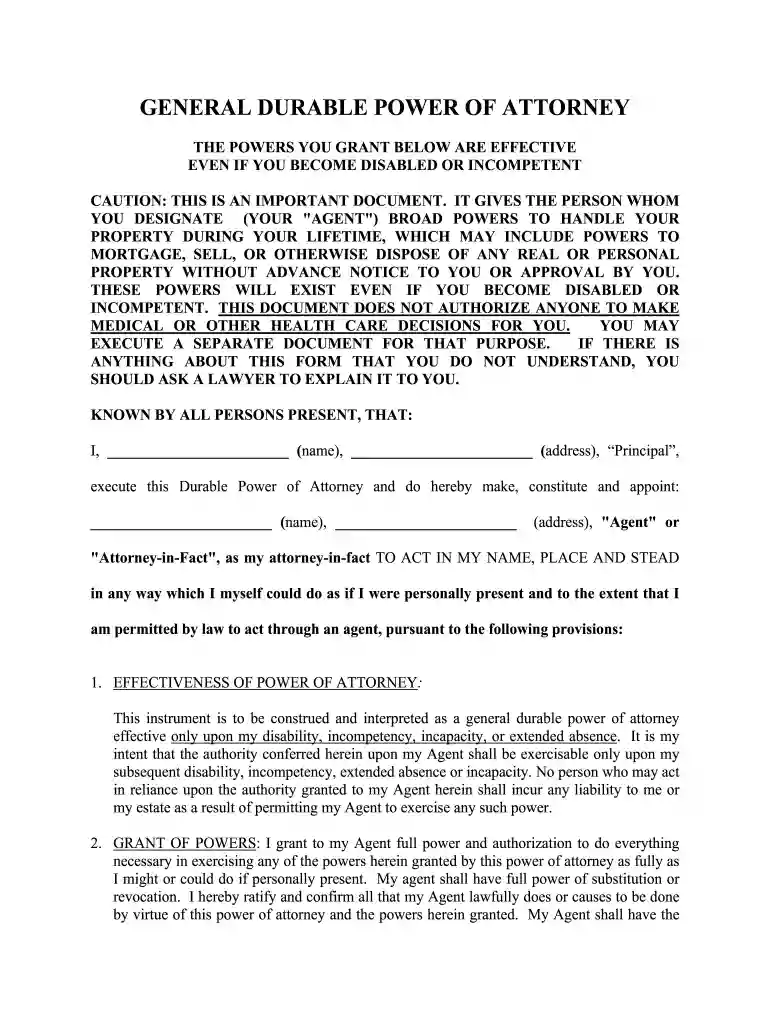
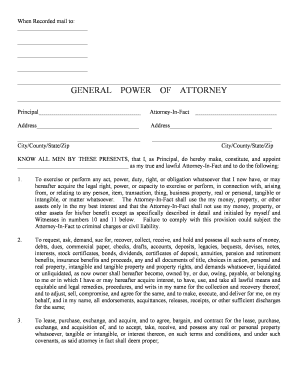
The "Oklahoma General Durable Power of Attorney for Property and Finances or Financial Effective upon Disability" is a legal document that empowers an appointed agent, or attorney-in-fact, to manage the principal's property and financial affairs. This authority remains effective even if the principal becomes incapacitated, ensuring seamless management of their financial matters. It specifically excludes authorization for medical decisions, focusing solely on financial and property-related responsibilities.
How to Use the Oklahoma General Durable Power of Attorney
Utilizing this document involves several critical steps to ensure it is effectively executed:
Selection of an Agent: Choose a trusted individual who understands your financial matters and whom you can rely on to act in your best interest.
Specify Powers Granted: Clearly outline the powers you wish to confer upon your agent, such as handling bank accounts, managing real estate transactions, or dealing with tax matters.
Execution: Sign the document in the presence of a notary public and any required witnesses to ensure its legality.
Important Considerations:
- Revocation Provisions: Include clauses that allow you to revoke the power of attorney if needed.
- Backup Agents: Designate successor agents in case the primary agent is unable or unwilling to act.
Key Elements
Understanding the essential components of this document is crucial:
- Principal Information: Details about the person granting the power.
- Agent's Duties: Clearly defined responsibilities and limitations.
- Effective Date: When the powers come into effect, typically upon the principal's incapacitation.
- Revocation and Termination: Conditions under which the document can be revoked or terminated.
Differences in Power:
- General vs. Specific Powers: Decide if the agent should have broad authority or specified restricted powers.
- Durability: Ensures continuation of power despite the principal’s incapacity.
Who Typically Uses This Document
This form is commonly used by:
- Elderly Individuals: Those preparing for unexpected health changes.
- Military Personnel: Individuals who may be deployed and require someone to manage their financial affairs.
- Business Owners: For continuity in business operations in case of incapacity.
Practical Scenarios:
- A senior appointing their child to handle financial matters if they become unable to do so.
- A military officer deploying overseas and needing someone to manage stateside affairs.
Steps to Complete the Document
Filling out the document accurately is critical. Below is a step-by-step guide:
- Gather Necessary Information: Collect personal details for both the principal and the agent.
- Decide on Powers and Limitations: Determine which financial, legal, or property decisions the agent can make.
- Draft the Document: Input the information into the form, carefully following all instructions.
- Execution: Sign in front of a notary public and witnesses.
Verification Required:
- Notary Public: Ensures the document’s legal standing.
- Witnesses: Provide additional validation of the principal’s intent.
Legal Use
Legal considerations are paramount when utilizing this document:
- State Compliance: Ensure the form adheres to the Oklahoma statutes for power of attorney documents.
- Legally Binding: Once executed properly, the document holds significant legal weight.
Legal Advice:
- Consulting with an attorney during the drafting process can ensure all legal bases are covered and personalized to your situation.
State-Specific Rules
Oklahoma’s specific regulations include:
- Statutory Forms Requirement: Must adhere to state-approved templates for validity.
- Witness Requirement: Oklahoma law does not require witnesses, but a notary is essential.
Unique Provisions:
- Oklahoma may have specific guidelines on what constitutes disabling incapacity, triggering the power of attorney's activation.
Important Terms
Familiarity with these terms aids in effectively using the document:
- Principal: The individual who grants authority to the agent.
- Agent/Attorney-in-fact: The person appointed to manage affairs.
- Incapacity: A state where the principal is unable to manage their own affairs, often medically verified.
Penalties for Non-Compliance
Non-compliance with the legal requirements can lead to:
- Invalidity of Document: Failing to comply with notarization and execution could render the document unenforceable.
- Legal Disputes: Potential conflicts if the document’s validity is contested in court.
Consequences:
- Agents might face legal repercussions if they act beyond their granted authority.
Understanding these detailed aspects of the "Oklahoma General Durable Power of Attorney for Property and Finances or Financial Effective upon Disability" ensures robust preparation and execution, providing peace of mind that your financial affairs will remain managed as intended.