






Definition and Meaning
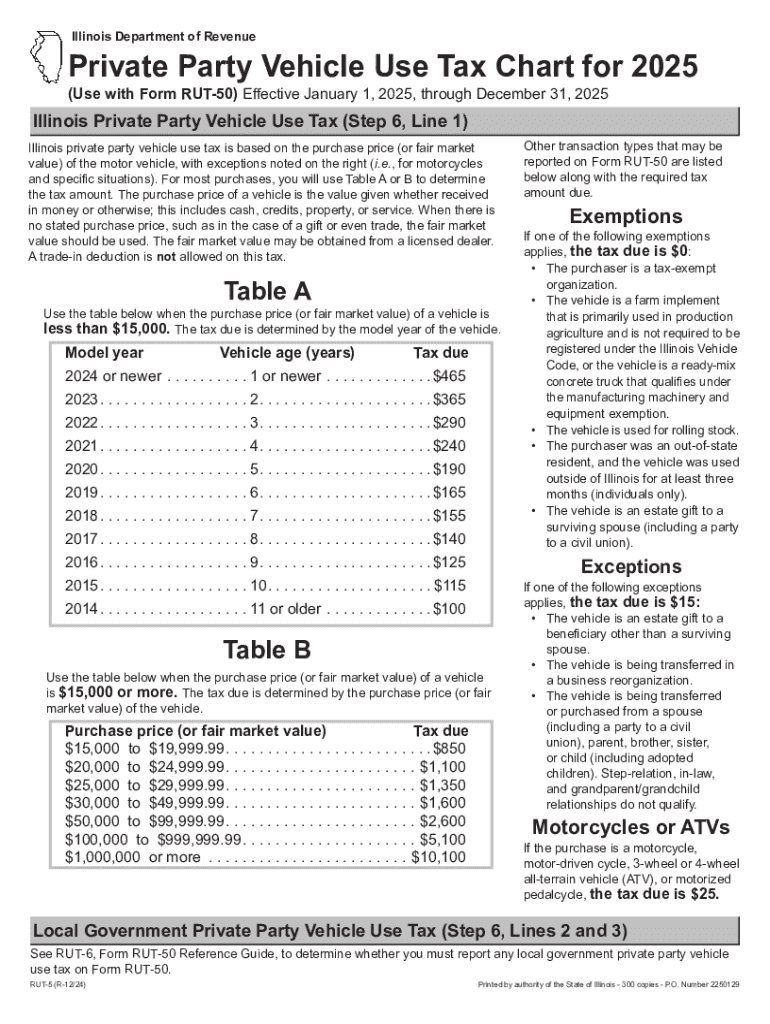
The RUT-5, Private Party Vehicle Use Tax Chart for 2023R1122 is a specialized form used in Illinois to calculate the sales tax imposed on the private sale of a vehicle. Distinct from dealer sales, this form helps individuals determine tax obligations based on the vehicle's purchase price or its market value. The form is primarily used in instances where the vehicle's ownership transfers between private parties, providing a standardized method to assess necessary tax payments. It is crucial for ensuring compliance with the state's taxation regulations, and failure to use the form correctly can result in financial penalties.
How to Use the RUT-5, Private Party Vehicle Use Tax Chart for 2023R1122
Using the RUT-5 involves several calculated steps that ensure accurate tax determination:
-
Identify Vehicle Value: Begin by confirming the vehicle's purchase price or fair market value. This value plays a foundational role in calculating the use tax.
-
Refer to the Chart: Utilize the designated tax chart based on the price and age of the vehicle. There are specific tables for vehicles below and above a $15,000 valuation.
-
Calculate Tax: Based on the appropriate table, calculate the tax owed. For vehicles with differing ages, consult the detailed brackets to determine the precise amount.
-
Complete the Form: Enter all details accurately on the form, including seller, buyer, and vehicle information. Ensure accuracy, as discrepancies can result in tax errors.
-
Submit with Payment: Finalize the transaction by submitting the RUT-5 form alongside the calculated tax payment to the relevant authorities.
Steps to Complete the RUT-5, Private Party Vehicle Use Tax Chart for 2023R1122
Completing the RUT-5 requires careful attention to detail:
-
Gather Required Information: Collect essential data, including the purchase price, vehicle details (such as make, model, VIN), and both parties' personal information.
-
Accurately Fill Out Details: Enter each item into the designated fields on the form. Ensure all information reflects the actual transaction specifics.
-
Refer to Tables A and B: Within the RUT-5, locate Tables A and B. Use these tables to match the correct tax rate based on the value and age of the vehicle.
-
Calculate the Tax: Determine the tax using the data from the appropriate table, ensuring you adhere to any exceptions or exemptions cited.
-
Verification and Submission: Double-check entries for accuracy before submitting. Submit the form with your payment via the specified methods, ensuring timely compliance within set deadlines.
Key Elements of the RUT-5, Private Party Vehicle Use Tax Chart for 2023R1122
The RUT-5 is constituted of several critical components:
-
Table A: Focuses on vehicles valued under $15,000, providing a breakdown based on precise tax amounts linked to vehicle age and valuation brackets.
-
Table B: Addresses vehicles priced $15,000 or above, offering a structured matrix to ascertain tax responsibility based on value and age.
-
Exemptions and Exceptions: Details specific situations where the tax may be reduced or entirely waived. These exemptions depend on certain conditions such as family transfers or specific legal clauses.
-
Personal and Vehicle Information Sections: Requires entries for personal data (buyer and seller), along with detailed vehicle information, guaranteeing relevancy and legality.
Examples of Using the RUT-5, Private Party Vehicle Use Tax Chart for 2023R1122
Practical examples illustrate the form's utility:
-
Example 1: A buyer purchases a 2018 car for $10,000 from a private seller. By consulting Table A, they locate the corresponding tax bracket and find the applicable tax.
-
Example 2: A family transfer involves a 2020 SUV initially valued at $20,000. Using Table B, the related tax bracket is assessed, but exemptions apply due to the family nature of the transfer, potentially waiving the tax.
Filing Deadlines and Important Dates
Complying with deadlines ensures legal adherence:
-
Prompt Filing: The form should be submitted swiftly post-transaction to avoid penalties. Typically, a 30-day window from the purchase or transfer date applies.
-
Key Tax Dates: Familiarize yourself with state-mandated tax dates to ensure submissions are timely, particularly during peak transfer seasons.
Required Documents
While completing the RUT-5, prepare these documents:
- Bill of Sale: Proves the transaction's legitimacy and value.
- Vehicle Title: A necessary piece documenting the transfer of ownership.
- Personal Identification: Valid ID copies may be necessary for proof of identity.
Penalties for Non-Compliance
Ignoring RUT-5 compliance can result in:
- Monetary Fines: Delayed submissions or inaccuracies may lead to fines or additional taxes.
- Legal Repercussions: Continued non-compliance hinders vehicle registration renewals and incurs further legal challenges.