






Definition & Purpose of the VS Form 6-35
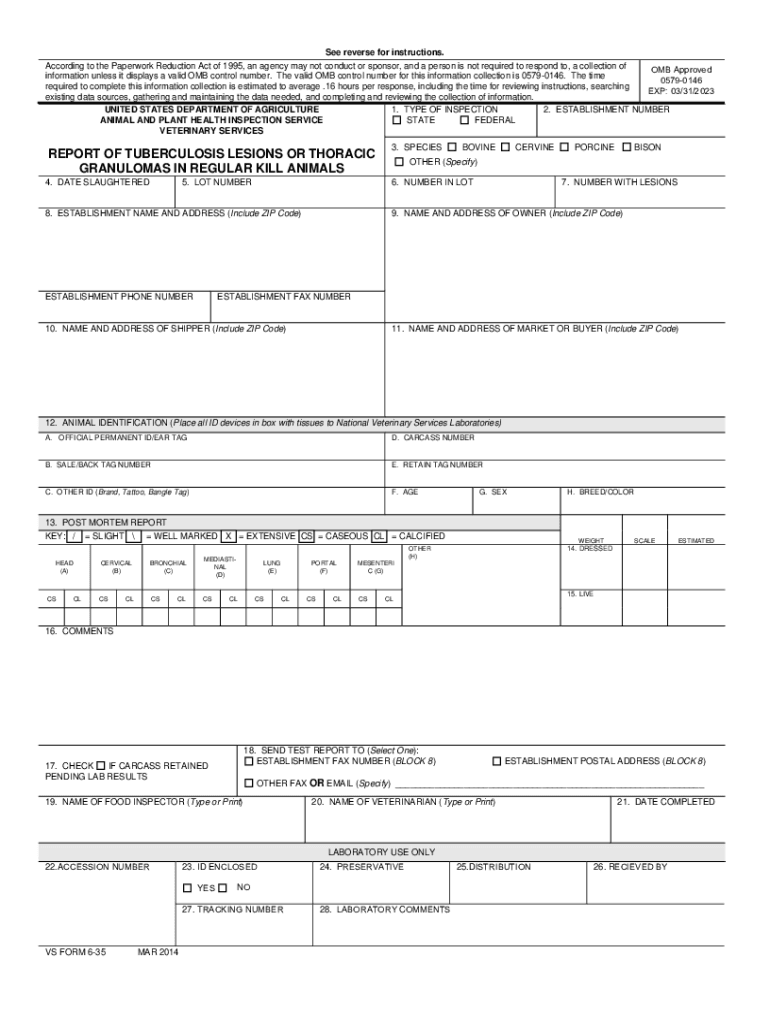
The VS Form 6-35 is a specific document used by the United States Department of Agriculture (USDA) to report tuberculosis (TB) lesions or thoracic granulomas found in animals during the regular kill process. The form is vital for tracking and managing animal health programs focused on controlling and eradicating diseases like Tuberculosis and Brucellosis. It captures essential details about the inspection, such as the type of inspection conducted, the establishment where it took place, animal identification, and detailed specimen submission guidelines.
Steps to Complete the VS Form 6-35
Completing the VS Form 6-35 involves several key steps to ensure all necessary information is accurately recorded. Here's a breakdown of the process:
- Inspection Details: Begin by documenting the type of inspection carried out, detailing whether it was a part of a routine or special inspection.
- Establishment Information: Provide the name, address, and unique identification number of the establishment where the inspection occurred.
- Animal Identification: Record specific details about the animal(s) involved, including identification numbers, breed, age, and sex.
- Specimen Collection: Follow guidelines for sampling, preserving, and shipping specimens. Ensure all samples are correctly labeled and preserved to avoid contamination.
- Document Handling: Complete all required sections legibly and accurately. Double-check entries to ensure compliance with the USDA's requirements.
Importance of the VS Form 6-35
The VS Form 6-35 plays a critical role in the USDA's efforts to monitor and control animal diseases. It supports data collection that informs public health policies and disease prevention strategies. This form is essential for maintaining transparency and accountability in animal health management and helps ensure that the United States complies with international animal health standards.
Who Typically Uses the VS Form 6-35
The primary users of the VS Form 6-35 are veterinary inspectors, animal health officials, and personnel involved in the slaughter and processing of animals. These individuals are responsible for identifying TB lesions or thoracic granulomas and ensuring proper documentation on the form. Additionally, epidemiologists may use data from the form to study disease patterns and improve control measures.


Legal Implications of the VS Form 6-35
Using the VS Form 6-35 correctly is important for legal compliance with USDA regulations. Failure to accurately complete this form can lead to non-compliance issues, potentially resulting in penalties or impacting an establishment's operational license. The form ensures thorough documentation, which is crucial for legal and regulatory purposes, safeguarding public health and animal welfare.
Key Elements of the VS Form 6-35
Several critical components must be addressed when filling out the form:
- Inspection Type: Specify the nature of the inspection and any findings related to TB lesions or granulomas.
- Sample Details: Include detailed information about the collection and handling of tissue samples.
- Compliance: Ensure all entries comply with the Paperwork Reduction Act and USDA guidelines for document submission and data protection.
How to Obtain the VS Form 6-35
The VS Form 6-35 is typically made available through the USDA's Animal and Plant Health Inspection Service (APHIS) offices. It can be accessed in both digital and paper formats, depending on the preference and available infrastructure of the establishment. For those who prefer a digital workflow, it may be possible to integrate the form into USDA-approved software systems for seamless data entry and submission.
Examples of Using the VS Form 6-35
Consider a scenario where a veterinary inspector discovers potential TB lesions during an animal inspection. The inspector would utilize the VS Form 6-35 to document findings, capture the necessary specimen information, and submit the report to USDA authorities. In another example, an epidemiologist may analyze compiled data from multiple forms to identify trends in TB outbreaks and propose policy changes to mitigate future risks.
State-Specific Considerations for the VS Form 6-35
While the VS Form 6-35 is a federal document, specific states might have additional requirements or guidelines for using the form. For instance, some states may have extra documentation procedures or need additional approvals before submissions are finalized. It is crucial for users of this form to be aware of both federal and state-specific regulations to ensure comprehensive compliance.