






Definition and Meaning
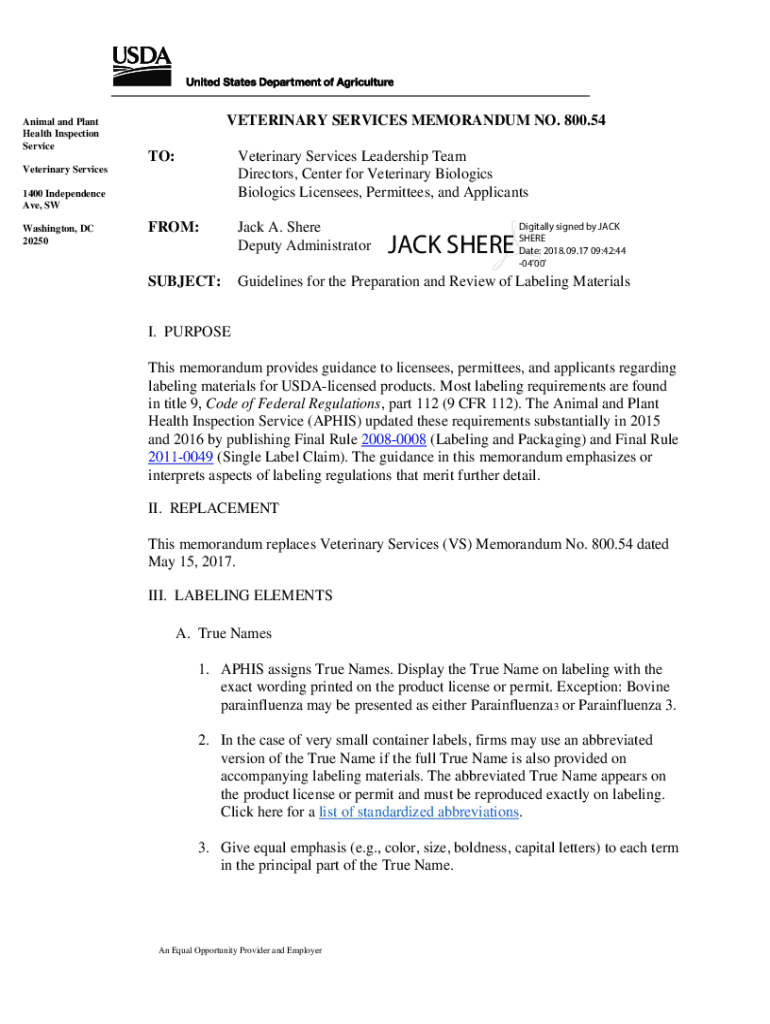
The Animal and Plant Veterinary Services Memorandum No. 800 51 is an official document from the Animal and Plant Health Inspection Service (APHIS). It provides specific guidelines and regulations concerning the preparation and review of labeling materials intended for USDA-licensed veterinary products. These guidelines encompass critical aspects such as the use of True Names, Trade Names, and Functional Names, ensuring accurate representation of veterinary products on labels. Additionally, the memorandum includes regulations regarding statements on product efficacy, storage conditions, and revaccination recommendations, promoting clarity and compliance with the 9 CFR 112 regulations. By adhering to these guidelines, businesses engaged in the development and distribution of veterinary products ensure legal compliance and uphold consumer trust.
How to Use the Animal and Plant Veterinary Services Memorandum No. 800 51
To effectively utilize Memorandum No. 800 51, businesses must integrate its guidelines into their labeling processes. This involves:
- Reviewing Labeling Materials: Ensure that all labels conform to the outlined standards, with proper use of names and required statements as directed by the memorandum.
- Training Staff: Individuals responsible for label creation and review must be well-versed in these guidelines. This ensures that all team members are informed and compliant.
- Ongoing Compliance Checks: Regular audits of labeling practices should be conducted to maintain alignment with any updates in the memorandum or related regulatory changes.
By following these steps, businesses can ensure that their products meet the required labeling standards, thereby avoiding regulatory penalties and potential market issues.
Key Elements of the Animal and Plant Veterinary Services Memorandum No. 800 51
The memorandum includes several critical elements designed to standardize and regulate veterinary product labeling:
- True and Trade Names: Clear guidelines are provided for using correct product names to ensure consumer understanding and legal compliance.
- Functional Names: These are required for clarity about the product's purpose and enhance transparency.
- Efficacy and Storage Information: Labels must include details about product efficacy and storage conditions, ensuring safe usage and handling.
- Revaccination Recommendations: Guidelines for labeling revaccination protocols are included, providing important information for maintaining animal health.
These elements are vital for businesses to ensure their products are accurately represented, legally compliant, and user-friendly.
Steps to Complete the Animal and Plant Veterinary Services Memorandum No. 800 51
Completing the memorandum involves adhering to its guidelines through a series of deliberate steps:
- Understand Requirements: Study the memorandum to comprehend all requirements.
- Label Drafting: Draft labels that fully incorporate these guidelines, ensuring all elements are covered.
- Internal Review: Conduct a detailed review with emphasis on compliance with 9 CFR 112 and other regulatory requirements.
- Feedback Loop: Implement a system where stakeholders can provide input and necessary changes are made.
- Final Approval: Obtain internal approvals before labels proceed to packaging.
These steps ensure thorough compliance with the memorandum and provide confidence in the final product labeling.
Legal Use of the Animal and Plant Veterinary Services Memorandum No. 800 51
Compliance with the memorandum ensures legal adherence in the following ways:
- Regulatory Alignment: Adhering to guidelines ensures alignment with federal regulations, avoiding legal pitfalls.
- Product Liability Protection: Proper labeling as per guidelines minimizes risks associated with product liability claims.
- Market Trust: Legal compliance enhances consumer and market trust in products, supporting business growth and stability.
Maintaining legal use through diligent adherence to the memorandum is essential for minimizing risks and promoting responsible business practices.
Who Issues the Form
The Animal and Plant Veterinary Services Memorandum No. 800 51 is issued by the Animal and Plant Health Inspection Service (APHIS), a division of the United States Department of Agriculture (USDA). APHIS is responsible for ensuring the health and safety of animals and plants, with this memorandum being part of their efforts to regulate and control veterinary product labeling to prevent misinformation and promote public health standards.
Important Terms Related to Animal and Plant Veterinary Services Memorandum No. 800 51
To fully grasp the memorandum, familiarity with several important terms is essential:
- True Name: The official name of the product as recognized by regulatory authorities.
- Trade Name: The commercial name under which the product is marketed.
- Functional Name: A descriptor indicating the primary function of a product, aiding in consumer understanding.
Understanding these terms aids businesses in crafting labels that meet regulatory requirements and facilitate consumer comprehension.
Who Typically Uses the Animal and Plant Veterinary Services Memorandum No. 800 51
This memorandum is primarily utilized by:
- Manufacturers of Veterinary Products: To ensure compliance in product labeling.
- Regulatory Compliance Officers: For implementing and monitoring adherence to guidelines.
- Label Designers: To incorporate the required elements into labels for legal compliance and informational accuracy.
By utilizing the memorandum, these stakeholders ensure that the veterinary products meet necessary standards and regulations.


Examples of Using the Animal and Plant Veterinary Services Memorandum No. 800 51
Practical applications include:
- Label Revisions: A company may use the memorandum to revise product labels to comply with new efficacy statement rules.
- Training Modules: Developing training modules for staff focused on understanding and implementing labeling guidelines.
- Quality Assurance: Incorporating memorandum guidelines into QA processes to verify product labels before distribution.
These examples highlight how businesses can integrate the memorandum into their practices for improved compliance and product quality.