01. Edit your form online
Type text, add images, blackout confidential details, add comments, highlights and more.

Type text, add images, blackout confidential details, add comments, highlights and more.

Draw your signature, type it, upload its image, or use your mobile device as a signature pad.

Send it via email, link, or fax. You can also download it, export it or print it out.
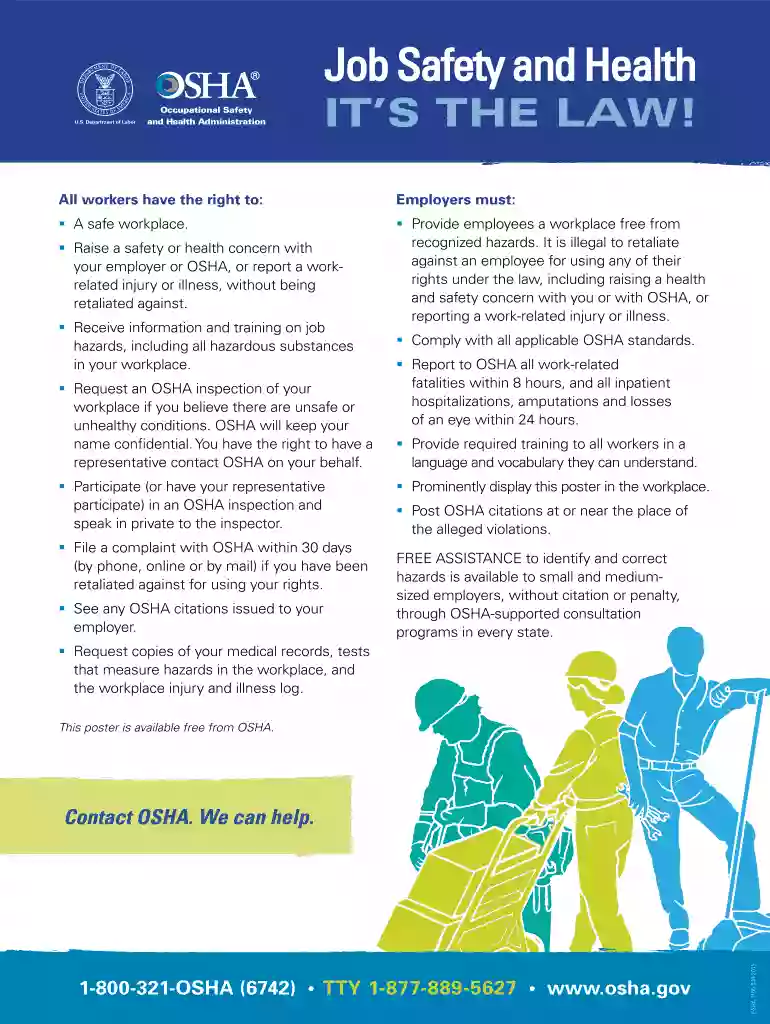
Workplace Safety and Health as regulated by the U.S. Department of Labor encompasses guidelines, standards, and procedures aimed at maintaining safe working environments. These standards address various hazards such as chemical exposure, mechanical risks, and ergonomic concerns, thereby fostering a secure workplace. By adhering to the Occupational Safety and Health Administration (OSHA) regulations, employers demonstrate a commitment to their employees' health and well-being, which can significantly reduce workplace injuries and illnesses.
Familiarity with certain key terms is crucial when dealing with OSHA standards:
Understanding these terms helps in comprehending the full scope of safety measures and requirements.
Achieving compliance with the Department of Labor's safety standards involves several steps:
These steps form the foundation of a comprehensive workplace safety strategy, essential for creating a health-conducive environment.
Employers must strategically apply these guidelines to cultivate a safe working environment:
Employing these methods ensures adherence to federal safety standards and fosters a culture of proactive safety management.
Various industries and business types benefit from these safety regulations, including:
These entities, among others, utilize guidelines to manage and minimize occupational hazards effectively.


Workplace Safety documents include several critical elements:
These components are essential to creating a comprehensive safety documentation framework, which is pivotal in maintaining compliance.
Compliance with workplace safety guidelines is enforceable by law, with financial penalties and operational restrictions acting as deterrents:
Understanding the legal landscape underscores the necessity of compliance with safety regulations.
Although federal guidelines are overarching, states can impose additional regulations that influence workplace safety:
Knowledge of state-specific requirements ensures more nuanced compliance efforts tailored to local jurisdictions.
Successful implementation of safety standards involves practical applications:
These examples illustrate how businesses can transform safety guidelines into tangible outcomes that promote health and productivity.
We've got more versions of the Workplace Safety and HealthU S Department of Labor form. Select the right Workplace Safety and HealthU S Department of Labor version from the list and start editing it straight away!
At DocHub, your data security is our priority. We follow HIPAA, SOC2, GDPR, and other standards, so you can work on your documents with confidence.