Definition and Meaning
The Certificate of Ownership for Personally Owned Wildlife "Pet," also referred to as a 'Pet Passport' under CITES regulations, is an essential legal document. It establishes the ownership and legal compliance associated with possessing certain types of wildlife classified as pets in the United States. This certificate ensures that owners meet all local, state, and federal regulations concerning the care and ownership of exotic animals. It is particularly pertinent for endangered or protected species where international regulations and monitoring exist to safeguard these animals’ welfare and conservation.
Purpose and Functionality
- Ensures legal ownership and compliance with wildlife regulations.
- Facilitates international travel and identification of pets classified as wildlife.
- Demonstrates adherence to CITES guidelines for endangered and protected species.
- Serves as proof of ownership in disputes or legal matters.
How to Use the Certificate
The use of the Certificate of Ownership for Personally Owned Wildlife "Pet" extends beyond merely owning an animal. It serves multiple operational functions, such as providing legal protection and verifying regulatory compliance.
Applications in Practical Scenarios
- Travel: Required for legally transporting wildlife pets across state lines or international borders under CITES regulations.
- Insurance: Used to verify ownership for insurance purposes, ensuring comprehensive coverage for your wildlife pet.
- Veterinary Care: Facilitates informed decisions in veterinary treatments and interventions.
Usage Procedures
- Verification: Present the certificate during inspections by wildlife authorities.
- Documentation: Provide the certificate in case of legal disputes involving ownership.
- Record Keeping: Retain updated copies as proof of legal compliance and changes in pet status.
How to Obtain the Certificate
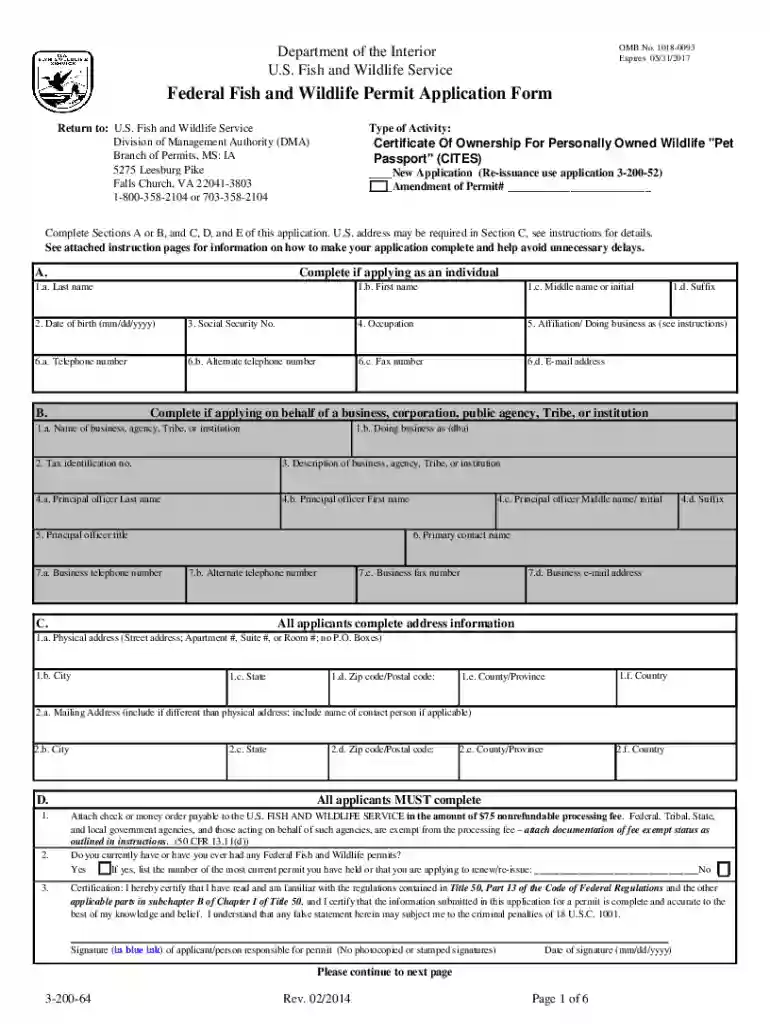
Getting a Certificate of Ownership for Personally Owned Wildlife "Pet" involves a structured application process with the U.S. Fish and Wildlife Service. This assures compliance with national and international wildlife laws.
Application Process
- Prepare Required Information: Collect essential data such as the pet’s species, origin, and personal identification details.
- Submit Application: Complete the Federal Fish and Wildlife Permit Application Form, ensuring all required fields are filled.
- Supporting Documents: Provide necessary documentation, including proof of legal ownership and veterinary health certificates.
Associated Costs
- Application fees are mandated, subject to the type and status of the wildlife pet.
- Additional charges might apply for expedited processing or special handling requests.
Steps to Complete the Application
Completing the application for a Certificate of Ownership for Personally Owned Wildlife "Pet" requires attention to detail to avoid legal and administrative setbacks.
Detailed Steps
- Obtain the Form: Access the Federal Fish and Wildlife Permit Application Form from the U.S. Fish and Wildlife Service.
- Fill in Details: Provide comprehensive pet information, including species name, identification marks, and origin.
- Attach Documents: Include proof of legal acquisition and health certificates verified by licensed veterinarians.
- Fee Payment: Pay the necessary application fee through the accepted payment methods.
- Review: Double-check all entries for accuracy before submission.
- Submit the Application: Send the completed form and documents to the designated governmental office.
Common Mistakes
- Omitting critical information about the pet's origin.
- Failing to attach necessary certifications.
- Incorrect fee calculation or delayed payment.
Key Elements of the Certificate
The Certificate of Ownership for Personally Owned Wildlife "Pet" contains several critical elements that provide comprehensive regulatory information.
Core Components
- Pet Identification: Includes species name, microchip details, and other identifiers.
- Owner Information: Name, address, and contact details for the registered owner.
- Regulatory Compliance: CITES certification numbers and associated legal codes.
- Transport Permissions: Details any restrictions or permissions for travel.
Legal Use of the Certificate
The legal use of the Certificate of Ownership for Personally Owned Wildlife "Pet" extends to compliance checks and enforcement scenarios mandated by law enforcement and environmental agencies.
Important Legal Aspects
- CITES Compliance: Ensures adherence to international wildlife conservation agreements.
- Ownership Disputes: Serves as evidence in legal disputes over pet ownership.
- Regulatory Checks: Acts as a crucial document during inspections and enforcement by wildlife authorities.
State-Specific Rules
While the Certificate is governed by federal guidelines, each state may implement additional regulations affecting wildlife ownership.
Notable Variations
- California: Requires additional state-specific permits for certain exotic species.
- Florida: Enforces strict guidelines for habitat conditions for wildlife pets.
- Texas: May necessitate a comprehensive background check before certificate issuance.
Managing State Requirements
- Stay informed about state-specific regulations that apply to your wildlife pet.
- Regularly update certifications and permits to maintain compliance.
- Consult with wildlife professionals specializing in state laws for specific guidance.
Examples of Using the Certificate
Practical examples of using the Certificate of Ownership for Personally Owned Wildlife "Pet" illustrate its importance in real-world situations and its role in ensuring the welfare of the pet and owner compliance.
Illustrative Cases
- Educational Programs: Animal trainers may use the certificate to demonstrate legal possession of wildlife during educational events.
- Conservation Efforts: Wildlife researchers possessing animals for studies in conservation projects must hold valid certificates.
- Rehabilitation Centers: Centers caring for sick or injured wildlife use certificates to validate their rehabilitation activities and legal compliance.