






Definition and Meaning of the CG4260 PDF Application and Permit to Handle Hazardous Materials
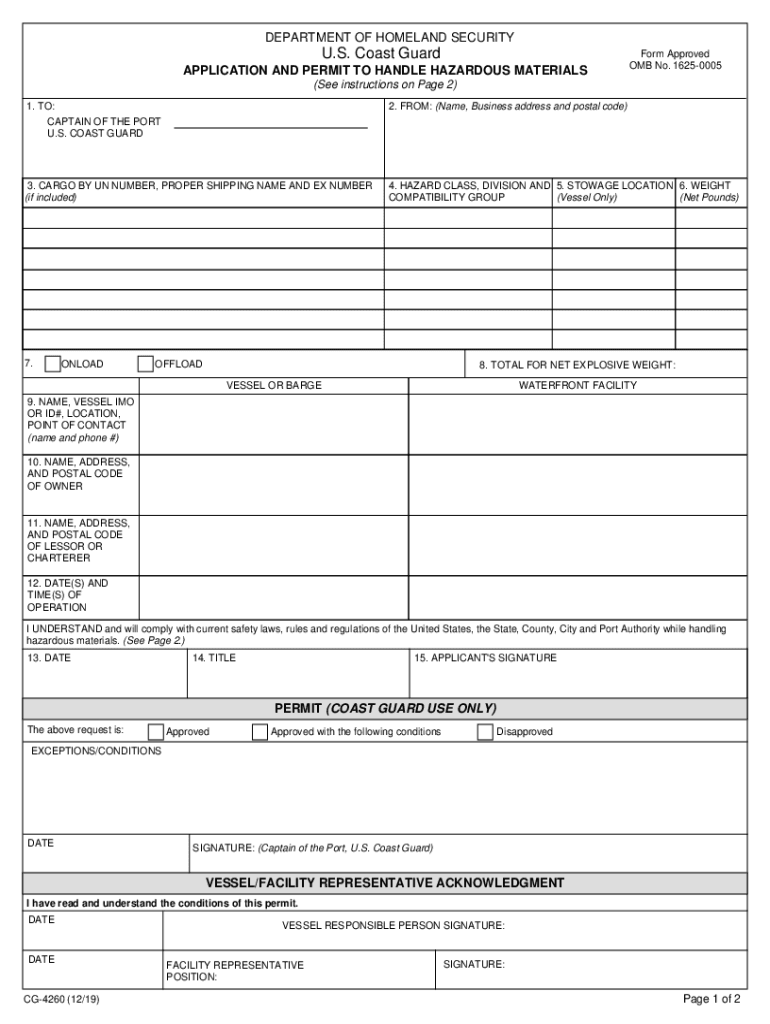
The CG4260 PDF Application and Permit to Handle Hazardous Materials is a crucial document provided by the U.S. Coast Guard for individuals and organizations seeking permission to transport or work with potentially dangerous substances. It serves as a formal request and authorization, ensuring that all operations involving hazardous materials comply with safety guidelines and legal regulations. This application requires comprehensive details about the materials in question, including their classification and the compliance standards to be met. Understanding this document’s purpose is essential for all parties involved in the handling of hazardous materials to prevent accidents and legal violations.
How to Use the CG4260 PDF Application and Permit to Handle Hazardous Materials
When using the CG4260 form, it is important to follow the outlined procedures accurately to avoid delays in approval. Key steps include:
-
Gather Necessary Information: Collect all required details about the hazardous materials. This includes cargo identification, hazard classification, and intended handling methods.
-
Complete the Form: Fill out each section of the form with precision. Be sure to provide valid and up-to-date information, particularly regarding any potential safety concerns and the measures in place to mitigate them.
-
Verification and Double-Check: Before submission, review the entire form to ensure accuracy and completeness. Errors or omissions can lead to processing delays or rejection.
-
Submission: Submit the form through the approved channels, which may vary based on the requirements set forth by the U.S. Coast Guard.
How to Obtain the CG4260 PDF Application and Permit to Handle Hazardous Materials
To obtain the CG4260 PDF Application and Permit, applicants should:
-
Visit the Official Website: Begin by accessing the U.S. Coast Guard’s official website, where the form can be downloaded in PDF format.
-
Check Local Regulations: Depending on the state or region, there might be specific guidelines or additional forms to fulfill before submitting the application.
-
Acquire Supporting Documents: Collect necessary supporting documents that substantiate the details filled in the application, such as safety plans or previous approval records.
Steps to Complete the CG4260 PDF Application and Permit to Handle Hazardous Materials
Completing the application entails a structured approach to ensure all elements are adequately addressed:
-
Read Instructions Carefully: Familiarize yourself with the form’s instructions to understand specific sections that may need additional input.
-
Enter Basic Details: Fill in basic information like company name, contact details, and relevant identification numbers.
-
Describe Hazardous Materials: Provide a clear and concise description of the materials, including their classification, packaging, and storage requirements.
-
Outline Safety Procedures: Detail the safety measures in place to handle the materials safely.
-
Review and Sign: Once all sections are accurately completed, the form should be reviewed thoroughly and signed by the authorized individual.
Who Typically Uses the CG4260 PDF Application and Permit to Handle Hazardous Materials
The CG4260 form is typically utilized by:
-
Transport Companies: Those involved in the shipment of hazardous materials by sea, air, or road need this permit to ensure compliance with international safety standards.
-
Manufacturing Firms: Industries dealing with the production of chemicals or other potentially hazardous products often require this permit for legal compliance.
-
Research Institutions: Organizations performing scientific research that involves hazardous substances need this form to legally handle such materials.


Key Elements of the CG4260 PDF Application and Permit to Handle Hazardous Materials
Key elements of the CG4260 form include:
-
Applicant Information: Basic identification details including name, address, and contact information.
-
Material Description: Detailed information about the hazardous materials to be handled, including hazard category and quantity.
-
Safety Measures: Comprehensive outline of safety precautions and emergency response strategies to be implemented.
-
Compliance Confirmation: Declaration confirming adherence to relevant federal, state, and local laws.
Legal Use of the CG4260 PDF Application and Permit to Handle Hazardous Materials
The legal use of the CG4260 form is mandated by U.S. Coast Guard regulations to enhance safety and limit liability:
-
Regulatory Compliance: Ensures that all hazardous material handling meets strict safety and environmental regulations.
-
Operational Authorization: Legally authorizes companies and individuals to proceed with activities involving hazardous substances.
-
Risk Mitigation: Minimizes potential risks associated with hazardous material transport or use, safeguarding public health and infrastructure.
Penalties for Non-Compliance
Non-compliance with the requirements of the CG4260 PDF Application can lead to substantial penalties. These can include:
-
Fines: Financial penalties levied for violations such as unauthorized handling of hazardous materials.
-
Suspension of Operations: Temporary or permanent cessation of activities involving hazardous materials until compliance is achieved.
-
Legal Liability: Increased liability in the event of incidents or accidents due to non-compliance with safety standards.