Definition and Meaning of the Consent to Toxicology Form
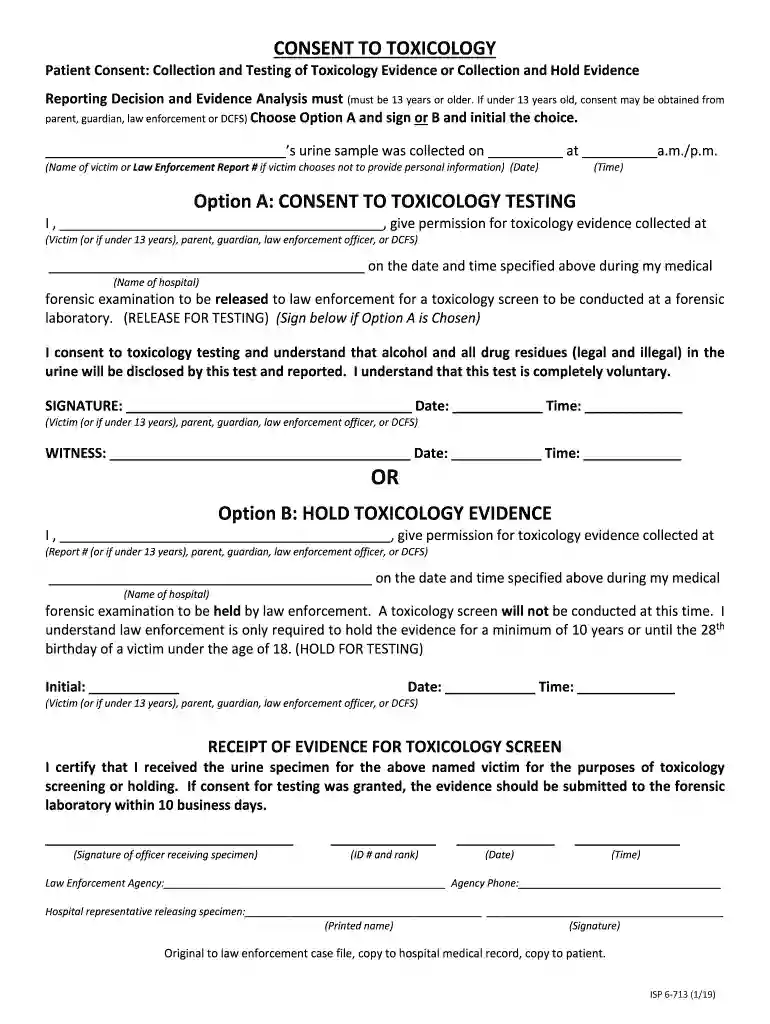
The "Consent to Toxicology Form" is a crucial document used in the legal and medical fields to authorize the testing of biological samples for toxic substances. This form typically aims to obtain permission from individuals, or their legal guardians in the case of minors, to conduct toxicology tests, which are often essential in forensic investigations and clinical assessments. The form may outline conditions under which the results can be shared with law enforcement or held for future reference. It is a tool to ensure that the subjects understand and agree to the testing procedures and the potential use of the test results.
Importance of the Consent Process
- Ensures Informed Decision-Making: The form provides detailed information about the testing process, allowing individuals to make informed decisions.
- Legal Protection: It acts as a legal protection for both the testing entities and the subjects by documenting informed consent.
- Ethical Compliance: Ensures that the testing process adheres to ethical standards and respects the subject's rights.
How to Use the Consent to Toxicology Form
To effectively use the Consent to Toxicology Form, follow these essential steps:
- Review the Document Thoroughly: Individuals should read the entire form to understand all stipulations, including any legal implications of consenting or refusing the test.
- Seek Clarification: If any part of the form is unclear, consult the administering authority, such as a legal representative or medical professional, for clarification.
- Complete Required Sections: Carefully fill out all mandatory fields, including personal identification and details about the individual providing consent.
- Sign and Date the Form: The form must be signed and dated by the individual or their authorized representative to confirm consent.
Practical Considerations
- Understand Options: The form often includes options regarding how the toxicology data may be used, such as for immediate testing or storing for potential future analysis.
- Review Age Requirements: Age-specific requirements may necessitate a guardian's consent for minors.
Steps to Complete the Consent to Toxicology Form
Completing the form can typically be broken down into several key steps:
- Personal Information: Enter your full name, date of birth, and contact details.
- Purpose of Testing: Indicate the reason why the test is being conducted, which may vary from medical assessment to legal investigation.
- Consent Options: Choose between different consent options, such as permitting full testing and reporting or opting for limited use of the results.
- Signature and Date: Provide your signature and the date to validate the consent.
Step-by-Step Detailed Guide
- Identify the Sample: Specify the type of sample to be tested (e.g., urine, blood).
- Legal Guardian Signature: If applicable, ensure the form includes the signature of a legal guardian.
- Include Witness: Some forms may require a witness's signature to further validate the consent.
Legal Use of the Consent to Toxicology Form
The legal use of the Consent to Toxicology Form spans several aspects:
Compliance with Legal Standards
- Adherence to Federal Guidelines: The form ensures compliance with U.S. federal laws governing the use and storage of biological samples for toxicology.
- State-Specific Regulations: Different states may have specific rules regarding the necessity and application of the form, which should be adhered to for legal validity.
Documenting Informed Consent
- Providing Proof of Understanding: The form serves as documented proof that the individual has been informed about and agrees to the testing process.
- Facilitating Legal Processes: In cases of disputes or legal proceedings, the form can serve as evidence of consented actions.
Key Elements of the Consent to Toxicology Form
Understanding the key elements of the form can help ensure that all necessary information is captured correctly:
Core Components
- Information Clause: Details the testing procedures and potential risks involved.
- Consent Statements: Includes explicit statements where subjects can agree or disagree with specific testing options.
- Risks and Benefits: Outlines potential risks and benefits associated with the toxicology test process.
Additional Elements
- Contact Information: Provides details on who to contact for concerns or questions regarding the test.
- Data Use Statement: Clarifies how the test results will be used and who will have access to them.
State-Specific Rules for the Consent to Toxicology Form
Different states within the United States may have varying legal requirements for the implementation of the Consent to Toxicology Form:
- Age of Consent Variations: Some states may have different legal ages for providing independent consent to toxicology testing.
- Mandatory Reporting Requirements: States may have different reporting obligations for positive test results, particularly if they pertain to legal cases.
Examples
- California: May require additional documentation for drug-related toxicology tests.
- Texas: Could impose stricter guidelines on consent forms used in criminal investigations.
Examples of Using the Consent to Toxicology Form
Real-world applications and scenarios where the Consent to Toxicology Form is utilized:
Forensic Investigations
- Application: Used in cases involving DUI offenses to validate the presence and level of intoxicants.
- Process: Consent is obtained before a urine or blood sample is tested.
Clinical Assessments
- Purpose: Facilitates the diagnosis and treatment of medical conditions related to substance use.
- Implementation: Often used in rehabilitation centers to monitor patient progress.
Required Documents for the Consent to Toxicology Form
To complete and submit the form, certain supporting documents may be required:
Essential Documents
- Identification Proof: A government-issued ID to verify the subject's identity.
- Medical Records: Previous health records, if relevant to the toxicological assessment.
Supplementary Documents
- Legal Authorizations: Documentation of power of attorney if someone else is consenting on behalf of the subject.
- Guardian Approval: Legal documents confirming guardianship if the subject is a minor.