Definition & Meaning
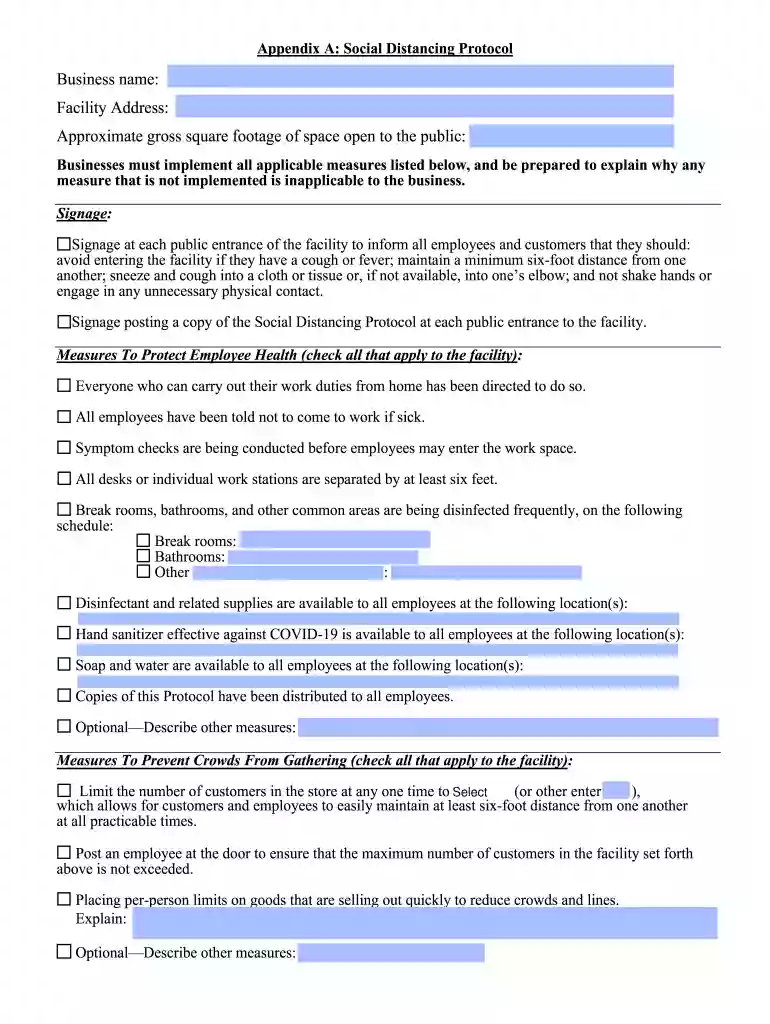
The form titled "Business name: Facility Address: Approximate gross square" appears to be related to the registration or reporting of business properties, specifically focusing on the business's name, its physical location, and the size of the facility. This form might be used for administrative, regulatory, or tax purposes where businesses are required to submit accurate information about their operational premises. Understanding the role of each element is crucial for completing the form accurately:
- Business name: Identifies the legal or registered name of the enterprise. It is critical for official records and distinct identification from other entities.
- Facility address: Refers to the physical location where business activities occur. This is essential for zoning, compliance, and service delivery.
- Approximate gross square: Indicates the total square footage of the business property, which can impact property taxes, lease agreements, and operational considerations.
How to Obtain the Business name: Facility Address: Approximate Gross Square Form
Acquiring the form generally involves contacting the relevant local or state authority responsible for business registrations or property records. Here are potential avenues:
- Local Government Offices: City or county offices often manage forms related to business and property.
- Official Websites: Many jurisdictions offer downloadable forms through their official government websites.
- Business Registrars: For areas with central business registries, inquiries can be directed to these entities.
Understanding where to access the form helps streamline the process, ensuring that all relevant information is sourced from recognized channels.
Steps to Complete the Business name: Facility Address: Approximate Gross Square
Completing this form requires careful attention to detail to ensure accuracy and compliance. Follow these steps:
- Gather Necessary Information: Collect details such as business registration documents, physical addresses, and building plans for square footage.
- Complete the Business Name Section: Ensure the business name matches registered documentation exactly.
- Accurately Fill the Facility Address: Provide the full and precise address, including street number, city, state, and ZIP code.
- Calculate the Approximate Gross Square: Use building plans or a property surveyor to measure and report the square footage.
- Review for Accuracy: Double-check for any transcription errors or omissions before submission.
- Submit: Follow the specified protocol for form submission—whether online, by mail, or in-person.
Why Should You Complete the Business name: Facility Address: Approximate Gross Square
Filling out this form accurately has several benefits and legal necessities:
- Compliance: Ensures your business meets regulatory requirements set by local or state authorities. Non-compliance might result in fines, penalties, or operational disruptions.
- Taxation: Accurate property size reporting impacts property tax assessments.
- Operational Legality: Demonstrating valid premises identification supports licensing and operational legitimacy.
Understanding the importance of this form solidifies its role in business governance and operations management.
Key Elements of the Business name: Facility Address: Approximate Gross Square
Certain elements are critical for the precise completion of this form:
- Legal Business Name: Must match the name registered with relevant authorities.
- Exact Facility Address: Requires complete address information to ensure proper identification of premises.
- Gross Square Footage: Typically determined using professional measurement techniques, reflecting total usable space.
Each component plays a distinct role in the administrative process, affecting aspects from legal compliance to operational logistics.
State-Specific Rules for the Business name: Facility Address: Approximate Gross Square
State regulations vary significantly concerning business documentation:
- Zoning Laws: Certain states might require additional documentation related to local zoning laws.
- Regional Compliance: Some states maintain stricter guidelines on property size and business operations.
- Submission Protocols: Procedures and requirements for submission may differ according to state-level bureaucracy.
Knowledge of state-specific rules ensures compliance, avoiding administrative or financial penalties.
Legal Use of the Business name: Facility Address: Approximate Gross Square
Legal compliance concerning this form involves adherence to regulations set by governing bodies:
- Validation of Business Operations: Legal recognition of the business's presence and operational space.
- Regulatory Compliance: Ensures all business activities occur within legal and approved frameworks.
- Documentation for Disputes: Offers evidence in case of disputes regarding business premises or factions.
Awareness of legal aspects surrounding the form underscores its importance in maintaining business legitimacy.
Examples of Using the Business name: Facility Address: Approximate Gross Square
Examples illustrate the form's application across various scenarios:
- Case Study 1: A Retail Chain used the form to report facility sizes accurately, impacting property tax calculation and lease negotiations.
- Case Study 2: A Manufacturing Firm relied on comprehensive address and square footage entries to secure operational permits.
- Case Study 3: A Startup utilized the form information to validate premises for insurance purposes and risk assessment.
These examples offer insights into practical applications, reflecting the form's value in business management and regulation.