Oregon Vaccines for Children: 2026

Get Form
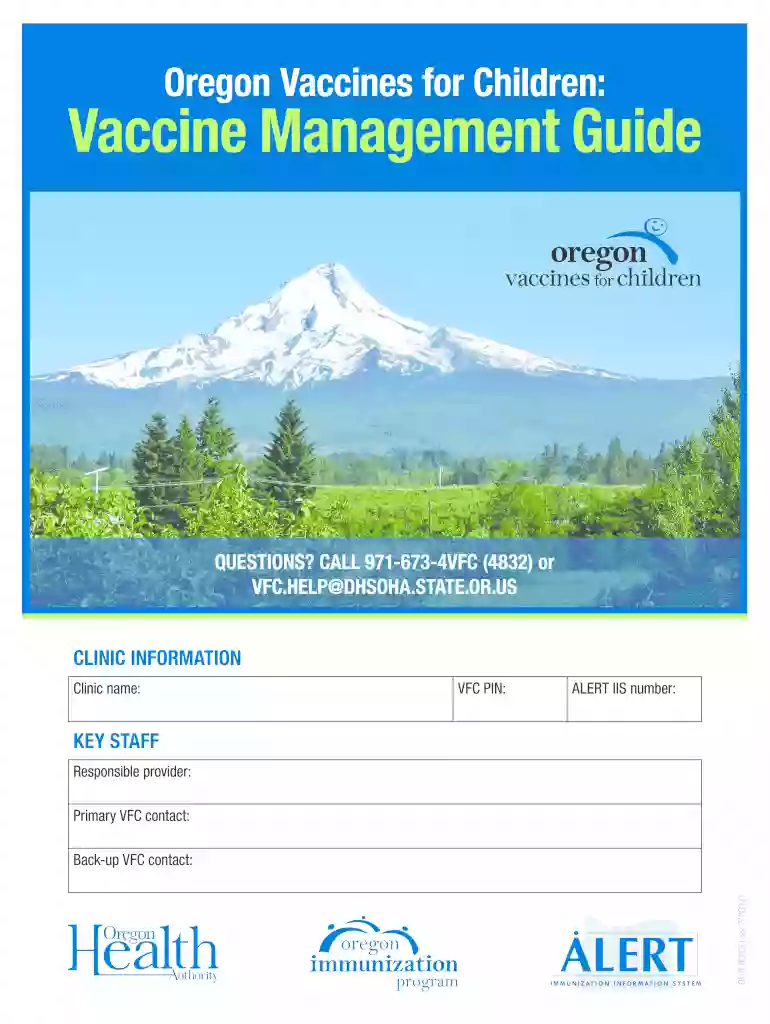
Oregon Vaccines for Children: Preview on Page 1

Here's how it works

01. Edit your form online
Type text, add images, blackout confidential details, add comments, highlights and more.

02. Sign it in a few clicks
Draw your signature, type it, upload its image, or use your mobile device as a signature pad.

03. Share your form with others
Send it via email, link, or fax. You can also download it, export it or print it out.

Definition and Meaning of Oregon Vaccines for Children

The "Oregon Vaccines for Children" refers to a program designed to provide vaccines at no cost to eligible children throughout the state of Oregon. This initiative is part of a broader effort to ensure comprehensive healthcare access for children, preventing diseases through immunization. By participating in this program, healthcare providers help reduce the economic barrier associated with vaccines, promoting public health within the community. Each participating healthcare facility must adhere to specific guidelines and procedures to maintain its status as a provider within the program.

How to Use the Oregon Vaccines for Children Program

Using the Oregon Vaccines for Children program involves several steps and processes that healthcare facilities must follow to ensure compliance and effective service delivery. First, clinics must register as approved VFC Program providers. Once registered, they are required to follow set protocols for vaccine storage and handling. Facilities must train their staff on proper administration techniques and maintain accurate records of all administered vaccines. Providers should engage in regular audits to ensure adherence to standards and facilitate continuous improvement in service delivery.

Step-by-Step Instructions for Providers

  1. Registration: Clinics must register with the state's health department to participate in the program.
  2. Training: Staff must be thoroughly trained in the VFC Program requirements and procedures.
  3. Vaccine Storage: Follow detailed guidelines for cold storage to preserve vaccine efficacy.
  4. Documentation: Maintain precise records of vaccines received, stored, and administered.
  5. Audits: Participate in regular audits conducted by health department officials to verify compliance.
  6. Feedback and Improvements: Use audit results to improve vaccine management processes.

How to Obtain the Oregon Vaccines for Children

Obtaining the Oregon Vaccines for Children involves a streamlined process for healthcare providers. Once a facility is registered as a provider, it can place orders for vaccines through the state’s designated vaccine ordering system. Providers must adhere to order schedules and demonstrate appropriate storage capabilities before receiving any vaccine shipments. The health department verifies these capabilities through site visits and monitoring reports submitted by the provider.

Eligibility Criteria for the Program

Eligibility criteria for the Oregon Vaccines for Children program are set to focus on reaching underserved populations. Children from birth through 18 years of age who meet specific criteria are eligible. This includes children who are uninsured, underinsured, enrolled in Medicaid, or who are Native American or Alaska Native. Providers must verify eligibility at each vaccination visit and ensure that they document each child’s eligibility status accurately in the medical records.


decoration image ratings of Dochub

Key Eligibility Requirements

  • Age: Children from birth through 18 years.
  • Insurance Status: Uninsured or underinsured children.
  • Medicaid: Enrollees are eligible.
  • Native American or Alaska Native: Automatically eligible.

Important Terms Related to Oregon Vaccines for Children

Understanding the key terms associated with the Oregon Vaccines for Children program is essential for both healthcare providers and participants. These terms ensure clarity in communication and help streamline the processes involved in the program’s operation.

Terms Explanation

  • VFC Program: Refers to the national Vaccines for Children program, a federally funded initiative aimed at increasing access to immunizations.
  • Provider Agreement: A contract between the healthcare provider and the state health department detailing responsibilities and compliance requirements.
  • Cold Chain Management: Ensures vaccines are stored at the correct temperatures from manufacturer to administration.

Key Elements of the Oregon Vaccines for Children

The Oregon Vaccines for Children program comprises several critical elements designed to ensure vaccines are effectively distributed and administered to eligible children. These elements include maintaining a secure and reliable cold chain system, accurate documentation and reporting, continuous provider education, and regular audits by the health department to confirm compliance.

Core Components

  • Cold Storage Requirements: Ensures vaccine potency and safety.
  • Reporting Systems: Tracks vaccine usage and inventory.
  • Regular Training Sessions: Educates staff on current protocols and guidelines.
  • Compliance Audits: Ensures program integrity and proper vaccine management.

Legal Use of the Oregon Vaccines for Children

Legal compliance under the Oregon Vaccines for Children program involves understanding and adhering to state and federal laws governing vaccine distribution and administration. Providers must ensure they follow Hepatitis B Immunization policies, patient confidentiality laws (HIPAA compliance), and state-specific vaccine administration guidelines. Legal use also necessitates the maintenance of proper consents for vaccination and thorough record-keeping as per legal requirements.

Compliance Checkpoints

  1. Hepatitis B Immunizations: Follow state policies for administration.
  2. HIPAA Compliance: Protect patient information as required by federal law.
  3. State Guidelines: Adhere to local vaccine-specific administration rules.

State-Specific Rules for the Oregon Vaccines for Children

Oregon has particular regulations that pertain specifically to the execution of the VFC Program within the state. Providers must be familiar with these to ensure their practices align with state expectations.

Oregon-Specific Regulations

  • Safe Storage Protocols: Detailed storage guides to prevent loss of vaccine potency.
  • Regularly Updated Guidelines: Providers must stay informed of any changes in state regulations to maintain compliance.
  • Crisis Management: Establishes procedures for responding to emergencies that might affect vaccine integrity, such as power outages.

Examples of Using the Oregon Vaccines for Children Program

Real-world examples illustrate how the Oregon Vaccines for Children program impacts communities and improves public health outcomes. By evaluating case studies, providers can gain insights into best practices and common pitfalls.

Case Studies

  • Urban Clinics: Handling large volumes of patients involves streamlining procedures and ensuring rapid response to demand changes.
  • Rural Outreach: Challenges include ensuring cold chain delivery and maintaining communication with distant communities.
  • School-Based Initiatives: Efficiency in record-keeping and administration amidst significant footfall of students requiring vaccinations.
be ready to get more

Complete this form in 5 minutes or less

Get form

Got questions?

We have answers to the most popular questions from our customers. If you can't find an answer to your question, please contact us.
Contact us
Oregon Immunization Requirements Immunizations are required by law for children in attendance at public and private schools, preschools, childcare facilities, and Head Start programs in Oregon.
Nonmedical Exemptions Some people choose not to vaccinate for personal, religious, or philosophical reasons and they can claim a nonmedical exemption to some or all immunizations. To claim a nonmedical exemption for children in child care, preschool, K-12, or college, visit the Nonmedical Vaccine Exemptions page.
Oregon requires immunization against these vaccine-preventable diseases: Tetanus. Pertussis (whooping cough) Polio. Varicella (chickenpox) Measles. Mumps. Rubella. Hepatitis B.
Only two states (California and Illinois) require, based on state-level decisions, that students of a certain age are vaccinated to attend school. Many other states (17 states) have enacted bans on requiring COVID-19 vaccination as a condition of in-person learning.
All states allow exemptions from school immunization requirements for children who are unable to receive vaccines for medical reasons. State laws vary regarding non-medical exemptions, for religious or personal reasons. Personal exemptions are also referred to as philosophical exemptions by some states.

Security and compliance

At DocHub, your data security is our priority. We follow HIPAA, SOC2, GDPR, and other standards, so you can work on your documents with confidence.
Learn more
ccpa2
pci-dss
gdpr-compliance
hipaa
soc-compliance

People also ask

Do children really need vaccinations, even if the disease is not still around? Although many diseases, like measles, are no longer widespread in most U.S. communities, children still need vaccines to maintain their immunity. These diseases are still alive and well in other parts of the world.

Related links