01. Edit your form online
Type text, add images, blackout confidential details, add comments, highlights and more.

Type text, add images, blackout confidential details, add comments, highlights and more.

Draw your signature, type it, upload its image, or use your mobile device as a signature pad.

Send it via email, link, or fax. You can also download it, export it or print it out.
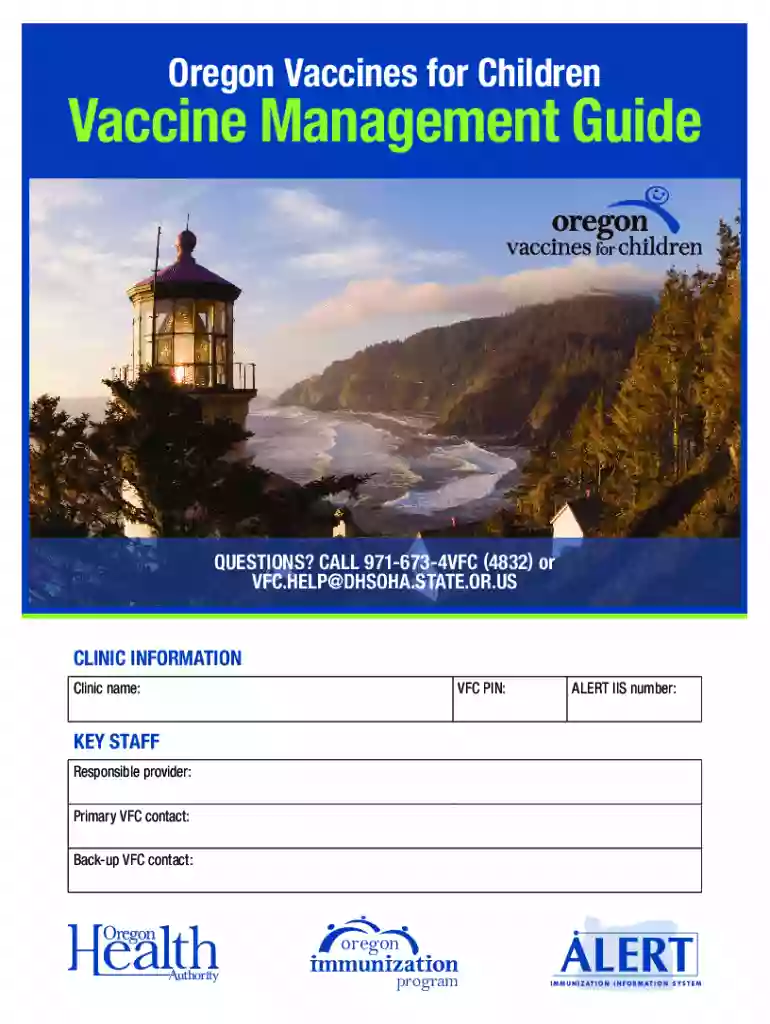
The Oregon Vaccines for Children (VFC) Program is a significant public health initiative aimed at providing vaccines at no cost to children who might not otherwise have access. This program ensures that eligible children in the state of Oregon receive all recommended vaccines to prevent infectious diseases, supporting long-term community health. Managed at the state level, it benefits families by removing financial barriers to essential immunizations. The program’s ultimate goal is to maintain high immunization rates and prevent disease outbreaks.
Eligibility for the Oregon VFC program extends to children through 18 years of age who meet specific criteria. Children are eligible if they are Medicaid-eligible, uninsured, underinsured, or are American Indian or Alaskan Native, as defined by the Indian Health Care Improvement Act. Underinsured children are those whose insurance does not cover vaccines or only certain vaccines. These criteria ensure the program targets those most in need, effectively utilizing resources to improve public health outcomes.


Families and healthcare providers use the VFC program by identifying and enrolling eligible children. Healthcare providers must be enrolled in the VFC program and follow guidelines to administer vaccines to eligible children. Once a child is deemed eligible, the provider orders vaccines through the program and administers them at no cost during regular healthcare visits. The use of the program is facilitated through a streamlined process that involves confirming eligibility and maintaining accurate records.
Oregon's implementation of the VFC program includes specific requirements for vaccine storage, handling, and record-keeping. Providers must adhere to storage guidelines that include maintaining vaccines at required temperatures and conducting routine audits. The state also mandates specific data reporting practices to monitor vaccination rates and manage vaccine distribution. This ensures that the program meets Oregon's public health goals and adheres to legal standards.
The legal framework governing the VFC program in Oregon involves strict compliance with state and federal laws. Providers must adhere to data privacy rules and reporting requirements to protect patients' health information. The distribution of vaccines is regulated to prevent misuse and ensure they reach eligible children. Legal use of the program is designed to protect public health while safeguarding the rights of individual patients.
Healthcare providers participating in the VFC program must maintain comprehensive documentation, including eligibility verification, vaccine administration records, and inventory logs. Documentation of compliance with storage and handling protocols is essential. Providers must also submit regular reports to state health departments to ensure ongoing compliance and program success. Accurate record-keeping is crucial for program integrity and audit readiness.
To join the Oregon VFC program, providers must complete an application that includes information about their practice, eligibility criteria compliance, and consent to follow program regulations. Approval timelines vary, but the process typically involves a review of the application, background checks on the provider, and an inspection of vaccine storage facilities. Once approved, providers can begin ordering vaccines for eligible children.
The primary users of the VFC program are healthcare providers, including pediatricians, family doctors, and community health clinics that serve children in Oregon. They work with families who meet eligibility criteria, focusing on those with limited access to healthcare. Community organizations and schools may also participate indirectly, referring eligible families to enrolled providers. The program serves diverse populations, ensuring equitable access to vaccinations for all eligible children.

An example of the VFC program in action might involve a community health clinic identifying a child eligible for the program and providing necessary vaccines during a routine check-up. Another real-world scenario could be a school district partnering with local health providers to host a vaccination clinic for uninsured students. These examples highlight the program’s adaptability and its role in public health initiatives.
We've got more versions of the Oregon's Vaccines for Children Program (VFC) - State of Oregon form. Select the right Oregon's Vaccines for Children Program (VFC) - State of Oregon version from the list and start editing it straight away!
At DocHub, your data security is our priority. We follow HIPAA, SOC2, GDPR, and other standards, so you can work on your documents with confidence.